
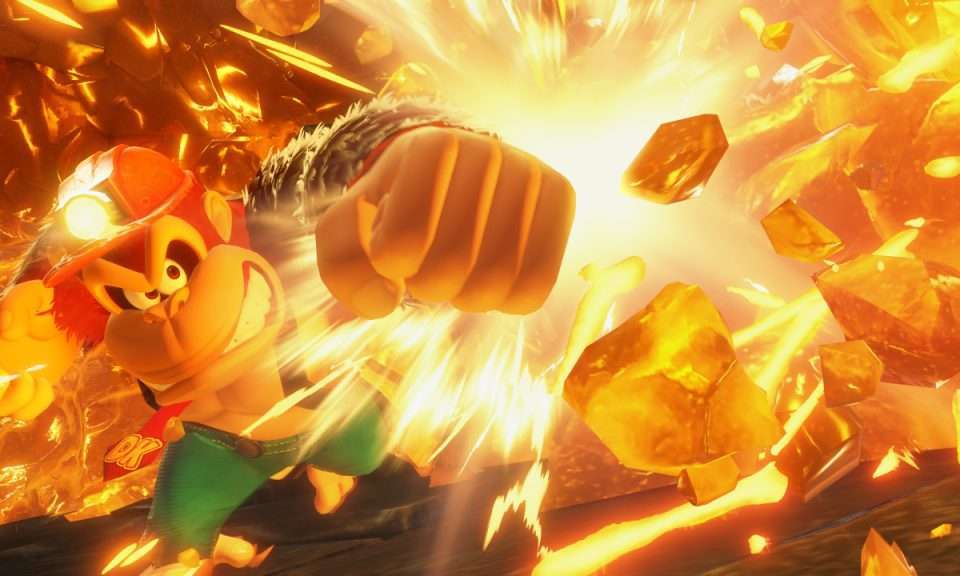
Whether you began your Nintendo adventures by jumping over barrels or riding minecarts through melancholic mines, Donkey Kong has always been there. He’s a gaming legend, and one that’s never afraid to reinvent himself.
Western studios like Rareware and Retro Studios defined the Donkey Kong Country adventures; the great ape has only explored 3D worlds once on the Nintendo 64. It’s also been many years since Nintendo in-house created a DK adventure, with the last one being Nintendo EAD Tokyo’s Donkey Kong: Jungle Beat on the GameCube.
Many generations later, the talented team that worked on Super Mario Odyssey brings Donkey Kong and Pauline into the spotlight on the Nintendo Switch 2 with Donkey Kong Bananza. Melding impressive destruction mechanics, design elements from Odyssey and Breath of the Wild, and honoring the legacy of what came before it, does DK’s latest adventure match Mario’s 3D platforming adventures?
Not only does DK match Super Mario Odyssey‘s quality, but Plumber Boy may need to learn a few things from his oldest rival.
Release Date: July 17th, 2025
Publisher/Developer: Nintendo, Nintendo EPD
Price: $69.99
Platform: Nintendo Switch 2
Underground Hijinxs – Premise
- In a quest for more Bananas, Donkey Kong and his crew look on Ingot Isle to find Banadium Gems. But after discovering the yellow gems, he gets swept into a larger adventure, exploring underground depths with Odd Rock.
- Odd Rock, it turns out, is a teenage version of Super Mario Odyssey’s Pauline. The duo learn of a way to return to the surface and team up.
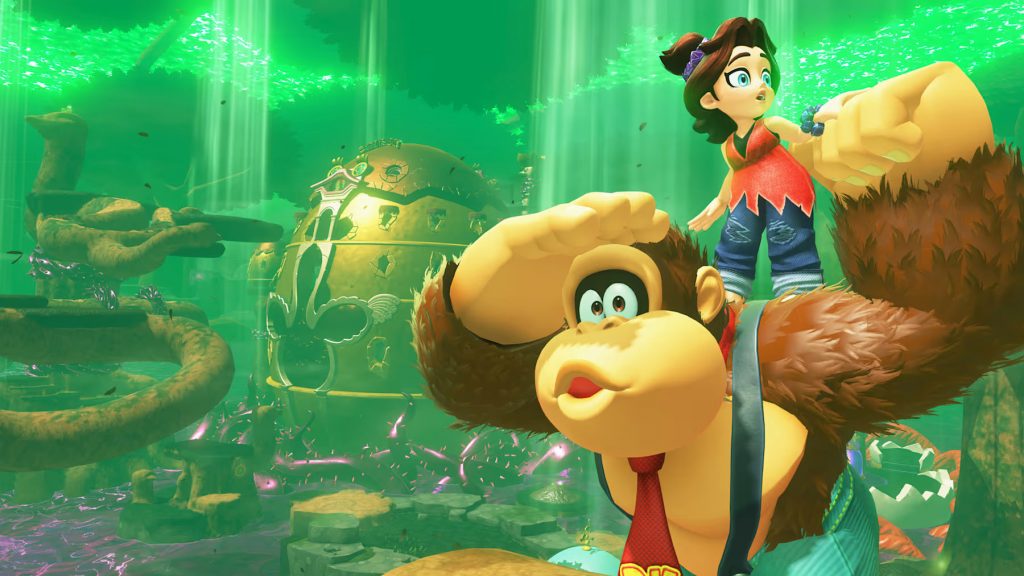
Venturing outside of his home on DK Isle, Donkey Kong and some of his monkey friends head to Ingot Isle to find Bananidium Gems. But as with any hunt for the potassium-packed treat, someone else wants DK’s treasure. The VoidCo corporation, led by Void Kong and his two allies, Grumpy and Poppy Kong, steals DK’s discoveries.
With Ingot Isle deeper underground, DK discovers a small rock creature named ‘Odd Rock’. The duo works together to travel through the subterranean world, only to realize early on that a teenage Pauline was the rock creature. With DK wanting more bananas and Pauline desiring to return home on the surface, the unlikely duo team up to grant their deepest wishes.
The game’s conclusion is a powerful and effective one, and a significant part of that comes from how it develops the characters of DK and Pauline.
Peeling Back the Layers – The Friendship Between DK & Pauline
- The emotional heart of Bananza is Pauline’s character growth. Starting as a shy singer, she grows more confident and bold through her adventures with DK.
- Pauline, being the only character with fully voiced dialogue, makes her interactions with DK and others stand out all the more. Specifically, her hideaway dialogues with DK are charming and make her a more lovable character.
With this simple premise, one would assume the narrative of Donkey Kong Bananza has little to offer. To my surprise, the story has some great moments, and that’s all through the relationship between DK and Pauline. While DK does not speak, he is incredibly emotive with his expressions. This is paired with Pauline having spoken dialogue throughout the entire game.
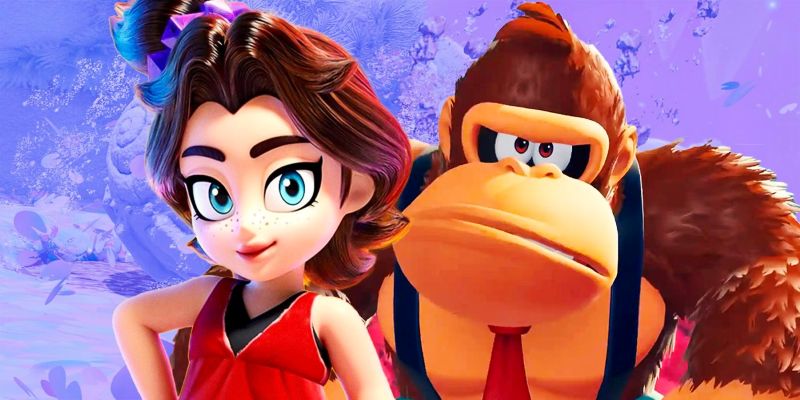
This contrasts with the other characters, who use Banjo-Kazooie-esque gibberish language (spoken words are in subtitles). Jenny Kidd’s performance as Pauline gives the characters a lot of personality. She slowly transitions from being somewhat awkward with her singing to bursting with confidence through her adventures with DK.
And her short dialogues with DK when resting at various hideaways are charming. They range from some interesting lore bits about her grandmother, being genuinely concerned about DK’s obsession with bananas, and even struggling to put on the big ape’s iconic tie.
Best of the Bunch – Other NPCs
But it’s not just DK and Pauline, as various animal characters populate the world of Bananza. Starting with the many animal NPCs, they offer banter not unlike the characters in Mario Odyssey’s Kingdoms. The main difference is that they feel more ‘defined’, with their interactions with DK having a touch more personality.
This extends to the elders, granting DK and Pauline the powerful Bananza forms. From the Kong Elder’s raw display of power to the chill Zebra Elder making various food puns, they are fun to listen to.
Even some familiar faces show up across DK’s adventure, such as Cranky and Diddy Kong, with the game even explaining how they got involved with DK’s latest banana quest at the Racing Layer.
Welcome to the Krew – VoidCo Team
- The Void Company, composed of Void, Grumpy, and Poppy Kong, is a welcome addition to the Donkey Kong series.
- The trio has strong personalities and has minor character development as the narrative progresses.
- A surprise krew of threats at the game’s conclusion is a highlight, honoring what came before in the DK Series.
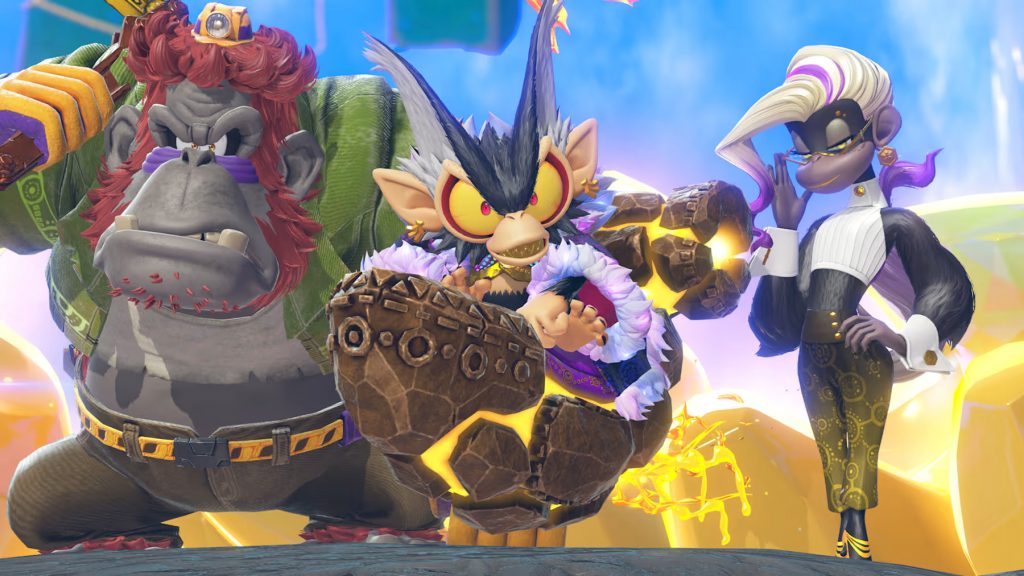
Donkey Kong Bananza’s villains, the VoidCo Company, offer some of the strongest villain characters in the Donkey Kong series. Following up on the iconic Kremlings from the Donkey Kong Country series is a tall order, with even Retro Studio’s DKC titles failing to match up to them for one reason or another.
What helps the VoidCo cast match up to DK’s best antagonists is how much personality they bring to the experience. Void Kong is small in stature but makes his presence felt across the entire game, with posters of his company in every layer and the keys you smash to progress featuring his ugly mug all over them.
But he’s not alone, with Grumpy and Poppy Kong feeling like genuine new additions to the DK crew. The former has a sense of honor when you defeat his creations, while the latter doesn’t like to get her hands dirty. And when the game reaches the halfway mark, their actions toward DK and Pauline are enjoyable to see unfold.
And when you think the fight is done against Void Kong, the game offers a major surprise encounter familiar to DKC fans. He and his crew are a bunch that carry over their iconic status from the prior Donkey Kong Country titles, and seeing them not only upstage the new villains but help create one of the best conclusions in Nintendo history is awesome to see.
Donkey Kong is Here – Controls
- Donkey Kong has a varied moveset composed of multi-directional punches, rolls, throwing objects, etc. In addition, returning moves from Donkey Kong Country and DK Jungle Beat return as well.
- Punching is a critical mechanic, as it helps DK dig and destroy the world around him. As he punches through the world around him, Donkey Kong can find gold and treasure chests along the way.
Controlling a character like Donkey Kong has changed depending on the game, with his more ambitious moveset being from Donkey Kong 64. In that game, DK had various jumps, attacks, and even long-ranged weapons to use. So coming into Bananza, the follow-up to that ’90s 3D platformer, one has to ask how you change up his moveset.
The answer? Combine pretty much everything he’s done before, with the addition of punching, and tying it together. DK can jump and roll like in the Donkey Kong Country series, clap his hands like Donkey Kong Jungle Beat, and climb across most surfaces with ease. He can even throw various objects, including barrels and chunks of material, with the ZR button.
His newest move is the reliable punch. You can punch forward (Y), upward (X), or downward (B). DK has all these options because punching through dirt, crystal, ice, and more is the cornerstone of Bananza’s gameplay. Save for the very foundation of the Layer itself and some special metal surfaces, DK can punch through everything.
The multi-directional punch is a key part in exploring the underground world, with every punch having a substantial impact. Even after finishing the game, it’s still a treat revisiting Layers and punching my way through everything, being showered in Gold, or finding a helpful treasure chest.
Going Bananza – Gameplay Variations
- The Bananza forms add to DK’s core moveset, with each transformation offering something different. From Kong’s great strength to Zebra’s blazing speed, each form has its uses during DK’s adventure.
- Collecting gold keeps these forms active, which can be collected from destroying the world around you, defeating enemies, etc.
But punching and destroying the world around isn’t all DK can do, as other layers are added to the gameplay experience.
Across the adventure, DK gains access to several different Bananza forms. These transform the big ape into various animal creatures, and each focuses on empowering DK. The first one is Kong Bananza, transforming DK into a giant ape to pull off powerful charged punches. Alongside Kong Bananza, DK can also turn into a Zebra to run at blistering speeds, an ostrich to glide across casams, and many more.
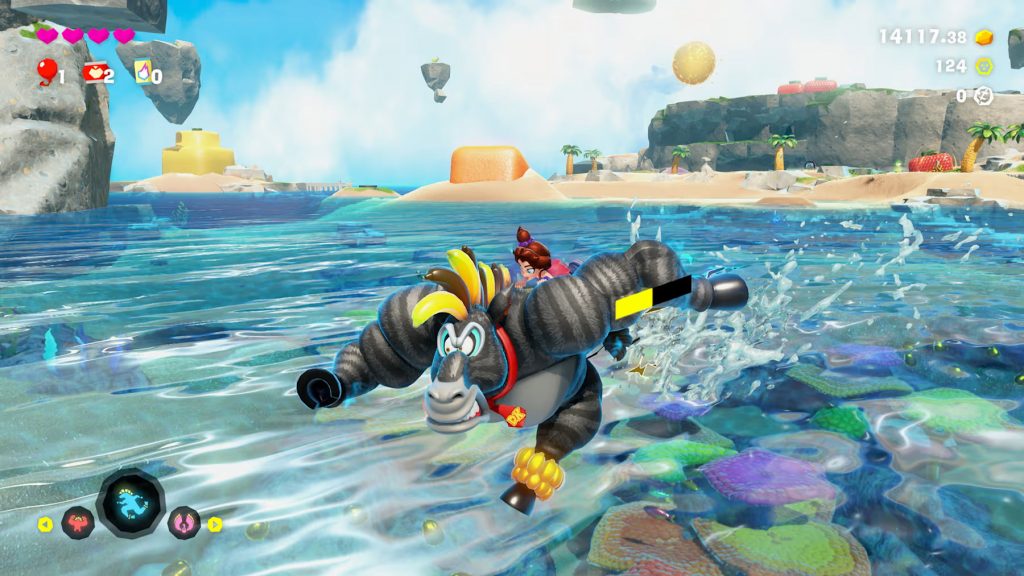
In many ways, the Bananza forms are an evolution of the animal buddies from the Country games, but the core difference is that DK needs to collect Gold to keep these forms active. Gold is everywhere in Bananza, from digging through the world around you, collecting the Bandium gems, and even defeating enemies.
These transformations take DK’s core moveset and add additional layers, making exploration a complete joy once you unlock all the Bananza forms. Combining the raw strength of Kong, with the fast movement speeds of Zebra and the flight abilities of Ostrach were my go-to forms for late-game exploration.
The Minecart
Alongside the new transformation mechanics, it wouldn’t be a Donkey Kong game without minecarts. These return in Bananza, being usable in both 3D and 2D. When in 3D, DK can throw explosive rocks collected during the minecart ride, being aimed using the right stick and gyro controls. A highlight of this was in the end-game Feast Layer, where Minecarts are all over the level and give you additional options to reach your goals.
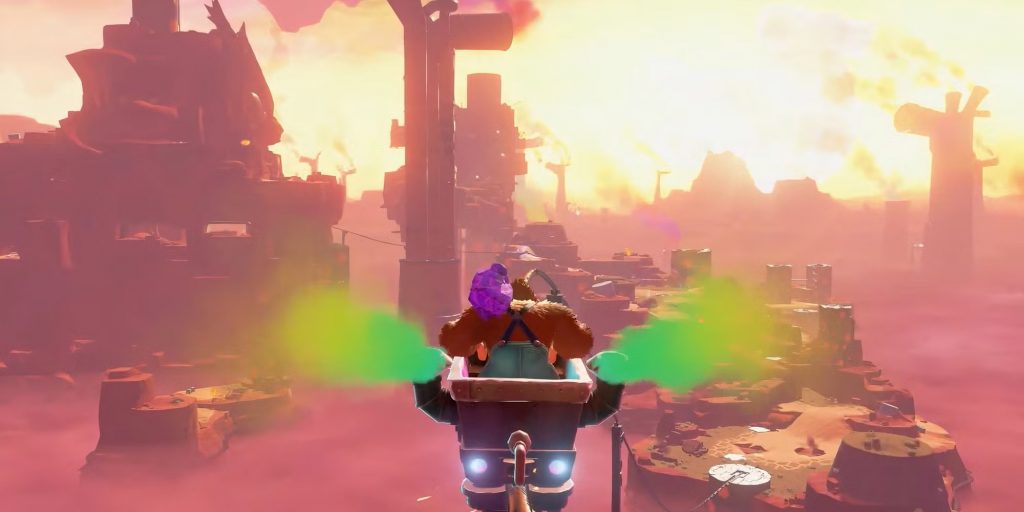
Meanwhile, when in 2D, the Minecart controls just as you would expect them to from past Donkey Kong Country games, with this popping up in some bonus rooms and one of the 2D challenge levels.
2D Challenge Levels
Speaking of, these are directly inspired by past Donkey Kong adventures while still using the entire control scheme and moveset from the main 3D stages. Jumping across familiar jungle japes, riding the ever-daunting minecart, and jumping across sharp stickerbushes, these nostalgic levels were a blast.
If anything, I wish there were more of these stages, as DK’s control in 2D feels so fantastic that I could easily envision other level themes from Donkey Kong Country games being adapted to the Bananza engine. Regardless, what’s included here is fantastic, and discovering these fun 2D challenge levels was a highlight during my adventure.
A Kong’s Odyssey – Level Design
Digging to the planet’s core, Donkey Kong and Pauline have quite the quest ahead of them. Completing that quest, the unlikely duo explores a series of layers that challenge players and fully explore every inch of their environment. Every level in Bananaza invites exploration, not unlike Nintendo EAD’s prior work on Super Mario Odyssey.
So much of the level design in Bananza reminded me of the best levels from Mario’s globe-trotting adventure, with one key difference. That is, Donkey Kong’s ability to effortlessly go anywhere without much resistance. He has an effective roll jump, can climb on almost everything, and he can literally carve his own path to the Banadium Gems he craves.
Creating levels crafted around such a character asks players to approach platforming challenges differently. Do you use your roll-jump and Ostrach Bananza to get across a large gap? Or do you throw clumps of mud (which can stick together) at a wall to create a bridge? Or do you punch a path, creating a tunnel that, so happens, to lead to a cluster of Banana Chips (currency you can spend on things) and a fossil or two?

While this does lead to level design that appears more basic on the surface than your typical 3D Mario adventure, the sheer free-form approach to platforming feels like Nintendo adapting the Breath of the Wild mindset to the 3D platformer.
Even with his mindset, though, later layers feature more challenging platforming challenges that demand players to master the Bananza forms and DK’s various abilities. The final two hours of Bananza challenged me in ways that even Super Mario Odyssey didn’t, which is fitting considering the game’s crocodile teeth come into the picture.
Ooohhh… Banana – Collectables/Progression
It’s fitting that DK’s latest adventure honors the rare legacy that came before it through some of the best collectables in any 3D platformer.
DK is after the plentiful Banadium Gems, with each one granting the great ape a skill point. Collecting five allows you to upgrade one of DK’s many abilities, ranging from increased health to making your punches more powerful, and even giving your Bananza forms some extra abilities.
But unlike games like Super Mario Odyssey and prior 3D Mario adventures, DK doesn’t need to collect any of the yellow fruit to continue his adventure. The Motivation in the game’s core collectible is empowering Donkey Kong in your preferred playstyle.
Want to max out all his basic abilities right away? Or focus squarely on your favorite Bananza form to make a specific set of challenges easier? Utilizing structure not only keeps players engaged throughout the entire adventure through consistent rewards, but also makes the game one that has freedom of progression.
And the most impressive part? Collecting every bananadium gem is a blast from start to finish. Thanks to the game’s fantastic real-time in-game map, treasure maps to find, and spending Banana Chips to help open up the map, it’s a painless, almost zen-like experience finding everything.
This was one 3D platformer where I fully 100% the experience, with the only 3D platformers pushing me to do that being Mario 64 and Mario Galaxy 1 + 2.
An Ape’s Cacophony – Combat/Boss Fights
While DK is climbing and rolling around, he and Pauline tango with the best of them across the adventure. The game features simple enemies, each requiring a different method to defeat them. Sometimes a simple punch will do the trick, but airborne enemies might require DK to throw objects at them.
They also leverage the game’s material mechanics, which terrain needs explosive material (like Gold) or one of DK’s Bananza forms, to destroy it. But the biggest highlight for the combat encounters is the bosses.
Void Co.’s various creations that Grumpy Kong creates aren’t the toughest encounters in a Nintendo platformer. However, they push you to utilize your Bananza forms to great effect and leverage the game’s various mechanics to make encounters engaging. Using a combination of the Zebra and Ostrich Bananza to get across a decaying pathway to using Kong Bananza to land powerful punches is just one example of a fun challenge Grumpy Kong sent DK’s way.
However, the final section of the game features one of the hardest boss encounters in any Nintendo platformer, where this massive, familiar threat demands that the player has mastered all of DK’s abilities. The final encounter kept me on my toes, forcing me to switch between all of my Bananzas every few seconds to avoid attacks and land powerful blows when an opening came up.
Overall, the boss encounters are enjoyable and do a fantastic job leveraging the game’s innate combat mechanics to great effect.
An Unfamiliar Country – Presentation of DK’s World
The look of the Donkey Kong series has changed over the years. Going from pixelated arcade romps, using ground-breaking CGI scans to create some of the most realistic visuals on the Super Nintendo, to braving the uncharted waters of 3D gaming, it’s one where Nintendo and Rareware took risks.
For many years, Nintendo kept the core Rareware art style for the Donkey Kong series, adapting it to fit their needs for spin-offs and Retro Studio’s own take on the Donkey Kong Country series. When Nintendo EAD got its hands on the series again, it took a bold risk, taking the series in a new visual direction.
Many aspects of the game honor what came before, with the game’s opening Ignot Isle being a perfect display of this. The iconic neon gurters from the Donkey Kong Arcade game hold up the construction site, with Donkey Kong Country barrels helping DK navigate the area. But once DK breaks through the first layer and explores the deeper underground world, its visual identity becomes clear.
It takes the bright colors one would see from locations like the Lunchon Kingdom from Mario Odyssey, but adds more nuanced color choices and grounded elements. Bright lagoons, vast canyons, icy mountain tops hiding a hidden volcanic core, and a hidden disco dancefloor highlight the many varied biomes DK and Paluine explore.
New Looks – Character Designs
And then we have the iconic Kongs. The new members of the crew, such as Void Co., fit perfectly alongside Cranky and Diddy Kong, sporting strong character designs.
Alongside the Kongs, the game’s many NPCs are delightfully charming. From the silly-looking zebras wearing winter coats to the Rareware-coded Fractoid gem creatures, the allies DK and Pauline come across are memorable.
Regarding Donkey Kong himself, he received a more extensive redesign, with the explicit goal to make him more expressive and cartoony. In many ways, it’s similar to what Toys for Bob did with Crash Bandicoot in Crash 4, and just like that game, I love this more expressive Donkey Kong.
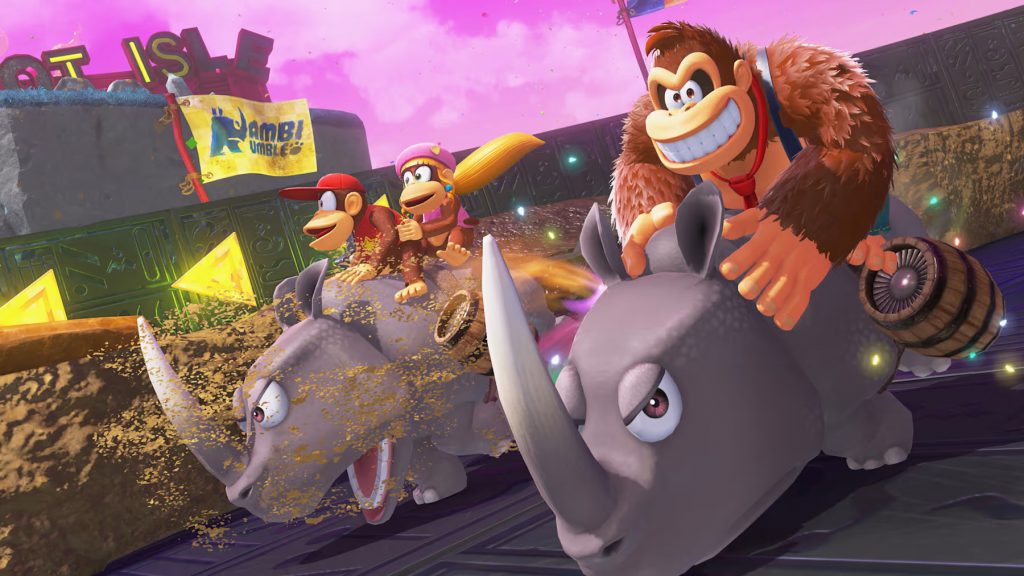
He can effortlessly switch between a joyful ape hungry for bananas, to an angry beast ready to fight like hell. Little details, such as his expressive eyes looking at everything catching his interest, from idle animations where he and Pauline interact with one another, do so much in presenting a living character.
It’s similar to the team’s prior work from Mario Odyssey, where Mario was such a lovable fella in that adventure, and that was expressed through strong animation work.
This strong character design mentality for DK bleeds into his Bananza forms, with each one looking delightfully wacky and over-the-top. While he can look intimidating in the Kong Bananza, he looks stupidly goofy in the Ostrich Bananza.
The same thing can’t be said about the enemies DK encounters, however, as they are largely forgettable. While they fit the look of the game’s various biomes, they aren’t iconic like the Kremlings and Snowmad tribe due to how easily they bleed into the destructive chaos around DK.
It’s On like Donkey Kong – Audio Design
Being a game focused on destruction, it’s fitting that Donkey Kong Bananza has fantastic sound design. Every action in the game world has an impact. From small things like DK landing on the ground having a big ‘thud’ impact, to punching various materials having a great ‘crunch’, every action has an audible reward for the player.
And when DK finds a Bandium Gem, he’s not just picking it off the ground and calling it a day. No, he violently punches it, with a glass-like sound effect hyping the player up. Then it shatters, playing an explosive, glass-like shattering sound effect.
Then the iconic Donkey Kong 64 ‘Oh Banananaaaa’ soundbite plays, with DK munching up his yummy reward. And this happens hundreds of times throughout the game. And it never gets old, being something that consistently gave me the dumbest grin.
All this, combined with charming sound bits from various NPCs and fantastic audio design for DK’s Bananza forms, cements this game’s effective audio design as one of its biggest strengths.
The Underground Symphony – Level Music
Similar to franchises like Sonic, I look forward to amazing musical scores in Donkey Kong adventures. Every Donkey Kong Country game features amazing musical scores. Meanwhile, Donkey Kong 64 has iconic melodies, and Jungle Beat is built entirely on musical sound design, linking to the platforming experience.
So expectations were rightfully high when Donkey Kong Bananza was revealed, more so when it was revealed that Pauline’s singing would be a major mechanic. So I’m happy to say, Bananza killed it with its score.
The game’s main biome themes are enjoyable, capturing the vibe they shoot for, and are pleasing to the ear. They aren’t earworms like the legendary themes from the Donkey Kong Country series, but themes like the mines from the Canyon Layer or the festive carnival vibe from the Feast Layer were enjoyable.
Singing with the Band – Bananza & Vocal Themes
Cementing this game’s score as one of DK’s best is centered around the Bananza themes and Pauline’s vocals. Her singing triggers DK’s powerful forms, with each one featuring a catchy beat.
Kong Bananza, my favorite, featuring Pauline singing Splatoon-esque vocals with effective rock beats and aggressive ape grunts backing it. Every Bananza form has a unique theme, from the Zebra’s Spanish guitar to Snake Bananza’s mixture of rap-like vocals and moody instrumentation, making each one memorable and catchy.
The game also features a vocal track that closes out the adventure. It got me genuinely emotional, reflecting on my entire adventure in a positive way.
The Performance of Donkey Kong Bananza
Continuing Nintendo’s trend of offering strong, performant platformers, Donkey Kong Bananza often hits its 60 FPS target while sporting high resolutions in both handheld and TV mode.
There are moments where the game’s frame rate suffers, however. Specifically, in some boss encounters or when a lot happens on screens, such as causing a chain of explosions, or when a lot of effects happen at once. Thankfully, it quickly returns to its 60 FPS target.
Considering the game’s destruction mechanics, overall performance is an impressive showcase of the Switch 2 hardware, despite occasional frame-rate drops.
A Heart of Gold – Closing Thoughts on DK Bananza
3D Platformers, as a genre, Nintendo is the master of. They look at the genre every generation or so, and make a bold move forward. Mario is usually the one spearheading this, with galaxy-defying adventures or an odyssey around large worlds. However, Donkey Kong’s second shot at the 3D platformer not only accomplishes similar genre-defying moves but also surpasses the plumber’s most recent adventure.
Donkey Kong Bananza is one of the greatest Nintendo platformers of all time, utilizing the strong foundation of Mario Odyssey. It moves the genre forward through its destructive terrain-based platforming and enjoyable transformation mechanics. This is an experience that justifies the Nintendo Switch 2, as a platform, and I can’t wait to see what the future of Donkey Kong holds.
Score: 9.5 out of 10
Pros:
- Amazing game feel with tight controls and enjoyable deformation mechanics
- The different Bananza Forms add a lot to DK’s moveset
- A consistent feeling of progression keeps collecting everything rewarding
- Simple but enjoyable narrative and story
- Fantastic, colorful visuals that are paired with an equally powerful soundtrack
- Final few hours are some of the best ‘End Game’ content in any Nintendo game to date
- Lengthy post-game with additional Bananas to collect
Cons:
- Minor performance drops during some boss encounters and intensive moments
- Full 100% completion doesn’t unlock anything special
- More 2D Challenge Levels would’ve been welcomed
