
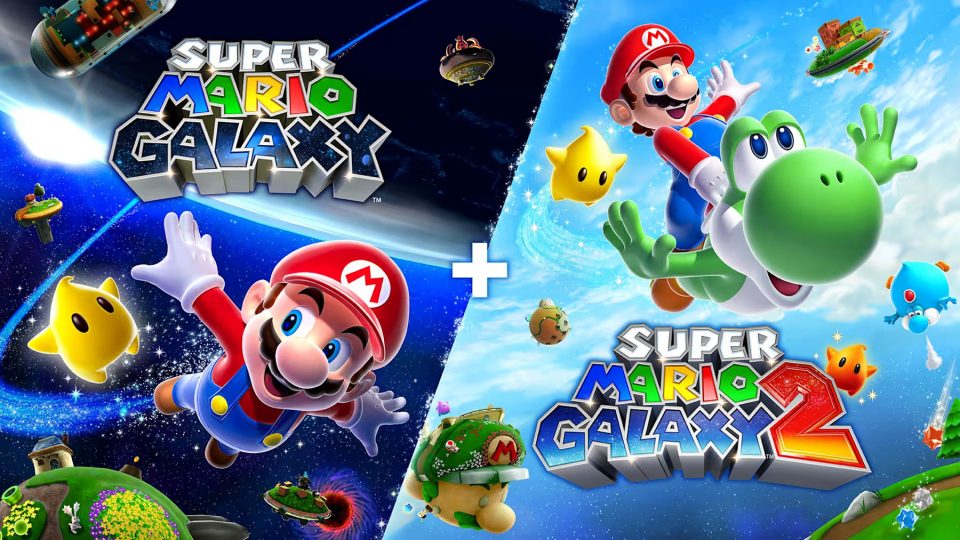
What is Super Mario Galaxy 1 + 2
When many think of the greatest 3D platformers of all time, Super Mario Galaxy comes to mind. Taking the groundbreaking framework that powered Super Mario 64 and refining that in Super Mario Sunshine, Mario’s next step was to leap into the cosmos.
Originally released on the Nintendo Wii in 2007 and an equally amazing follow-up released in 2011, both titles return to celebrate the release of The Super Mario Galaxy Movie. But does this collection on Nintendo Switch honor the original releases? Or is it a greedy Luma wanting too many starbits?
After revisiting these childhood classics, I have much to say about Mario’s star-fairing adventures.
Publisher/Developer: Nintendo, Nintendo EAD Tokyo
Platforms: Nintendo Switch, Nintendo Switch 2
Price: $39.99 Per Game, $69.99 for the Collection
Release Date: October 2nd, 2025
Reviewed on Nintendo Switch 2
A Starry Night – Story of the Galaxy 1
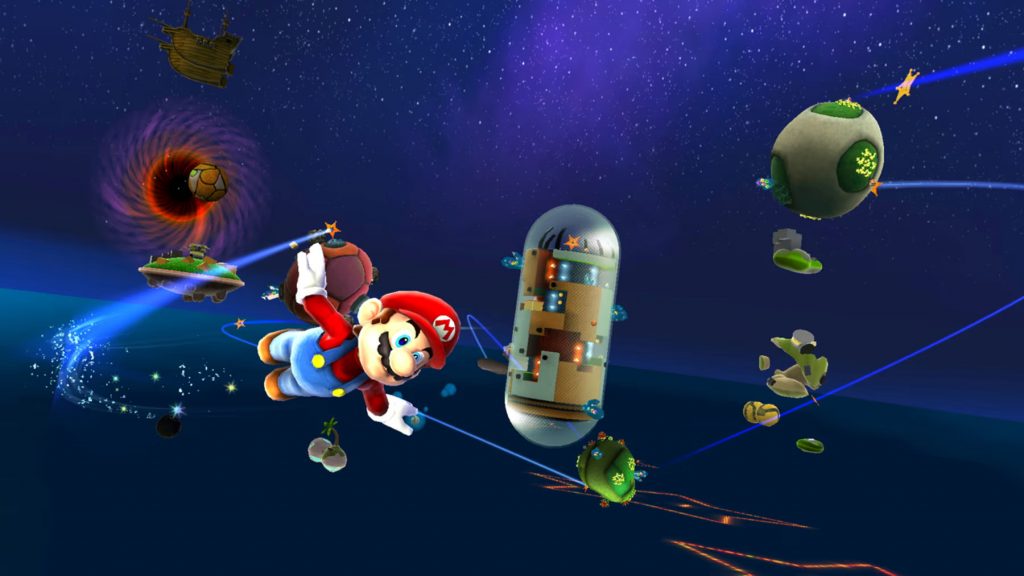
Upon receiving a letter from Princess Peach to join her for the beautiful star festival, he rushes toward her castle to join her and his Toad friends. But Bowser invades, trapping the Toads in crystal and outright stealing Peach’s castle into the dark abyss of space.
Mario wakes up on a lone planet and, with the help of Rosalina, goes on a grand adventure through the stars to save his beloved, all the while collecting Stars to power up the Starship Observatory to reach Bowser’s domain. It’s a simple premise, and Mario’s encounters with NPCs are charming. His interactions with Captain Toad, Luigi, and the stowaways from the Mushroom Kingdom on the Observatory are charming.
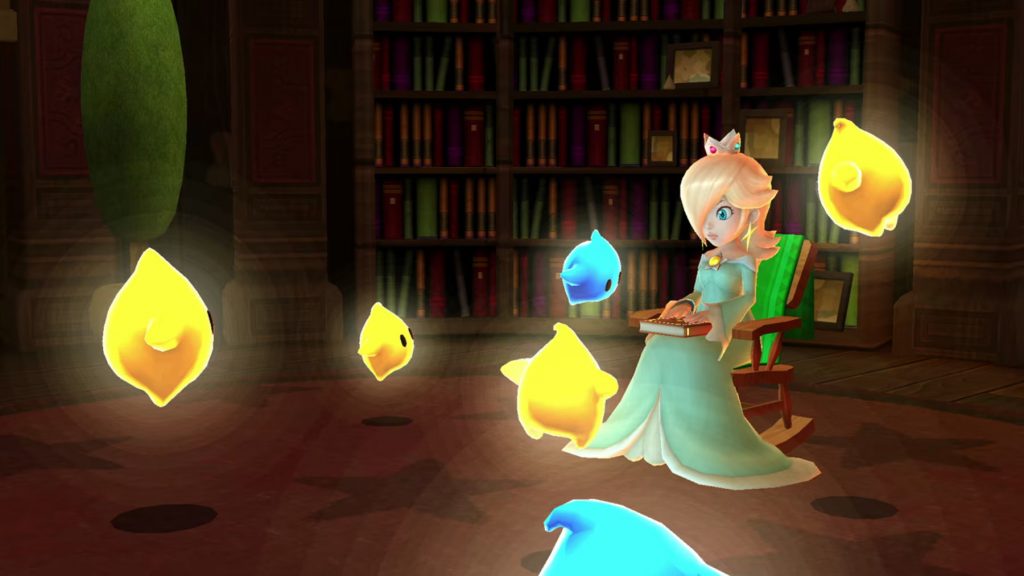
However, the highlight is everything surrounding Princess Rosalina. She’s the mother of star children (called Luma’s) and has an otherworldly energy. Reading through her storybook, which reveals more pages as Mario’s adventure continues, you learn about her somber backstory.
It’s emotionally powerful, but it’s side content that has no bearing on Mario’s adventures through the cosmos. Despite that, though, it adds something to the experience and is a nice change of pace from typical Mario stories.
Back to Basics – Story of Galaxy 2
However, the same can’t be said for Super Mario Galaxy 2. Following the events from the original Super Mario Galaxy, Mario and friends act as if nothing happened and, in many ways, restart the adventure once more. Bowser shows up to capture Peach, Mario sets out after him with the help of friendly Lumas, and teams up with Luma Captain Lubba to chase after the powerful Koopa.
Like Galaxy 1, the friendly NPCs are varied and add to the experience. More so as Mario progresses through the adventure and more allies decide to join him on the quest for Stars via the ‘Starship Mario’ that Mario uses to travel across the galaxies.
That being said, the Switch & Switch 2 version of Galaxy 2 adds a new story book for Rosalina, adding more backstory to the mysterious space princess. It’s a welcome inclusion, making her have a more notable role in Galaxy 2’s adventure.
Beyond the Cosmos – Gameplay of the Galaxy Games
Like other 3D Mario adventures, the plumber can easily perform most of his Super Mario 64 and Super Mario Sunshine moveset (long jumping, triple jump, wall kick/jump, etc). But his punch has been replaced with a spin attack, working as an all-around attack, or can be used for a double jump.
These moves work well to support the timeless 3D Mario platforming, but with Galaxy, it’s done in a new perspective. While some areas are open, like in Sunshine, a large chunk of the game has Mario exploring in a more linear format.
This is due to the game’s core gravity mechanic, which has Mario run and jump around spherical planets. Simply exploring these spherical locations offers a unique challenge to Mario. For example, you have a parana plant in the distance and need to hit it to unlock a launch star to get to the next planet.
Mario must use gravity to his advantage, spinning melons and letting gravity work to hit the creature. This also extends to some fun platforming tricks, such as Mario’s long jumping across spheres. In many ways, the more linear platforming challenges of the Galaxy games call back to the more demanding sections of Sunshine, but with a more balanced difficulty.
A New Adventure Each Time – Gameplay Variety
It’s not just jumping around, however, as Mario interacts with gravity in other ways. From using blue pull-stars to get from place to place, riding on a ball, and riding on creatures to get across sea and air, the gameplay is always doing something new.
This extends to the power-ups, with Mario having access to several across his two adventures. Power-Ups from the 2D titles, like the Fire Flower, are brought to 3D for the first time as time-based power-ups. In addition, items like the Ice Flower can help Mario skate across bodies of lava or sea. And even more wacky original power-ups, like the Rock Mushroom in Galaxy 2 (letting Mario roll around in a rock ball) and the Spring Mushroom (bouncing around like a literal spring) in Galaxy 1, lead to some really fun level designs built around their unique gimmicks.
A great example of this is in Galaxy 1‘s Freezeflame level, where the level starts covered in ice, but as Mario explores it and collects stars, more fire elements bleed into the level design. By the final star, Mario has to master ice skating with the Ice Flower over gravity-defying lava to complete the level’s final challenge.
The Green Dino – Yoshi Gameplay
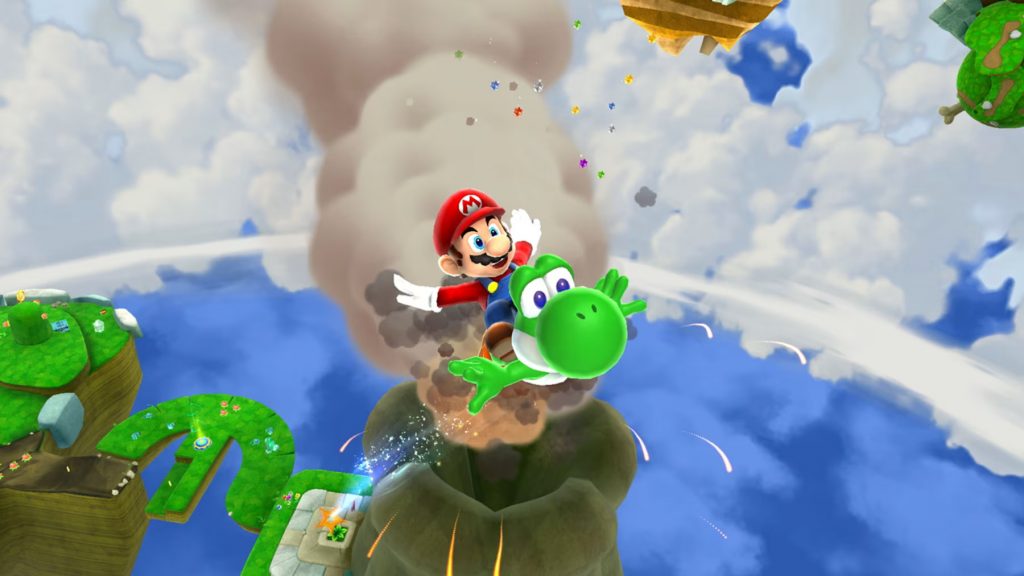
By far the best power-ups in the Galaxy games have to be the sequel’s implementation of Yoshi. The green dino grants Mario the flutter jump and can use his tongue to grab objects, letting him swing across flower checkpoints or spit back shells and more.
I loved using his power-ups, as they felt like a quick change-up from the usual platforming with him. Running with the Red Pepper, carefully exploring a boo-filled haunt with a Yellow Fruit, and gently ascending with the Blue Fruit was fun.
Spinning Around – Controls
But none of these fun gameplay mechanics would work without great controls. Thankfully, Nintendo adapted these for the Switch release of Galaxy 1 + 2 in a few ways. Mario’s moveset is tied to the buttons and analog sticks. In addition, the pointer (used for aiming with Yoshi, feeding Luma’s starbits, and more) is mapped to gyro controls.
Gyro controls can be used in both handheld mode and with the Switch/Switch 2 Pro Controller, both working as intended. You can play the game with the Joy Cons standalone, mirroring how the original Galaxy games played on Nintendo Wii.
But there is no option to map any motion controls to the analog sticks. Specifically, it can be a problem during motion-centric sections. The motion controls work well for me, but Nintendo’s offering no alternative option is a shame for these modern releases.
Ships of Different Sizes – Progression & Hub Worlds
Mario Galaxy 1 + 2 feature similar gameplay structures, as the end goal is collecting 120 Power Stars in each game. But each Galaxy has a different approach.
Starship Observatory – Super Mario Galaxy
Super Mario Galaxy has Mario run around Rosalina’s home, the Starship Observatory. Getting to each section of the hub to access the next set of worlds is fun, and being able to see your progress in real time is rewarding, as Mario collects the 60 needed Power Stars to face Bowser, making the ship slowly gain more power and become more alive.
Seeing the cute little Luma flying around, and the varied visual theming of each section keep things engaging. In addition, being able to explore and get those odd 1-Up mushrooms and talk with your allies is a nice ‘welcome back home’ feeling.
It is larger than it needs to be, but the attention to detail and the ‘expanding hub’ energy Galaxy 1 provides is rewarding.
FaceShip Mario – Super Mario Galaxy 2
Meanwhile, in Super Mario Galaxy 2, the hub is heavily downsized. Instead of a vast hub to explore, Mario has a small ship to run around. It is a sphere, meaning the gravity aspect of exploring is emphasized more. It’s fun, and seeing it slowly gain more allies is visually rewarding as you progress through the adventure.
However, it lacks the personal touch that Galaxy 1’s hub provided. And level selection is now more similar to traditional 2D Mario, with a series of ‘Worlds’ to explore. It functions identically to Galaxy 1, but it makes things a little less special technically.
Mr. L – Completion Rewards
Fully completing each Mario Galaxy adventure is an experience, as each game approaches this differently. In Mario Galaxy 1, you need to gain access to special comets. These comets unlock level modifiers and full-on redesigned levels. From racing a cosmic clone to collecting purple coins in each level, they are genuinely challenging. But gaining these stars, alongside the core ones along the main questline, unlocks Luigi himself.
He feels different from Mario, having a higher jump and slippery movement (making careful jumps more of a challenge). A full second playthrough with him is fun, but the final reward isn’t the best.
Meanwhile, Galaxy 2 offers a better post-game, with a series of challenging final levels. In addition, it features a better implementation of the purple coin star challenges, Luigi can be unlocked for your main save file, and by completing these challenges, a special guest joins the FaceShip.
Make no mistake, fully completing both Galaxies is not easy. But it’s one cosmic challenge worth undertaking.
A Burning Star – Presentation
Despite both Galaxy games being older titles, they hold up beautifully on Nintendo Switch and Switch 2. The downright gorgeous art direction for both titles completely sells their intergalactic scale. In many respects, the presentation tells the real story of Galaxy 1.
Mario goes from his familiar home in the starlit mushroom kingdom and runs alongside the stars themselves. The haunting black abyss of Space Jump Galaxy, the iconic grassy Egg Planet, and the warm yellow of the Honey Hive Galaxy are some of the game’s more impressive locations.
The visual variety is evident across both adventures, supported by some of the best animation during the PS3/360/Wii era of gaming. Sure, some textures don’t hold up as well when upscaled to 4K on Switch 2, but it is otherwise a beautiful adventure.
Performance on Switch & Switch 2
This double-pack has a Switch 1 SKU, but was updated to leverage the power of Nintendo Switch 2. Meaning, both games run at the consoles’ respective resolution targets.
Switch 1: 720p Handheld/1080p Docked
Switch 2: 1080p Handheld/4K Docked
Playing through the game on Switch 2, it looked sharp on the handheld’s display and ran like a dream at its 60 FPS target. The game also runs at a stable 60 FPS on Switch 1.
A Super Mario Symphony – Music/Audio
The greatest part of the experience has to be the stunning soundtracks of both Galaxy games. So many of the themes in both games have stuck with me years later. Egg Galaxy’s grand scale introduces the adventure, and the hauntingly beautiful Space Junk Road is a major highlight.
This also extends to other themes in both games, with the expanding ‘Rosalina in the Observatory’ theme having this waltz-like energy to the track. And for more traditional Mario themes, both games have some wonderful callbacks to Super Mario World and Super Mario 64 in great remixes.
While I may be ‘Lord Sonic’, I will die on the hill that both Super Mario Galaxy games have the greatest soundtracks in Nintendo history. If you have a Nintendo Online subscription, I highly recommend installing the Nintendo Music app to listen to the complete soundtracks of these classics. You can also listen to scores at the title screen via the music player.
Closing Thoughts on Super Mario Galaxy 1 + 2
Revisiting these classics, more so after enjoying The Super Mario Galaxy Movie, has been a wonderful treat. They hold up beautifully on Nintendo Switch & Switch 2, retaining the high quality that they had on the original Nintendo Wii.
Lack of accessibility options for motion controls and somewhat dated textures do little to sour what are stone-cold Nintendo classics. Stunning visuals, intuitive platforming that keeps you on your toes, and some of the best presentation in any 3D Mario adventure make this double pack a must-own for any Mario fan.
Score: 9.5 out of 10
This double-pack was reviewed using a copy purchased by the reviewer.
Pros:
- A powerful presentation that holds up, years later
- Powerful soundtrack that honors Mario’s long history
- Solid effort to adapt the original Wii controls to Switch & Switch 2
- Tons of content between both titles
- Completion rewards are solid
- Great gameplay that takes the core 3D Mario formula and turns it on its head
Cons:
- No accessibility options for the motion controls
- Some dated textures are noticeable when upscaled in Switch 2 Docked Mode
