
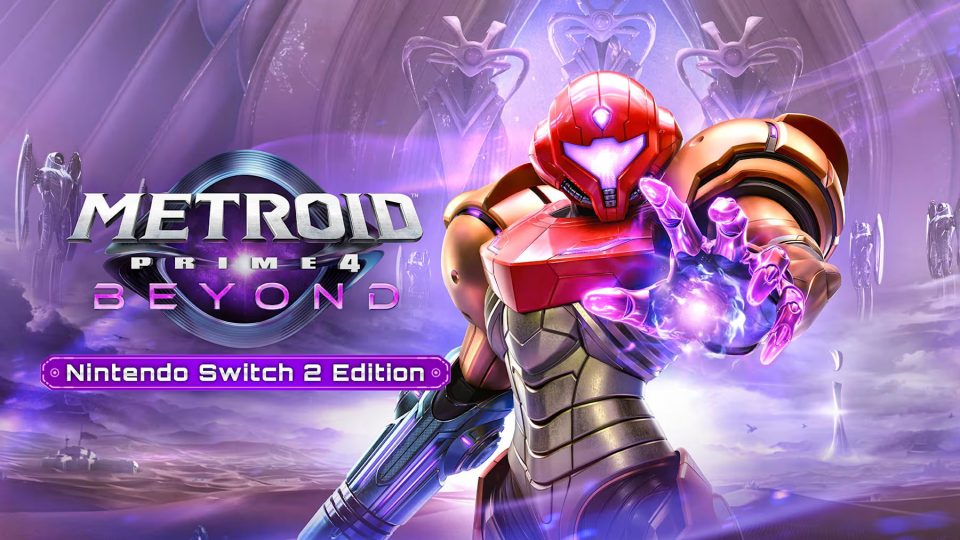
Revealed within the first year of Switch’s launch, Metroid Prime 4 was a project many eagerly anticipated. Following up on 2007’s Prime 3: Corruption, it was challenging to tell which direction the franchise would go next. Would it return to the giant, pseudo-open world of Prime 1? Or would Bandai-Namco go in a new direction?
But development challenges were faced, and Retro Studios took over the project, re-revealing the game as Metroid Prime 4: Beyond. Being one of the first major cross-generation games for Nintendo Switch 2, does Samus’ return to first-person shooting surpass the legendary original?
After my fifteen-hour adventure, it’s clear Samus is primed for more first-person adventures this generation, while her grueling journey to finishing the mission leaves some wear-and-tear on her power suit.
Publisher/Developer: Nintendo, Retro Studios
Platforms: Nintendo Switch & Switch 2
Price: $59.99 (SW1), $69.99 (SW2), $10 SW2 Edition Upgrade
Release Date: December 4th, 2025
Reviewed on Nintendo Switch 2
Departing for New Horizons – Premise of Metroid Prime 4: Beyond
- Samus is tasked by a Lamorn spirit to find five teleporter keys to fulfill their legacy.
- The game’s narrative unfolds through environmental scanning and cut-scenes, enriching the player’s experience.
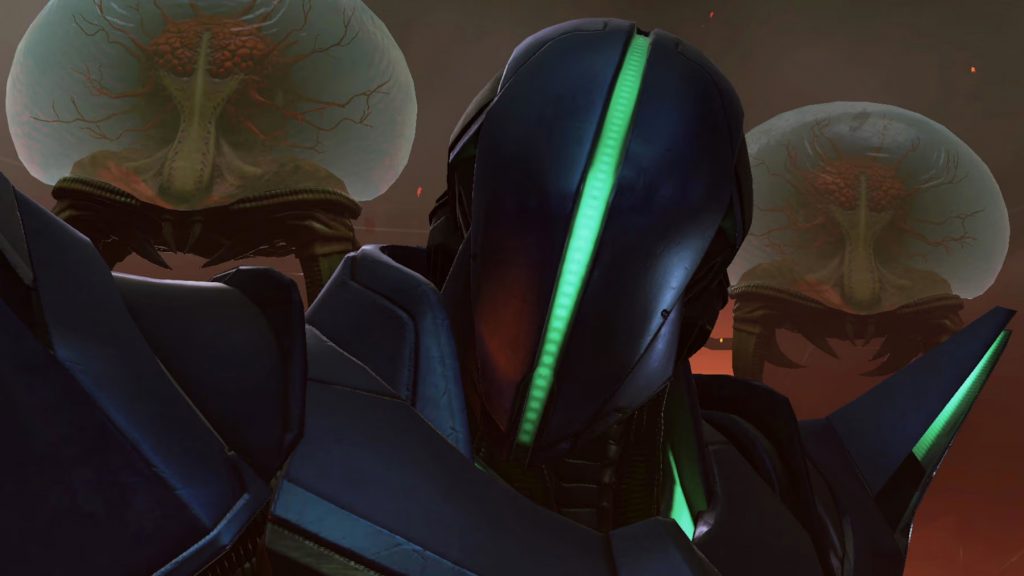
Taking place after Metroid Prime 3: Corruption, Samus receives a distress call from the UTC Research Center. The infamous Space Pirates, led by bounty hunter Slylux, are attacking the station. During a heated firefight with Slylux, a mysterious artifact gets hit and activates. Generating a powerful blast, the screen cuts to black.
Samus then wakes up on the strange planet, Viewrous. This mysterious location contains the history of the Lamorn, a race of creatures that utilize psychic powers and powerful technology. Samus is asked by one of the remaining Lamorn spirits on a mission: find the five teleporter keys and carry on their legacy.
In typical Metroid Prime fashion, the deeper narrative is revealed through scanning and studying the world around you. Similar to past games, the nuances and learning the deeper fates of the planet’s inhabitants were rewarding overall. In addition, Prime 4 features moments where cut-scenes reveal more information about the planet’s history as well.
Building the Team – NPCs & Allies
- Samus finds stranded Galactic Federation soldiers who are eager to help her on her mission. They do not overstay their welcome and have some enjoyable moments with the legendary bounty hunter.
Along the way, however, Samus comes across various Galactic Federation soldiers. They are also stranded on Viewrous, and when Samus finds them, they are eager to assist the legendary bounty hunter on her mission.
While early on it appears they will ‘be in the way’ of the tried-and-true exploration of Metroid Prime, it’s clear that after the first half hour or so, they leave you to your own devices for most of the adventure. And it also helps that, for me at least, they were all very likable characters.
The highlight was the GF Android VUE-995, who gave me major Titanfall 2 vibes with their interactions with Samus. By the time Prime 4 concludes, the entire crew of Federation allies joins Samus in the game’s final hours. I also enjoyed the character arc that Armstrong, a female GF Solder, went through. She, like many in the Galactic Federation, views Samus as a legendary figure. Having her hero interact with her was genuinely wholesome to see. But when the situation calls for it later in the adventure, she honors her hero, and I feel for her plight.
Failing Some Side Quests – The Stories Conclusion
While I enjoyed the first major ‘moment’ with everyone helping Samus out, I found myself disappointed with their ending. Without going into spoilers, I wasn’t emotionally moved by what my allies did. I was annoyed at how both they and Samus handled the situation they were in.
But overall, they were a noticeable improvement over the Ally NPCs and Bounty Hunters that Samus interacted with in Prime 3, specifically for their more vibrant personalities and how they stuck around the entire adventure.
Armed and Ready – Shooting Controls
- Prime 4 features responsive controls that meld the best of past Metroid Prime titles, while leveraging the newfound Mouse Mode and Gyro Aiming Switch 2 supports.
- Varied control schemes to choose from.
- Mouse Mode controls are somewhat negative due to the Switch 2 Joy Con size.
Metroid Prime 4: Beyond continues from where Prime 3 and the recent Metroid Prime: Remastered left off mechanically. Samus moves around using a first-person perspective, freely aiming with the right stick, and shoots with the right trigger.
In addition, Samus can use her secondary weapon with R and easily jump/dash with the L button. Her other trademark abilities, like the Morph Ball and Scan Visor, are activated using the face buttons. In many ways, it’s a streamlined version of Prime Remastered’s control scheme. This works great in handheld mode and when using the Switch 2 Pro Controller.
Due to being on Switch 2, Prime 4 heavily encourages the usage of free-aiming with either gyro controls or Mouse Mode controls. This provides multiple control options, making the game feel closer to a PC first-person shooter. Another control option is using the Joy-Con Detached Controls, which feel similar to how the Prime games were controlled on the Nintendo Wii.
My personal preference control-wise was using the Gyro Aiming to get better shots when the game demanded more precise aiming, as I found the Mouse controls hard to use for long stretches of time due to the size of the Joy-Con 2 controller. This was also an issue I had with the controls back when I played the demo at the Nintendo Experience event.
Driving Around – Vi-O-La Gameplay
- Samus has a bike, the Vi-O-La, to help explore the Desert of Viewrous.
- The bike features great controls and is fun to utilize, but the Desert doesn’t offer enough challenges/objectives to complete with it.
The biggest new addition to Samus’s roster of abilities is the Vi-O-La bike. This futuristic bike allows Samus to drive around the vast Desert of Viewrous with ease. The act of driving, boosting, and more is fantastic. The handful of times the game leverages this mechanic, it’s a lot of fun.
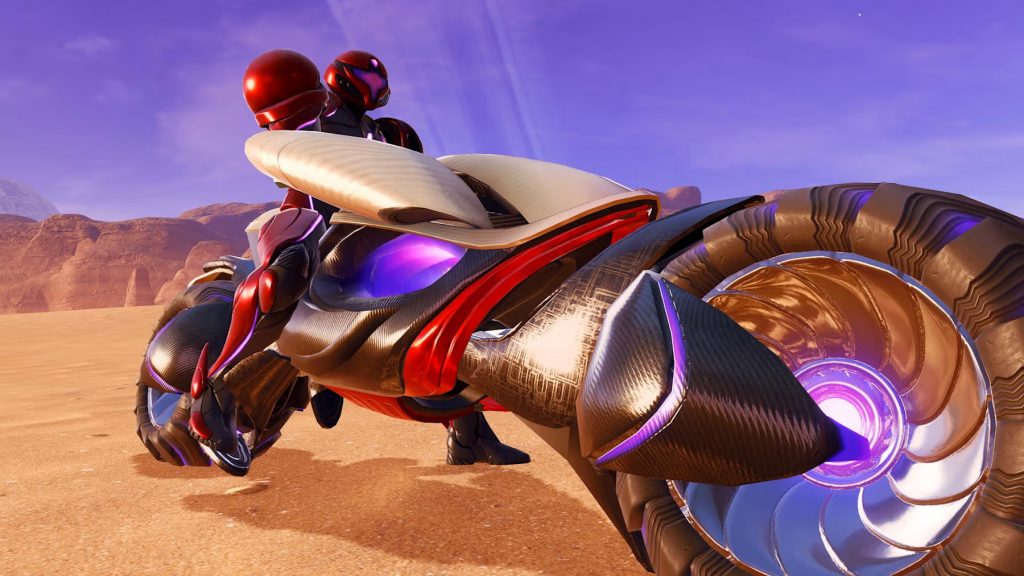
Vi-O-La is used for getting around the Desert Hub. Sadly, this leads to its biggest weakness, as there just isn’t much to do with the Vi-O-La bike. It’s Samus’ Epona, for all intents and purposes. That’s perfectly fine, but it should’ve been used more.
I could’ve easily imagined fun challenge courses that rewarded missile expansions, or races with the NPC characters, or even hidden time-trial courses to race through. But for its intended purposes, it works and is unintrusive.
The Mission – Game Flow and Progression
- The game features five main biomes, each with collectables and a key to discover to continue Samus’ journey.
- A majority of the dungeons are engaging to explore, though they are more linear compared to past Prime titles.
- Some dungeons are better than others, and the end-game content pushes frequent back-tracking.
Speaking of the desert, it connects the game’s five main biomes to explore. Samus must find five keys to get herself and her allies home, with each key residing in a unique dungeon. Covering familiar themes present in prior Metroid Prime games, they are semi-linear, encourage exploration, and allow revisits to collect everything.
Some of the dungeons have multiple layers, with standouts including the massive Volt Forge area with its many floors and the varied locations featured in the Ice Belt. They lack the depth of locations featured in Prime 1 and Prime 2, but offer enough exploration opportunities to be enjoyable.
Each dungeon isn’t visited only once, however. You will often revisit areas after collecting a new elemental shot type or a new ability. This approach largely works well, though, due to using the Vi-O-La bike to get from point A to point B, it can sometimes feel less like exploration and more like padding.
The final end-game side quests are a big example of this, composed of two missions to complete. One of these isn’t too bad if you collect green crystals during your adventure. However, the second (collecting machine parts) felt boring and dragged on longer than I would’ve liked.
It’s all in the Mind – Abilities & New Powers
- Samus regains abilities from past Prime games, such as the Grapple Hook and Boost Ball, while also discovering new psychic powers.
- The returning abilites are fun to use, specifically the Morph Ball-centric ones, but the new powers aren’t very original.
- But even with a lack of origianlity, abilities new and old are fun to utlize during Samus’ adventure.
In typical Metroid fashion, Samus discovers new abilities to help explore. When waking up on Viewrous, she loses most of her abilities, similar to past Prime games. But due to her newfound psychic powers, she gets new variations of abilities.
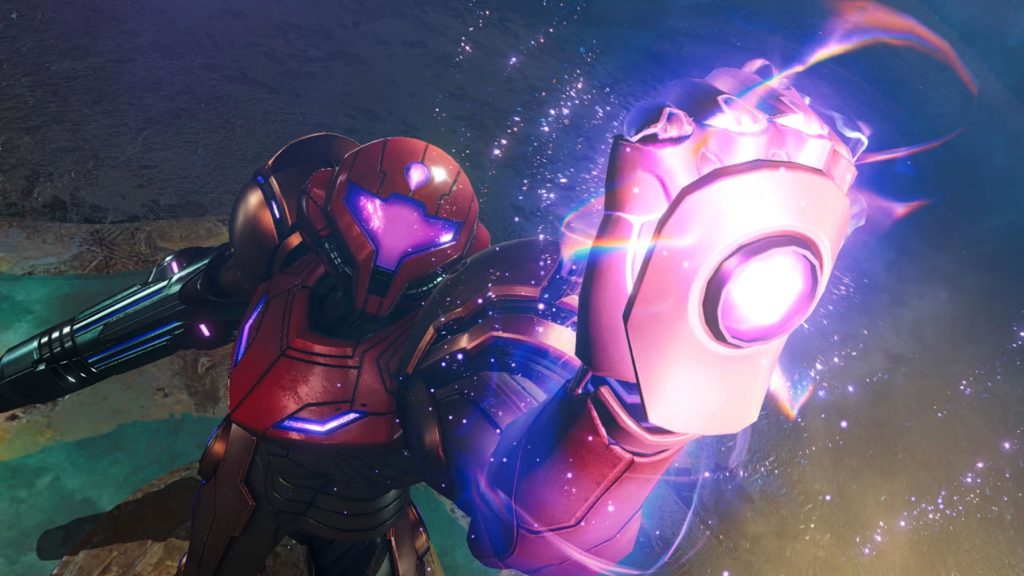
The Boost Ball, Power Bomb, Grapple Hook, and more return. These are fun to use, like in past games, but I particularly loved the platforming challenges centered around the Morph Ball. Using a combination of the Boost Ball to build up momentum and the Spider Ball’s magnetic abilities, some creative platforming can be pulled off.
However, the few genuinely new powers Samus learns don’t compare to past installments. Nothing is as creative as seeing Super Metroid abilities in 3D for the first time or the stress of Prime 2: Echo’s light/dark ammo management. Even if it’s a more standard set of abilities, they are fun to use.
Hunter Vs Hunted – Combat & Boss Encounters
- Prime 4 is more combat-focused, being more similar to Prime 3 than Prime 1. Samus’ arsenal is somewhat more limited than before, but new Elemental Shots work well alongside familiar firearms.
- Enemy encounters are engaging due to aggressive AI dodging attacks and deflecting missile fire.
- Boss encounters are a genuine highlight, leveraging all of the game’s main mechanics to keep Samus on her toes.
While exploration is critical to a Metroid experience, Prime 4 leans harder into its combat than any prior installment in the series. Samus’ moveset isn’t as varied when compared to past games, where she had multiple beam types. She trades these for elemental secondary shots. These, paired with the iconic Charge Shot, Missiles, and charged variations of the elemental weapons, give Samus a good arsenal to play with.
Making combat interesting is the fact that almost every enemy can dash away from attacks like you can. Some can even deflect your missile blasts. And in one particular dungeon, the combat encounters reminded me of when Master Chief fought the Flood in Halo: Combat Evolved, consistently spawning and keeping you on your toes.
Boss encounters are the best showcase of the game’s strong combat design. Almost every boss forces careful aiming and using all your abilities. My favorite boss encounters were Flair Pool’s final boss and the frequent boss encounters with Samus’ rival, Sylux.
Calling the Medic – Fighting with Ally NPCs
When fighting alongside ally NPCs, there are moments where Samus needs to stop fighting and use her newfound psychic abilities to heal them. Early on, these few moments aren’t too annoying, thanks to the low difficulty in early encounters.
But during the game’s final hours, this harmless mechanic becomes a source of frustration. During one particular boss encounter, Samus is torn between healing multiple downed allies and shooting at parts of a boss. When dealing with one or two allies, this mechanic was fine. But when multiple allies are on-screen, and you need to keep track of them and the big boss encounter, it’s not a fun experience.
A Lost Art – Presentation of Metroid Prime 4: Beyond
- Prime 4 features some of the best art direction in the entire Prime series, with various biomes rich with detailed assets and vivid colors.
- The game features fluid animation work, both inside and outside, of cut-scenes. Cut-scenes specifically look fantastic due to well-done animation and effective motion capture work.
- The one weak point is the bland-looking Desert Hub location, standing out like a sore thumb compared to the rest of Prime 4.
As a series always pushing visual fidelity on Nintendo hardware, Metroid Prime 4 continues to get the most out of Nintendo’s consoles. Using a mixture of striking art direction, fluid animation work, and high-quality assets, exploring the vast world of Viewros is a visual tour de force.
A standout location is the opening area of Furry Green. Sporting a lush forest area with a massive tree in the background as its core landmark, it’s visual stuck with me during my entire journey.
Every main dungeon location looks amazing, and it’s supported by amazing attention to detail. Little flourishes like Samus’ arm canon getting layers of frost in the Ice Belt or how charged blasts can sometimes make Samus’ eyes wince in her visor make the world feel alive.
A particular shoutout goes to the animation work during the games’ in-engine cut-scenes. Everyone is wonderfully animated, and the facial expressions on the Galactic Federation soldiers look realistic in a way that most Nintendo games normally don’t look.
However, one negative is the overall bland look of the desert hub. It lacks the visual punch and detail seen in every other aspect of the game. When locations like the dynamically evolving Volt Forge are present, it’s all the more galring.
The Soul of Prime – Music/Audio
- Powerful musical score that honors the work from prior Metroid Prime games, featuring atmospheric tracks that help players get lost in the various dungeons.
- Highlights include the main themes of Furry Green and Volt Forge.
- Strong audio design paired alongside effective music, with every action dynamically echoing across the game world.
- The desert music theme using minimalism is not nearly as effective when compared to other games using that approach, such as Sonic Frontiers and Legend of Zelda: Breath of the Wild.
By far the greatest strength of Prime 4 is its amazing soundtrack. Featuring atmospheric tracks that help you get lost in the game’s various dungeons, it perfectly captures the vibes from prior Prime games.
Furry Green’s main theme, alongside tracks like the intense Volt Forge and intense Sylux theme, honors the iconic Metroid sound. Not every music track is created equal, with the Desert theme noticeably sounding empty. It conveys the right emotional tone in the game, but when other games like Breath of the Wild or Sonic Frontiers have ‘quiet’ hub themes that stand tall alongside the entire overall score, it’s disappointing that Prime 4 doesn’t do the same.
While you can use additional music tracks when driving around the Desert, that feature is locked behind 100% completion. Or, you can instead buy the Samus Prime 4 Amiibo to unlock that feature early.
Overall audio design is very strong, with everything having a satisfying sound. From hearing your footsteps as you explore, to how the world dynamically reacts to the Morph Ball’s roll, adds to the experience.
Polished to a Sheen – Performance
The most impressive feat is Prime 4’s performance on both Nintendo Switch platforms. Playing the Switch 2 Edition, the game runs at a high resolution in 60 FPS. However, alongside that Quality Mode, there is also a Performance Mode, allowing the game to run at a locked 120 FPS in both TV and Portable Mode. Despite a resolution hit, visual settings are the same between the modes.
When playing the game on Switch 1, the game still maintains a locked 60 FPS, similar to Prime Remastered’s performance.
Closing Thoughts on Metroid Prime 4: Beyond
As a casual fan of the Metroid series but familiar with past Prime titles, I went into Prime 4: Beyond expecting one of the best games of 2025. Retro Studios is infamous for creating some of the greatest games of all time. Metroid Prime is a classic, and their work on the modern Donkey Kong Country games speaks for itself.
However, after completing my 15-hour adventure, I couldn’t help but feel disappointed in a few elements. The core Metroid Prime spirit is on full display in the game’s stunning art direction and outstanding musical score; it is also a showcase for Switch 2’s hardware. Sadly, though, some elements just don’t come together. A lackluster hub, unneeded padding, underutilized bike mechanics, and a disappointing conclusion dampen what is otherwise a solid first-person shooter and a strong start to a new series of adventures in the Metroid Prime series.
Score: 8 out of 10
This game was reviewed using a copy purchased by the reviewer.
Pros:
- Outstanding art direction
- Powerful audio design and an overall amazing musical score
- Impressive Performance in both handheld and docked modes
- NPCs don’t hinder exploration much
- The Dungeons are largely well-designed and fun to explore
- Boss Encounters are engaging and well-designed
Cons:
- Backtracking can feel like padding towards the endgame
- Not all dungeons are created equal
- Joy-Con 2 Mouse Mode can feel uncomfortable after long play sessions
- Music Options for the Vi-O-La Bike Desert Exploration locked behind 100% Completion or Amiibo Unlocks
- Having to heal NPCs during combat encounters can be frustrating during the End-Game combat encounters
- Disappointing Conclusion
