
What is Keeper?
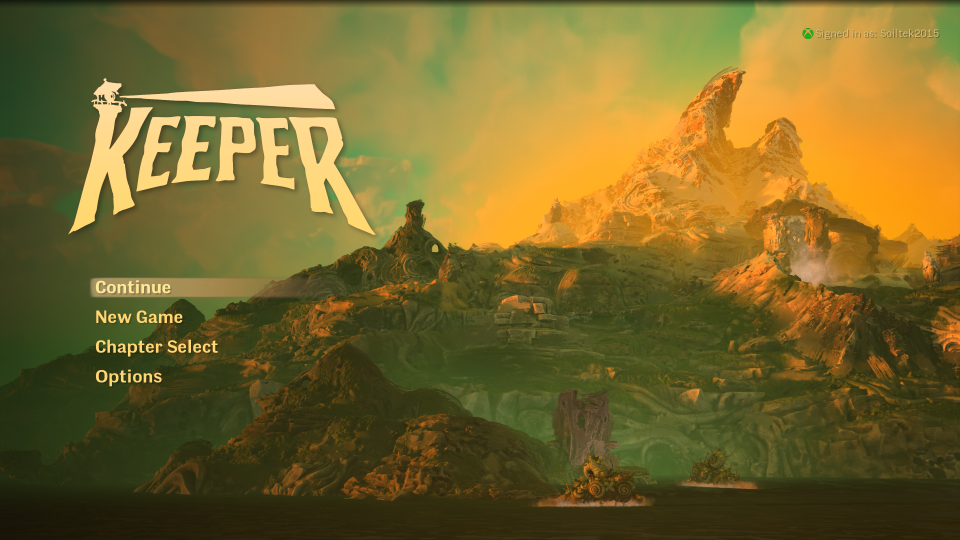
Keeper by Double Fine is not the kind of game you play for challenge— it’s a surreal journey that values your time, inviting you to slow down and absorb something beautiful. It’s the kind of game you play when you want to slow down, absorb something beautiful, and experience a story that unfolds more through feeling than through dialogue. Or if you only have a few minutes to unwind with a simple game with a surreal art style. At its core, Keeper is a short, mostly linear adventure built around simple mechanics, strong visual design, and a deeper, unwieldy narrative that quietly reveals itself if you’re willing to look for it.
Developer & Publisher // Double Fine Productions, Xbox Game Studios
Platforms // Windows, Xbox Series X/S, Xbox Cloud, Game Pass & Steam
MSRP & Release Date // $29.99, October 17, 2025
A Surreal Journey That Values Your Time
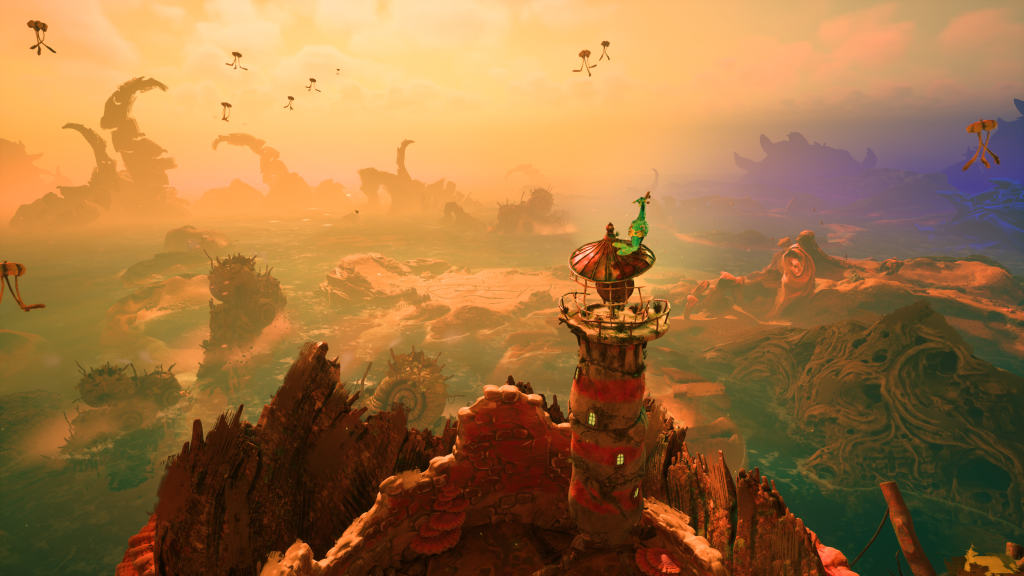
When the game begins, you wake up in a mysterious world with very little context. The opening moments are slow and almost feel like a walking simulator. You learn to walk, you get your bearings, and the game gently pushes you forward. There’s very little explanation about where you are or why you’re there. But that lack of information feels intentional. Keeper, while on rails, wants you to discover its world rather than be told about it.
And that discovery is really what drives the experience.
Art Direction and Visual Design
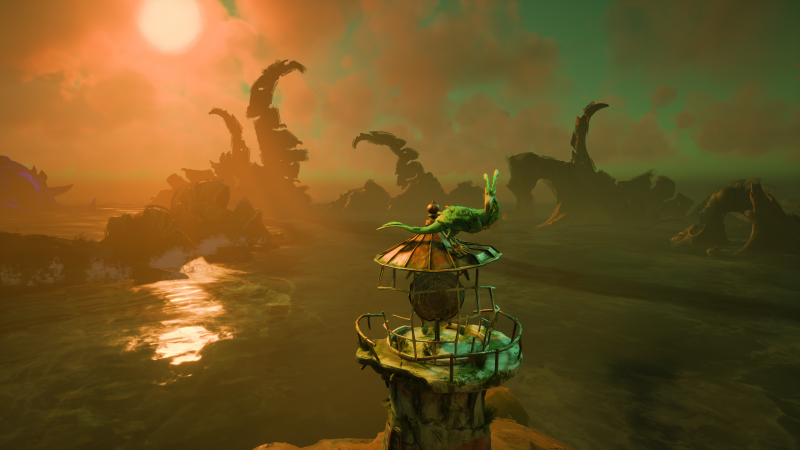
The best thing about Keeper, and the element that carries the entire experience, is its beautiful art direction. At its heart, it’s an arthouse title that begs you to appreciate its beauty.
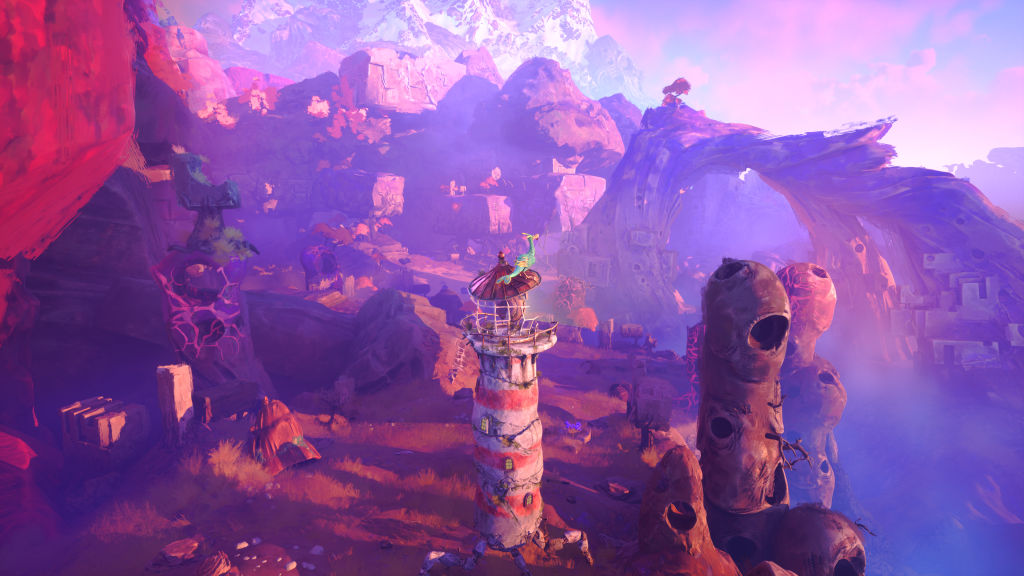
Early on, I initially thought the game had a watercolor-style palette. The colors are soft, expressive, and almost painterly. But as I continued playing, I realized it’s not strictly watercolor. The visual style becomes something much more surreal and dynamic as the game progresses. I’d conclude that it’s a painterly art style.
There were multiple moments where I stopped moving entirely to take in the scenery. Horizons stretch out to you with incredible compositions of color and light. The environments feel like living paintings. I’m not normally someone who takes screenshots in games, but Keeper had several moments where I genuinely wanted to capture the scene.
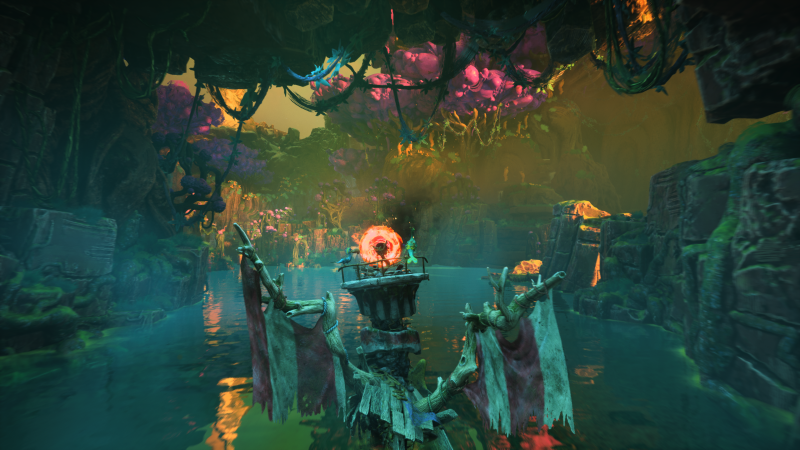
And what’s interesting is that the visuals evolve alongside the story. As the game progresses toward its later stages, the environments become more surreal and more intense. The backgrounds begin to feel almost symbolic rather than literal. It’s as if the world itself is reacting to the emotional direction of the story.
By the end of the game, the environments are far more abstract and dreamlike than when you started. That progression gives the visual experience a sense of escalation that the gameplay itself doesn’t necessarily provide.
Gameplay and Mechanics
If there’s one thing that might divide players, it’s the gameplay. Keeper is extremely simple: on-rails with a simple move set. If you are looking for depth of mechanics and systems, this isn’t the game for you.
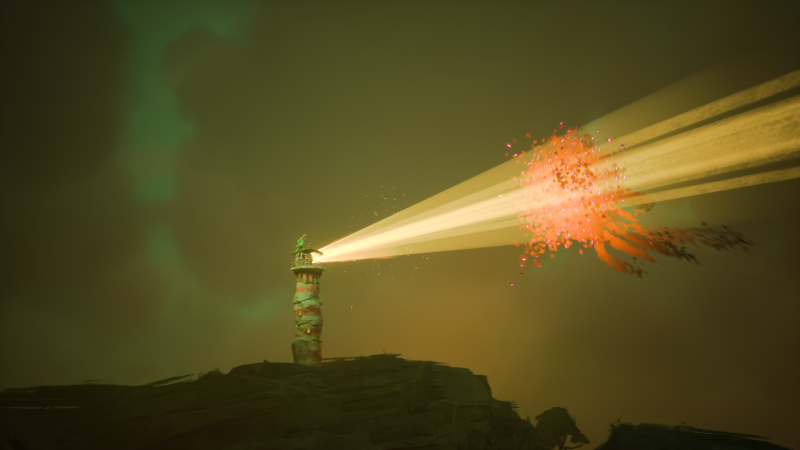
For most of the game, your actions are limited to walking forward, walking backward, shining a light, and interacting with puzzles using your bird companion. The structure is very linear, and there is usually only one or two directions you can move at any given time. It’s very much an on-rails experience, and that’s not a bad thing in this day of forced open-world exploration, which can be a burden if you only have a few moments to game. And this game delivers on progression for those few moments you give it.
The puzzles themselves are not particularly difficult at all. In fact, they’re intentionally straightforward. But I think that simplicity is part of the design philosophy. Because the gameplay isn’t demanding, you’re able to focus your attention on the world itself. The art, the environments, and the mood become the primary focus instead of mechanical mastery.
In that sense, the puzzles act more like pacing tools than actual obstacles. Near the end of the game, the mechanics do shift slightly. Without spoiling anything, the way you move through the world changes, and the overall pace increases. The experience becomes more intense, which helps keep the game feeling fresh during its final stretch.
But overall, this is not a mechanically complex game, and that’s clearly intentional.
Narrative and Themes
One of the most interesting things about Keeper is how it delivers its story. Or should I say stories? There are a couple of storylines presented, with the bird companion narrative being the obvious one. Keeper operates with a sub-narrative that is told by the environment and the odd NPCs. And this particular narrative is hard to piece together. This reinforces that Keeper is a surreal journey that values your time, rewarding players who pay attention to the emotional arc rather than explicit exposition.
During the actual gameplay, there’s very little dialogue and almost no direct explanation of what’s happening. If you simply play through the game and never look deeper, the story may feel minimal or even absent.
But the sub-narrative is actually hidden within the achievement system. Many achievements unlock fragments of lore, which describe the world’s culture and history. These descriptions provide context about what happened in the past and what role the keeper plays in that world.
When I first finished the game, I hadn’t fully realized that the achievements were where the sub-story lived. After rolling credits, I went back and spent another hour or two unlocking the remaining achievements. Only then did the sub-narrative kind of make sense. Honestly, I’m still not completely sure what the sub-narrative story is.
The central emotional thread, and the main story, revolves around the bird companion you encounter early in the game. The bird appears to be separated from its family, and your role as the keeper becomes tied to helping guide the companion through the world.
The bird eventually becomes more than just a gameplay mechanic. It becomes a metaphor for the player themselves — something small navigating a larger, mysterious world while trying to find its way back to where it belongs.
Without giving away spoilers, the story ultimately builds to tie together the themes of loss, companionship, and adventure.
Sound and Atmosphere
If the visuals are the strongest part of Keeper, the audio is probably the most understated.
The music never stood out in a particularly memorable way. That’s not necessarily a criticism — it just means the soundtrack isn’t trying to dominate the experience. It instead quietly supports the world’s mood.
Most of the emotional impact comes from the visuals rather than the music. In some ways, the restraint in the audio design reinforces the game’s contemplative nature. It allows the environments and colors to carry the emotional weight.
Pacing and Length
Keeper is relatively short, running around three to six hours, depending on how thoroughly you explore the achievements. Perfect for a profiled handled gaming experience, Keeper values your time if you give it a chance
For me personally, the pacing felt steady throughout the game. There’s a consistent sense of forward progression, which creates that small dopamine hit of “I’m moving through the story.” For those limited on time, this hits, even in small sessions.
What’s interesting is that the game works well both in long sessions and in short bursts. Because the mechanics are simple, you can step away for a while and come back later without feeling lost.
In my case, I actually played the game across bursts due to limited gaming time. But when I returned to it, I never felt like I needed to relearn the controls or mechanics; they were that simple. That accessibility made the experience feel very welcoming.
Final Thoughts on Keeper
In many ways, Keeper feels like a palette cleanser in between deeper gaming experiences. It ultimately stands out as a surreal journey that values your time, offering a focused, emotionally resonant experience without unnecessary complexity.
It’s the kind of game you play between larger, more demanding titles. The mechanics are simple, the pacing is calm, and the experience respects your time. It’s also a perfect fit for services like Game Pass, where shorter games can shine. It’s been said that the term Game Pass fodder exemplifies this short experience, in the perjorative. I disagree. Services like Game Pass need a consistent supply of titles like Keeper for players who value their limited gaming time.
But that simplicity shouldn’t be mistaken for a lack of artistry. The visual design is exceptional, and the emotional arc, particularly the relationship between the player and the bird companion, gives the experience a quiet resonance that sticks with you.
The biggest potential criticism is the way the story is hidden behind achievements. Players who never check those descriptions may miss a significant portion of the narrative. But for players willing to dig a little deeper, Keeper offers a surprisingly thoughtful and visually stunning journey.
It’s not a game for people looking for complex mechanics or intense challenges. But if you want a short, beautiful experience that feels like walking through a surreal painting, Keeper is absolutely worth your time.
Final Score: 7.5/10
Note – A key was provided for the purpose of this review.
Pros
- Beautiful, surreal art direction that evolves and carries the entire experience
- Simple, accessible gameplay that’s easy to pick up and return to
- Strong emotional core through the bird companion
- Steady pacing and short length that respects the player’s time
- Visual progression mirrors narrative intensity
Cons
- The story is largely hidden in achievements, making it easy to miss
- Very limited gameplay depth with minimal challenge
- Highly linear, on-rails structure
- Audio and music are not memorable
