
The State of the Video Game Industry in 2026
The video game industry outlook in 2026 points to a market shaped by hardware uncertainty, evolving subscription models, and an increasing reliance on blockbuster releases like GTA 6. The industry may appear stable on the surface, but according to Circana analyst Mat Piscatella, the reality beneath the top-line numbers tells a very different story.
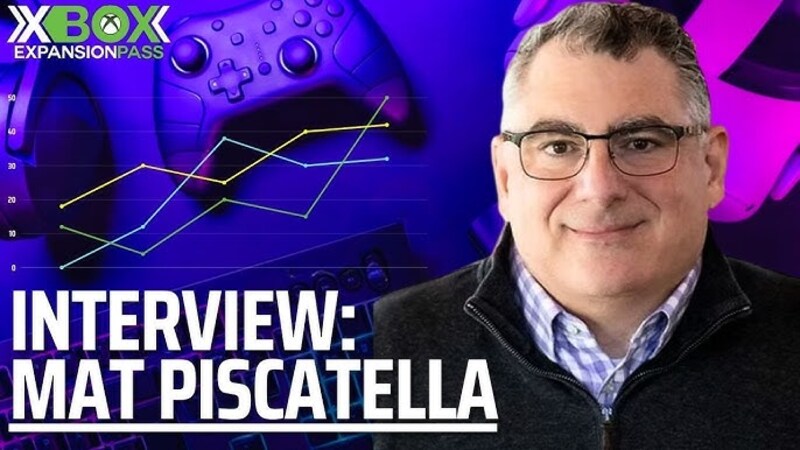
In a recent on-the-record interview recorded this week on Xbox Expansion Pass, Piscatella discussed hardware uncertainty, subscription economics, discoverability challenges, and why Grand Theft Auto VI has become a critical pressure point for the entire market heading into 2026
This isn’t your typical news piece or interview recap. What follows is a curated selection of key topics and quotes from Mat Piscatella, highlighting several important conversations currently shaping the video game industry.
Hardware Volatility Is Reshaping the Console Business
Piscatella pointed to component instability—particularly memory and supply constraints—as one of the industry’s biggest structural challenges right now.
“It’s the RAM issue, it’s the component issue — and how that is extending to everything in a very rapid manner.”
The unpredictability of global supply chains has made long-term hardware planning increasingly difficult. As Piscatella put it, the assumptions manufacturers rely on today may no longer apply tomorrow.
“What you know today, you don’t know for tomorrow.”
That uncertainty directly affects pricing strategies, availability, and even how console platforms position themselves to consumers.
“This is a very interesting time to try to figure out how to sell a video game box.”
Record Spending Masks a Market Under Pressure
While consumer spending remains near record highs, Piscatella warned that surface-level stability is hiding intense competition underneath.
“On the surface it’s calm — underneath the surface there’s tremendous churn.”
The core issue isn’t engagement—it’s saturation. Player counts have largely plateaued, while the number of games released continues to rise every year.
“We’ve basically hit a ceiling on player count, but we’ve continued growth in the number of games being released every year.”
That imbalance has made success increasingly zero-sum.
“There just aren’t the dollars and players to spread equitably among games anymore.”
Subscription Growth Is Now About ARPU, Not Players
Piscatella explained that subscription services are no longer focused on expanding their audience. Instead, the strategy has shifted toward increasing revenue per user.
“That’s the name of the game now. Improving revenue per user, not growing the audience.”
Price increases are doing most of the heavy lifting.
“The bet is that increased spend per user offsets any decline in subscribers.”
As hardware prices climb, subscription value propositions change as well. Sometimes uncomfortably so.
“That’s a pretty steep price to pay for a Game Pass sub — but the value proposition changes if hardware prices keep rising.”
Hardware Scarcity Could Normalize ‘Renting’ Games
If consoles become harder to acquire or significantly more expensive, Piscatella sees cloud gaming and service-based access accelerating out of necessity.
“If you can’t get a hardware device, what are your options? You’re cloud gaming.”
He framed the trend in blunt terms.
“The most cynical outlook is forcing people to rent computing power, and that applies to gaming too.”
Rather than replacing traditional ownership overnight, scarcity may gradually push players toward access-based models by default.

Why GTA 6 Is a Make-or-Break Moment for 2026
Piscatella emphasized that few releases have ever carried as much weight as Grand Theft Auto 6.
“Grand Theft Auto 6 is critical for the market this year, especially for consoles.”
Circana projects U.S. game spending to reach $62.8 billion, but that projection hinges heavily on Rockstar’s next release.
“We’re projecting U.S. game spending to reach $62.8 billion, and that projection relies heavily on GTA 6.”
The scale of its impact is hard to overstate.
“That’s how meaningful one release can be to the entire industry right now.”
Discoverability Is the Industry’s Quiet Crisis
Even great games struggle to break through in today’s storefront-driven ecosystem.
“Discoverability is one of the biggest challenges. You can have a great game and still never get in front of people.”
Piscatella noted that a small number of live-service titles dominate platform visibility week after week.
“The same ten games dominate console storefronts week after week.”
AI-generated content could make the problem even worse.
“If AI enables hundreds or thousands of casual games a day, discoverability gets dramatically worse.”
Why CCU Metrics Don’t Tell the Whole Story
Finally, Piscatella cautioned against treating concurrent-user counts as a definitive measure of success.
“CCUs do not tell the whole story.”
He criticized how public dashboards have shifted the conversation away from quality and long-term value.
“We’ve turned SteamDB charts into a proxy for success instead of asking if a game is worth playing.”
The Bigger Picture
Shout out to Insipid Ghost for this amazing interview with Mat Piscatella about the 2026 video game industry outlook. All of which you can catch in full on the Xbox Expansion Pass YouTube channel. This isn’t the first time we have been able to garner information about important topics from interviews on his channel.
Taken together, Piscatella’s comments paint a picture of an industry that is financially strong but structurally strained. Currently reliant on fewer hits, higher prices, and platform-controlled visibility to sustain growth. As hardware costs rise, subscription economics evolve, and blockbuster releases like GTA 6 shoulder more responsibility than ever, the margin for error across the industry continues to shrink.
Attribution Note
Quotes sourced from an on-the-record interview with Mat Piscatella, Executive Director and Video Game Analyst at Circana, conducted on Xbox Expansion Pass. Interview notes provided by Luke Lohr (Insipid Ghost).
