
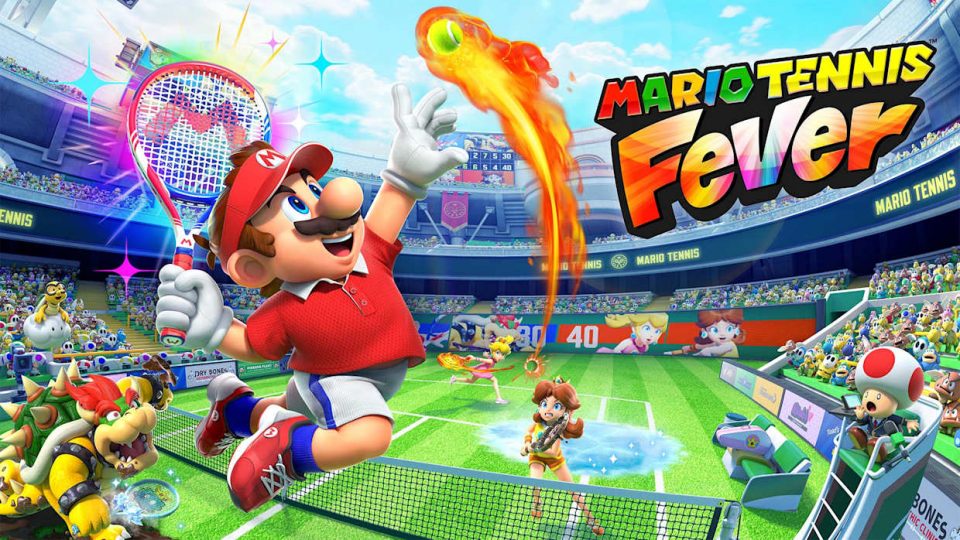
What is Mario Tennis Fever?
In my preview earlier this year, I was already sold on the potential of Mario Tennis Fever. Aces was the best competitive Mario Tennis game ever made, but it left a significant portion of players on the sidelines. Its content was sparse, especially at launch; its casual offerings were thin, and its single-player campaign was short and mediocre.
The Switch 2 follow-up from Camelot sets out to address every one of those criticisms. After pouring around 25 hours into the game across Adventure mode, Trial Towers, Tournaments, and more online ranked matches than I can count, I can say with confidence: Camelot delivered. Mario Tennis Fever is the best all-around Mario Sports game in over a decade—content-rich, mechanically deep, and built for everyone from first-time players to seasoned competitors.
Developer & Publisher: Camelot Software Planning / Nintendo
Platform: Nintendo Switch 2
MSRP: $69.99
Release Date: February 12, 2026
Presentation & Soundtrack — Brighter Courts, Blander Beats
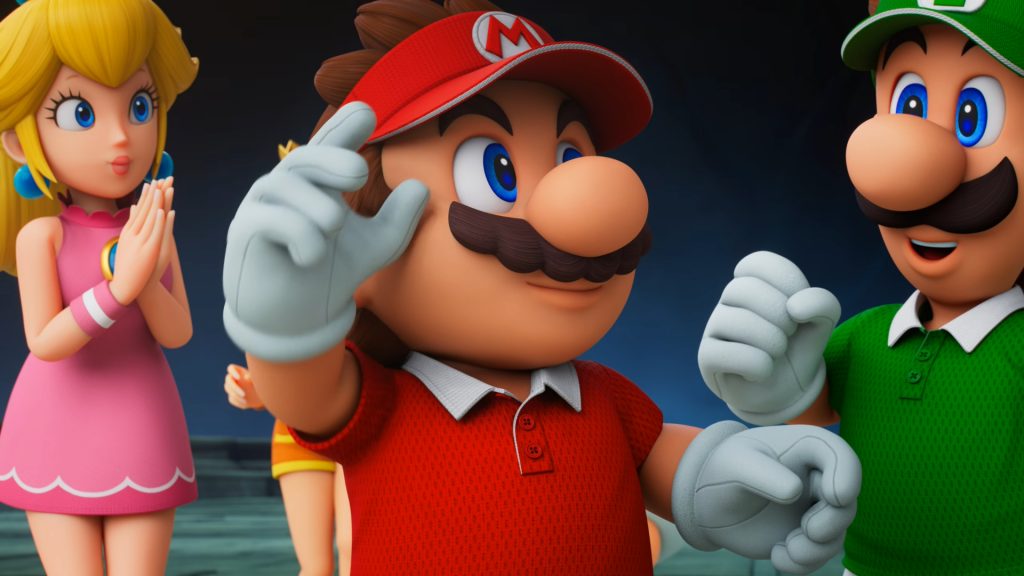
- Mario Tennis Fever is a noticeable visual step up from Aces’ washed-out look, featuring a more vibrant, HDR-friendly tone that finally feels like a game set in the Mario universe.
- The soundtrack brings more variety than Aces but still leans too heavily into a bland sports stadium vibe, missing opportunities to tap into Mario’s rich musical history.
Visually, Mario Tennis Fever corrects one of Aces’ quiet failures. Where Aces felt sterile and pale, Fever pops with the kind of vivid, saturated energy that feels authentically Mario. HDR support makes a genuine difference, and the colors shine in a way that makes Aces look like a beta build in hindsight. Details are sharper than what you’d expect from a Switch title, though it’s worth noting that next to other Switch 2 showpieces like Donkey Kong Bananza or Mario Kart World, Fever doesn’t push the envelope as much with its art direction and animations.
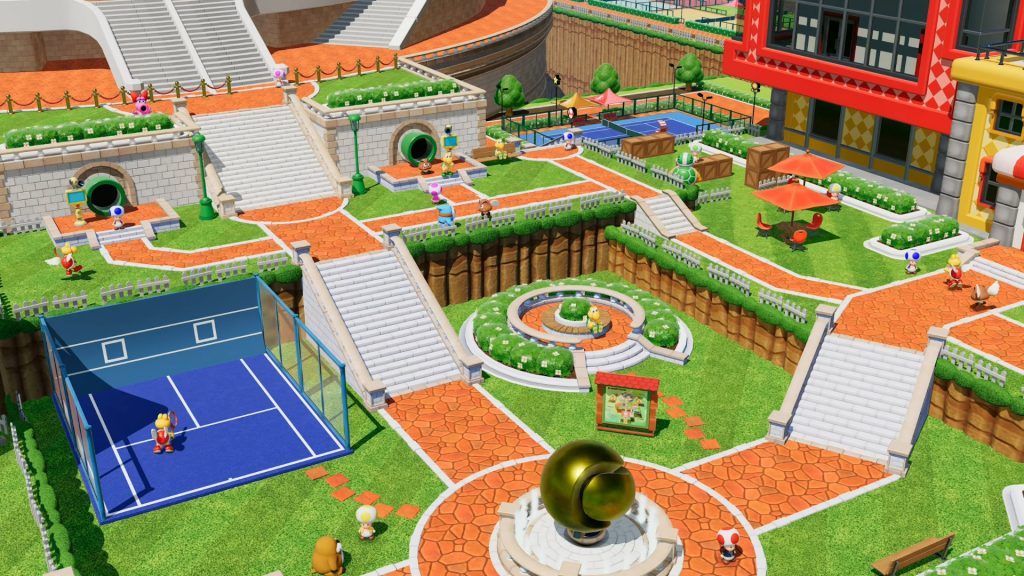
Although it’s on a smaller scale, the characters can come off as stiff and unexpressive comparatively. There’s also a lot of reused animations from Aces, but that’s not uncommon for sports games. Where the presentation truly shines is in the Adventure mode’s world and environment designs—they’re dense, aesthetically pleasing, and full of personality. The Tennis Academy is beautiful and really makes exploring it a visual treat.
The soundtrack is the one area where Fever doesn’t fully capitalize. It’s more varied than Aces, which isn’t a high bar, but it still doesn’t lean enough into the whimsical charm that defines Mario’s musical history. You’re mostly getting energetic stadium tracks where you deserved something wilder, something that felt like it belonged in the same universe as Odyssey or Galaxy. Mario Kart World is the perfect example of accomplishing this, and a handful of the Adventure Mode and special court tracks bring that energy, but the vast majority of the soundtrack feels formulaic and monotonous. It’s not bad, it’s just safe.
Adventure Mode — Back to the Academy
- Mario Tennis Fever meaningfully improves on Aces’ single-player by blending the beloved GB/GBA Tennis Academy campaign style with creative boss battles in a charming quest to restore Mario from baby form.
- The adventure portion feels barebones in terms of exploration and challenge.
The Adventure mode was always going to be Mario Tennis Fever‘s most closely watched feature. It’s a step forward, but it needs improvement. Mysterious monsters transform Mario, Luigi, Peach, Wario, and Waluigi into babies, forcing them to rebuild their tennis skills from the ground up. It’s a premise that gives Camelot license to revisit something fans have been wanting since Power Tour: the Tennis Academy.
The Academy section is Fever at its most charming. You learn techniques from Toad, play matches against students, take tennis quizzes to test your understanding of tennis, and challenge higher-ranked players to climb from JV up to Rank A. Minigames round out the Academy experience, though they’re a mixed bag. Winged Run and Sync & Spin were genuinely fun and offered a real test. Hop Pursuit and Hefty Haul were either too easy or frustratingly unintuitive. You can explore the Academy freely, though there isn’t much to find beyond dialogue with the assorted Koopas, Toads, and Goombas milling around the grounds.
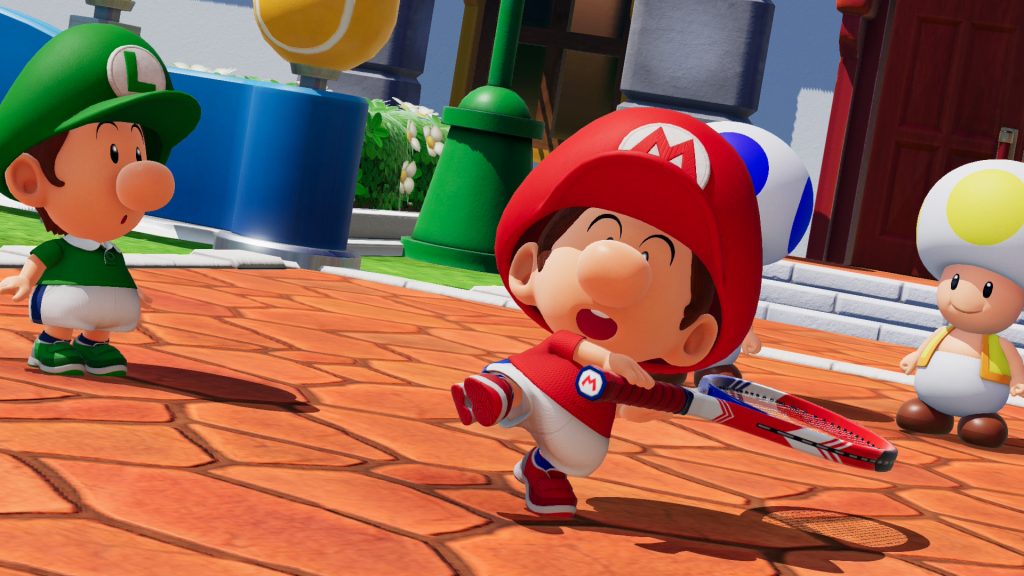
Once you’ve climbed the ranks, you set out on the adventure to reverse the baby curse. It’s here that the mode starts to falter somewhat. The exploration is disappointingly barebones—no real puzzles, no secrets tucked away, no sense of discovery. You’re just following a path to the next battle. The bosses, however, are a genuine highlight. Each one brings a creative mechanic that makes them feel more than just a tennis match and genuinely memorable. For example, battling Bowser upon his Air Ship, hitting Bullet Bills back at the ship while dodging incoming fire from above was hectic, cinematic, and fun. All in all, it’s a decent campaign for single-player-only players and a great tutorial for newcomers.
Extra Modes — Something for Everyone
- Trial Towers adds more single-player depth that rivals the Adventure mode in sheer engagement, with 130 challenges.
- Mix It Up, Free Play, Tournaments, and GameShare round out an already packed offering, giving every type of player a reason to stay at the net.
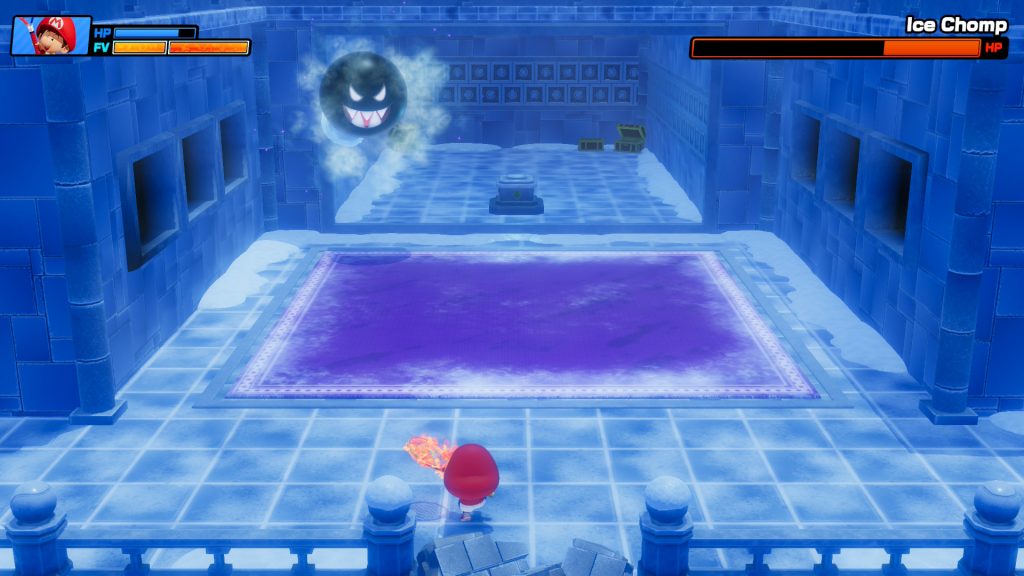
Trial Towers adds more single-player depth that rivals the Adventure mode in sheer engagement. Structured like Event Matches in Super Smash Bros., each of the 130 trials drops you into a themed challenge with a preset player, racket, stage, and opponent. Earn up to three stars per trial by hitting objectives like winning without dropping a point, countering all Fever Shots, or surviving without getting frozen or electrocuted. The difficulty ceiling on three-starring everything is considerably higher than anything the Adventure mode throws at you, and it gives completionists plenty to chase.
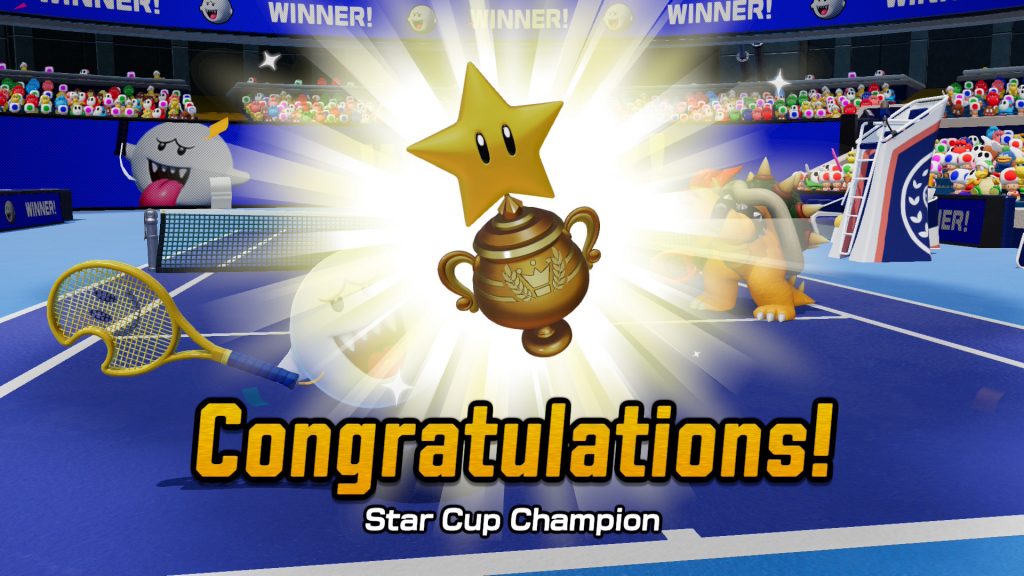
Mix It Up injects some welcome chaos in Mario Tennis Fever with five special match types—Wonder Court Match, Ring Shot, Forest Court Match, and more—that twist the rules enough to feel like a party game mode without losing the tennis fundamentals underneath. Tournament Mode pits you against a bracket of CPU-controlled foes with 3 increasingly difficult cups to compete for. Free Play lets you set your own rules and experiment freely, making it the go-to for couch sessions without any stakes. Swing Mode returns for Joy-Con 2 motion-controlled matches for anyone who wants a more physical experience.
GameShare lets a single copy of Fever extend to up to three additional players on their own Switch 2 or original Switch systems. For a Mario Sports title built around local multiplayer chaos, it’s one of those features that sounds like a footnote until the first time you actually need it.
Characters & Stadiums — Building Your Perfect Matchup
- 38 characters with unique stats and signature shots, combined with court-specific stadium effects, create a strategic layer deeper than anything the series has attempted.
The roster is the largest in Mario Tennis history, and it earns that distinction. All 38 characters come with distinct stats—speed, power, technique, and more—but what sets Fever’s cast apart is that individual characters also bring unique shot properties. Certain characters throw vicious curves on their slices; others launch drop shots that barely bounce. Building around a character isn’t just about stats; it’s about how their toolkit meshes with your Fever Racket of choice. The roster runs from stalwarts like Mario, Luigi, Peach, and Bowser to deep cuts like Goomba, Nabbit, Wiggler, and Spike, with series newcomers like Baby Wario and Baby Waluigi adding fresh wrinkles.
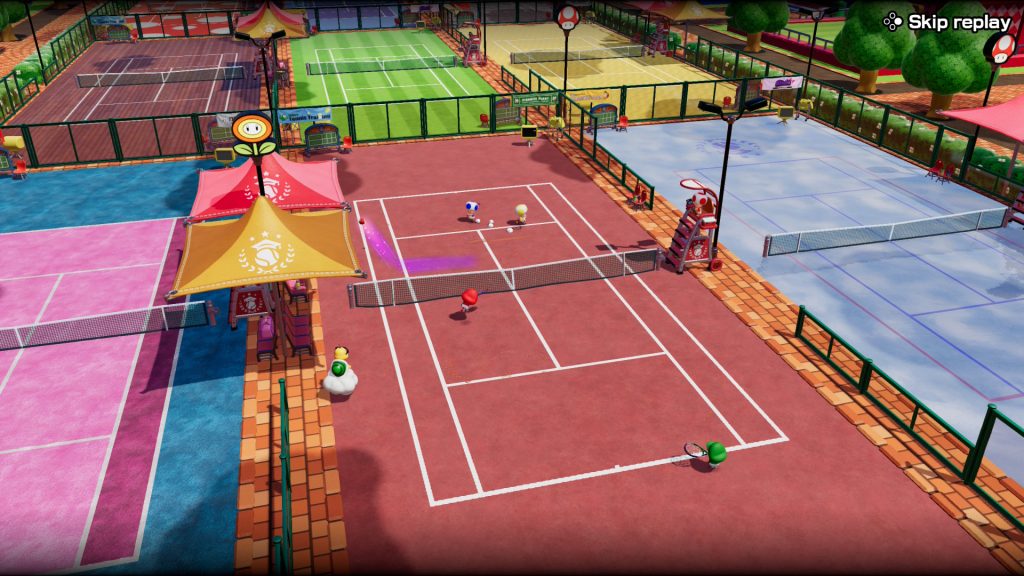
Stadiums add another dimension that makes the match setup feel like a deliberate decision rather than set dressing. The sand court makes drop shots devastating, given the minimal bounce. The grass court amps up ball speed, which gives Power-type characters a significant edge. Choosing your court—or letting your opponent choose theirs—carries real strategic weight.
Gameplay — Fever Rackets Bring the Heat
- Fever Rackets are the game’s defining evolution—powerful and satisfying to use, but double-edged and counterable, creating some of the most intense rally exchanges in the franchise’s history.
Fever Rackets are the game’s biggest swing, and they connect. Veterans of Aces will recognize the concept—fill a gauge, unleash a powerful shot—but where Special Shots were primarily about raw power and breaking your opponent’s racket, Fever Rackets bring a wider variety of effects that shift based on what both players bring to the court. The 30 available rackets each carry a unique ability: the Amp Racket plants electrical charges that, when connected in a triangle, stun anyone who crosses the field. The Mud Racket slows opponents caught in the impact zone. The Ice Racket turns patches of court into a slippery tundra.
What makes them genuinely exciting is the counter system. Hit a Fever Shot back before it bounces on your side, and you reverse the effects onto the opponent—turning their own weapon against them. The resulting back-and-forth creates a hot-potato tension that makes rallies genuinely dramatic. Fever Shots also deal HP damage; deplete your bar, and you lose Fever Gauge access for ten seconds. In doubles, a knocked-out player sits out that stretch entirely, leaving their partner to hold the court alone.
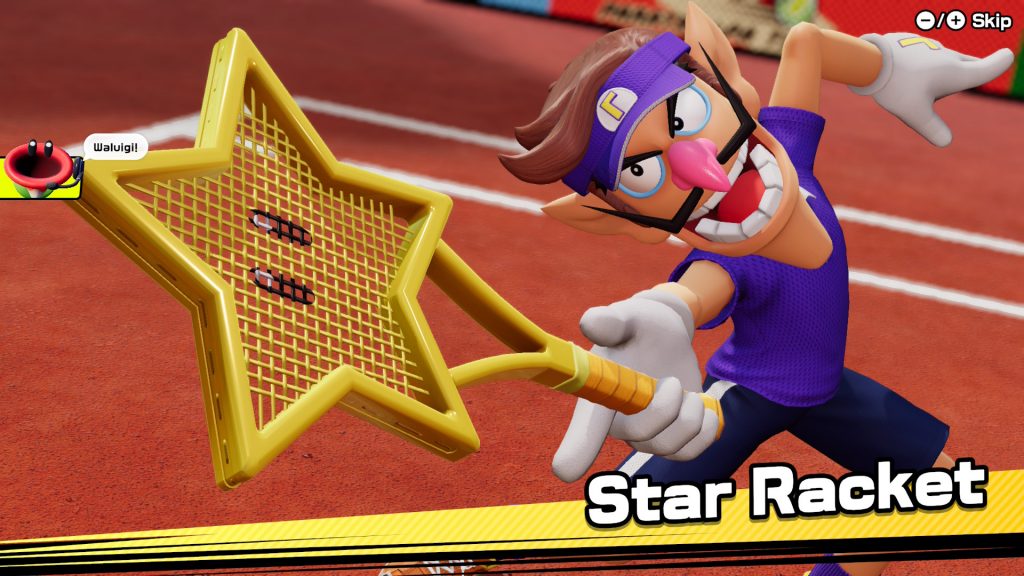
Not every Fever Shot is an offensive weapon, though—some can’t be countered and enhance your own play instead. The Star Racket offers a speed boost and brief invincibility that neutralizes opposing Fever Shots. The Swerve Racket bends every shot into wild curves. The Golden Dash Racket rockets you across the court to retrieve otherwise unreachable balls. This defensive layer solidifies Fever Rackets as a multifaceted game-changer. The kind of mechanic that makes it hard to imagine a future Mario Tennis without it.
Gameplay, Part 2 — Competitive Itch and Completionist Tick
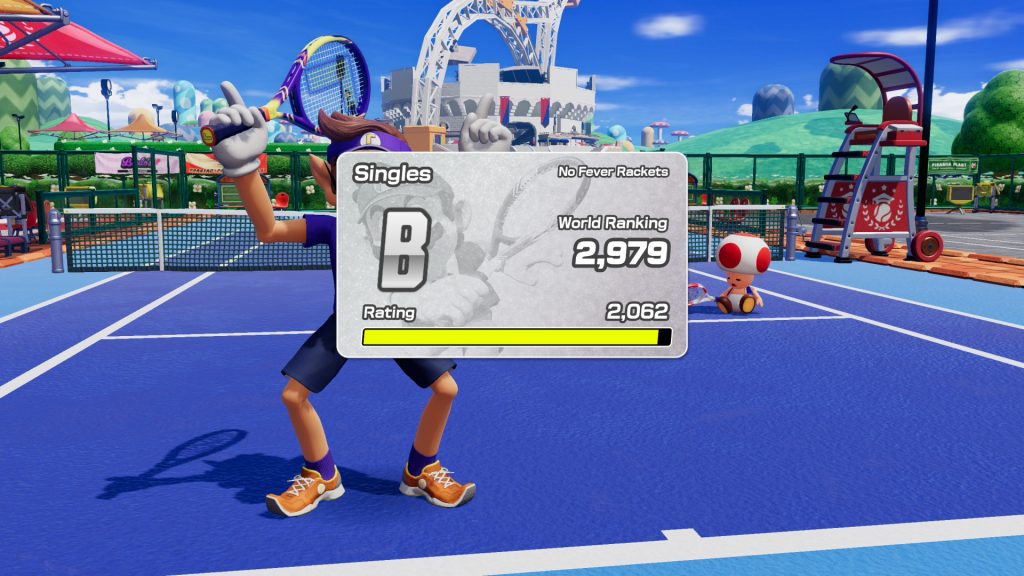
- Online play is even more punishing and rewarding than Aces, with ranked matches that derank losses just as aggressively as wins rank you up.
- An in-game achievement system rivaling Super Smash Bros. and Kirby Air Ride provides meaningful unlocks—characters, stadiums, and Fever Rackets—without outsourcing the reward loop to internet bragging points.
Online is where Mario Tennis Fever‘s competitive faithful will live, and it delivers. Ranked play is unforgiving in the best way: losses derank you just as aggressively as wins rank you up, and the resulting climb feels earned. What’s impressive is how balanced matches feel despite the sheer number of characters, stadiums, and Fever Racket combinations available—I haven’t encountered a dominant meta being abused in my online journey so far, which speaks to how well Camelot tuned the system. The one sad omission is Aces‘ Online Tournament structure, which gave competitive play a more formal stakes-driven format that Fever is currently missing. It’s a noticeable gap for players who lived in those brackets.
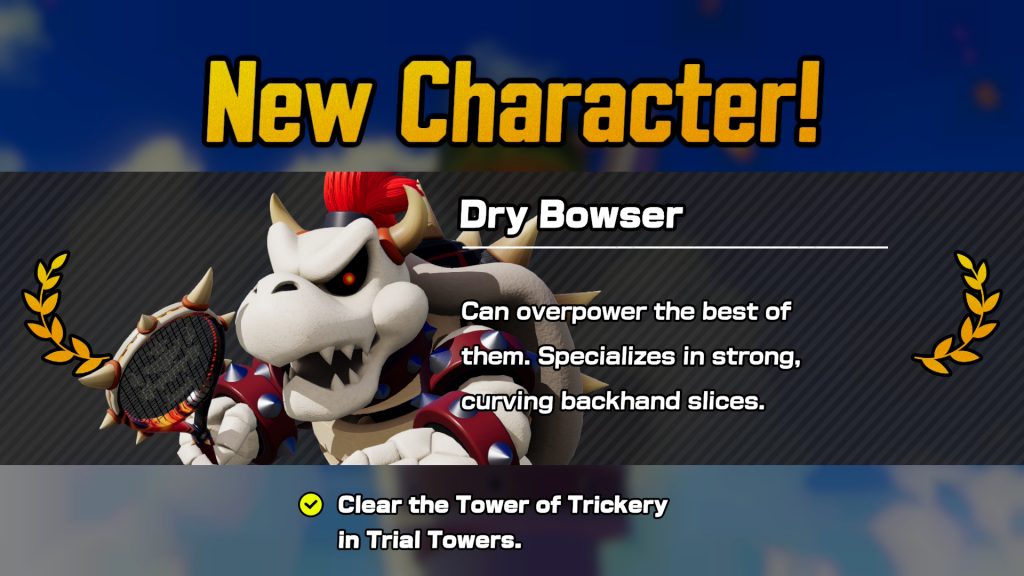
The unlock system is Mario Tennis Fever’s quiet masterstroke. A good chunk of the items are locked at launch, from characters to stadiums to Fever Rackets. They can all be earned through an in-game achievement system that mirrors the best Nintendo has offered in Super Smash Bros. and Kirby Air Ride. The achievements feel purposeful, tied to things you’d actually do while playing rather than arbitrary point and trophy accumulation. It’s a philosophy that the rest of the industry should study: give players real rewards for real in-game accomplishments and let the content speak for itself.
Conclusion — The New Template for Mario Sports
Mario Tennis Fever is what happens when a developer takes criticism seriously and responds to all of it. Fever is content-rich, mechanically deep, and designed for every type of player without compromising any of them. It’s a complete 180 from Aces and other Switch-era Mario Sports games. The Adventure Mode is fun in parts, but still needs improvements overall, and the soundtrack is a missed opportunity to celebrate Mario’s musical legacy. But those are the only cracks in an otherwise stellar package. Mario Tennis Fever isn’t just the best Mario Tennis game in years—it should be the baseline template for every Mario Sports title going forward.
Final Score: 8.5/10
Pros:
- Best all-around Mario Sports game in over a decade
- Fever Rackets adds deep strategy for competitors and chaotic fun for casual players
- 38-character roster with unique stats and signature shot properties
- Stadium-specific effects add meaningful strategic variety
- Trial Towers’ 130 challenges are highly engaging and replayable
- Excellent in-game achievement system for unlocking content
- Adventure mode’s Tennis Academy section is a welcome callback to the GB/GBA era
- Online ranked play is as competitive and punishing as Aces
- Vibrant, HDR-friendly presentation feels authentically Mario
- Covers all the bases—competitive, casual, single-player, online
Cons:
- Adventure mode exploration feels barebones with no real puzzles or secrets
- Overall campaign challenge is light, closer to an extended tutorial than a true adventure
- Soundtrack plays it safe, missing the whimsical charm of Mario’s musical history
- Visually pleasing but not a true next-gen showpiece compared to other Switch 2 titles
