
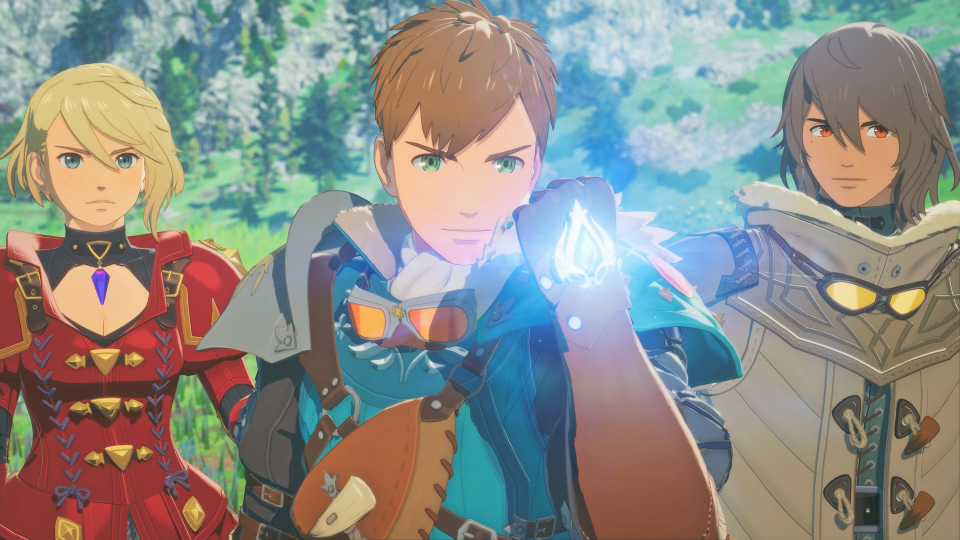
Monster Hunter Stories is an interesting sub-series. Originating on the Nintendo 3DS, it’s a JRPG spin on the iconic Monster Hunter series and Capcom’s premier JRPG series in recent years. The newest installment, Twisted Reflection, is releasing on March 13th, 2026, across major current-gen platforms.
After spending many hours with Monster Hunter Stories 3: Twisted Reflection on Nintendo Switch 2, I’m excited to share my thoughts on the game’s early hours as a newcomer to the series. And here is why you’ll be excited to experience the Rider’s adventures too!
Once Upon a Monstie – Premise of Monster Hunter Stories: Twisted Reflection
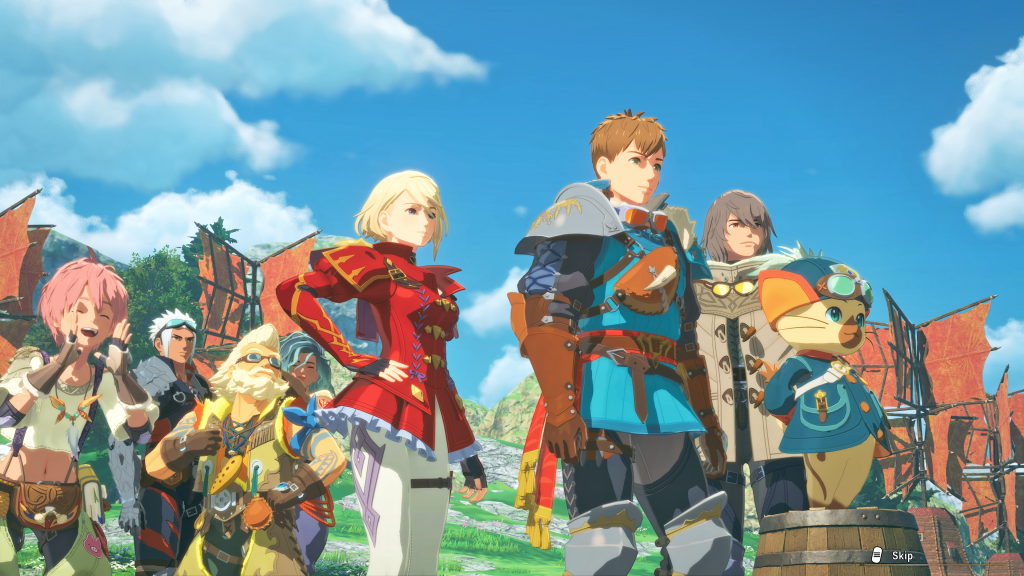
Taking the role of the Prince or Princess of Azuria, a lush kingdom that has avoided much of the dangerous damage caused by Crystal Encroachment impacting the world, they lead a group called the Rangers. These Monster Riders work to help rebuild monster populations and keep the land safe.
However, the rise of Ferral Monsters and calls of war push the Rangers into action. Playing through the early hours, it’s a tale full of twists, turns, and engaging characters.
Make Your Rider – Player Character
Starting with the customizable player character, who is voiced unlike prior Monster Hunter Stories games, they have a well-defined personality. Being a nice, earnest royal who only wants the best for his people and friends, Leo is a strong protagonist.
But while their personality is well-realized in the game, their appearance is completely in the player’s hands. Offering tons of customization options, the player character can look like anyone they desire. Body shapes, hair styles, eye styles, and more create a canvas for creative expression.
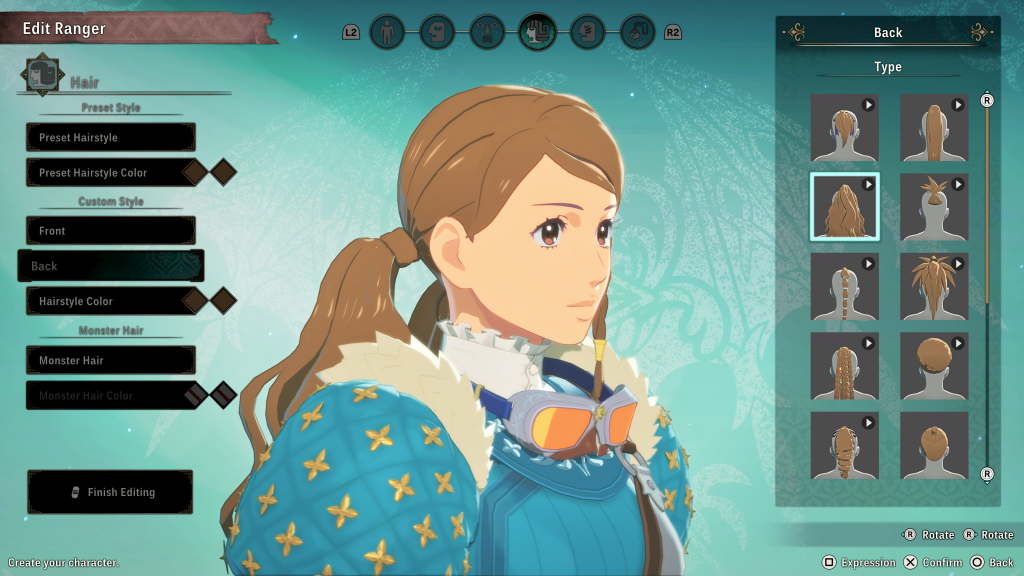
I personally stuck with the default look, but seeing this aspect of Monster Hunter Stories evolve so much from prior installments is impressive.
Riders Unite – Characters
His allies only support his strong character, with one of my personal favorites being the Vermeil Princess Elenaor. Their initial back-and-forth with Leo went places I didn’t expect. While she appeared nice and friendly, Elenaor wasn’t afraid to ask Leo the hard questions about what he would do to help her kingdom. Seeing his earnest reaction to her questioning and his effort to help, however he could, was a great character moment for both royals.
But it’s not just Elenaor having good interactions with Leo; the rest of his Ranger allies have enjoyable ‘Side Story’ adventures with him too.
A Social Link, So To Speak – Side Stories
Throughout the game, Leo can take part in ‘Side Stories’. These quests have Leo team up with one of his party members and work through a problem they are dealing with. From helping the Ranger-in-Training Thea rangle up the Gale Force Porkers in a race, to an expedition to explore a cave with Kora to help her gather rock materials, to learning about the serious work Gaul does for Azuria, these are fun adventures I greatly enjoyed.
Out of all of the Chapter 1 Side Stories I undergone, my personal favorite was Kora’s. This was because of how it opened up her character and made me want to learn more about her history in Azuria.
Exploring New Lands – Exploration
After the series jumped to HD with Stories 2: Twisted Reflection on Nintendo Switch and PlayStation 4, Stories 3: Twisted Reflection takes significant leaps forward. In my preview session, I explored the land of Azuria and the Canalta Timberland.
Both locations are filled with things to see and engage with, but to fully explore both areas, you need your Monstie. These impressive monsters allow Riders to use their abilities to fly, swim, and climb across the vast landscapes before them.
Though pressing a button and moving the right stick to switch to the right Monstie for the job is painless. The game rewards players with an attentive eye, with materials to collect for item crafting, and a lengthy game-wide questline for collecting every Poogie (cute little Pig monsters). But those elusive Monster Eggs are the most important item in the game.
Gotta Hatch ‘Em All – Monstie Egg Hatching & Deeper Mechanics
It’s easy to find Monster Eggs, as they are scattered about within Monster Dens. These are spread throughout the game, offering valuable Eggs to hatch back at camp and various items to collect for recipes and gear. Hatching the eggs rewards you with one of the legendary Monster Hunter creatures, spread across the entire series.
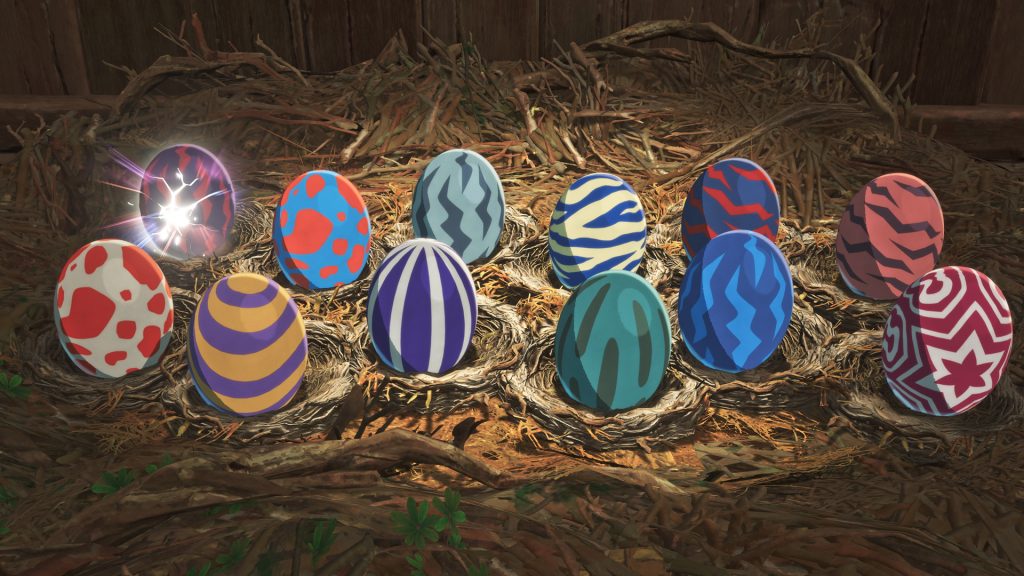
How players utilize these monsters depends on their intention. They could send out their Monsties on Excursions, making them stronger. Or they can release them into habitats to bolster the population and increase the chances of stronger monster eggs appearing in the Monster Dens.
The most interesting mechanic was ‘Rite of Channeling’. This is how you transfer the skills of one Monsite to another. You pick one monstie with the skills you want to transfer, and then pick the other that receives them.
Lining up the skill slots to earn ‘bingos’ creates more powerful results. One example of this in action was adjusting Ratha’s skill slots and unlocking new fire skills for battle. It’s a system with an immense depth, allowing players to craft the monsters they want.
Hunting in a New Perspective – Combat System & Party Members
And you’ll need to create powerful Monsties for the battles ahead, since Monster Hunter Stories 3 features turn-based combat. Battles have you in full control of Leo and your monstie, though your selected party member and their monstie are out of your control.
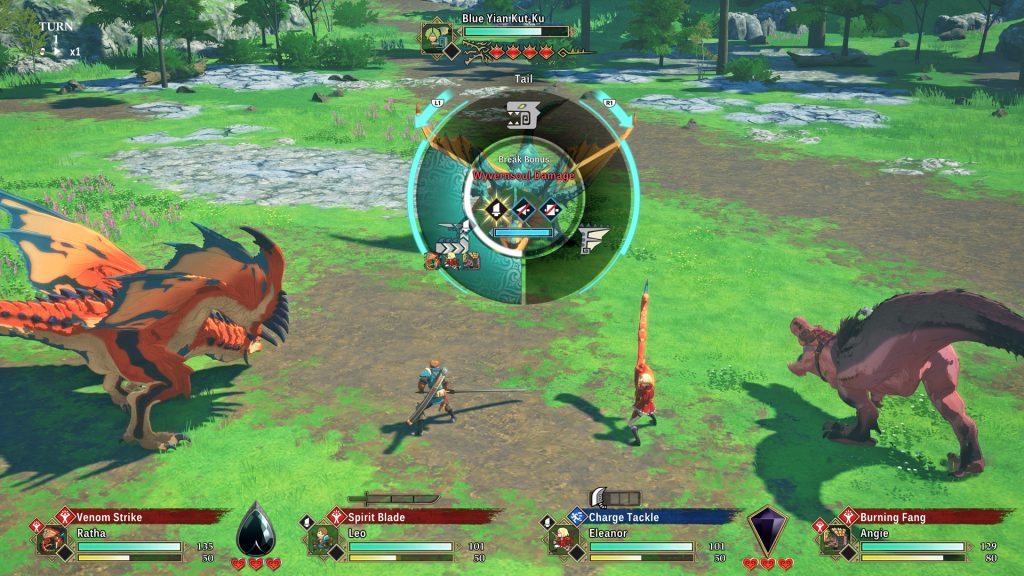
I mentioned my concerns about this system during my hands-on at NYCC 2025, but after playing through multiple battles, I relished every encounter I threw myself into. During every encounter, my AI companions were largely in sync with my own actions, and I could trust them to take care of themselves.
Even during the most difficult battles, they held their own and even stepped in to heal or buff Leo if the situation called for it. It’s a far cry from my frustrations with similar mechanics featured in JRPGs like the original Persona 3.
The Almighty Triangle – Attack Types
Originating from the original Monster Hunter Stories, there are three attack types: Power, Technical, and Speed. By selecting the right type of attack, you can overcome any attack coming your way. However, if your enemy uses one that’s weak too, you’ll take heavy damage.
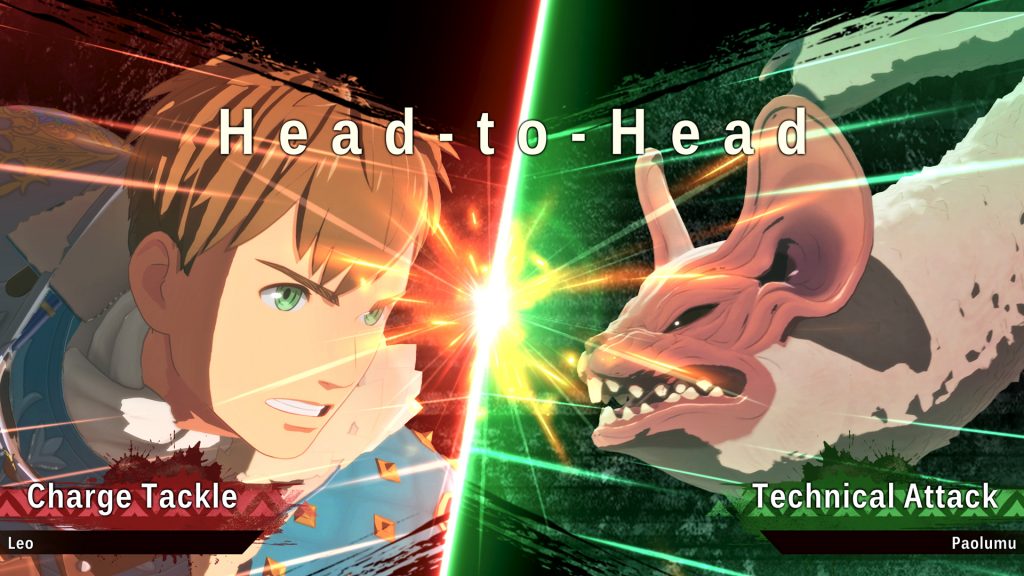
The key to victory was paying attention to monster patterns and listening to your companions, who sometimes gave you hints on the best attack to use. The feeling of being the victor of a head-to-head clash evoked memories of crushing type advantages in Pokémon or making the right play in a Fire Emblem game.
Jack of All Trades – Weapon Types
It wouldn’t be a Monster Hunter experience without a wide assortment of weapons to play with, and Stories 3 is no different. Being able to equip three weapons at a time and switching between them (without costing a turn), the variety in battle is astonishing.
My favorite loadout was using the speedy Long Sword (which can help deal brutal damage to monsters and help with counter-attacks), the Hunting Horn (which offers good melee damage and can buff/heal your party), and the Bow (offering effective long-distance options and can use different types of arrow shots).
Each weapon can also deal Elemental Damage, with the two types of bows I used, Water and Fire elemental attacks, respectively. The options I used are just some of what’s on offer, with my Ranger allies leveraging weapons like Hammers and Gunlances.
Downsizing the Beast – Part Breaking & Staggering
By far my favorite aspect of Stories 3‘s combat is the Part Breaking mechanic. This was something carried over from past Stories games. After breaking specific monster parts, they can become staggered, and the entire party does serious damage.
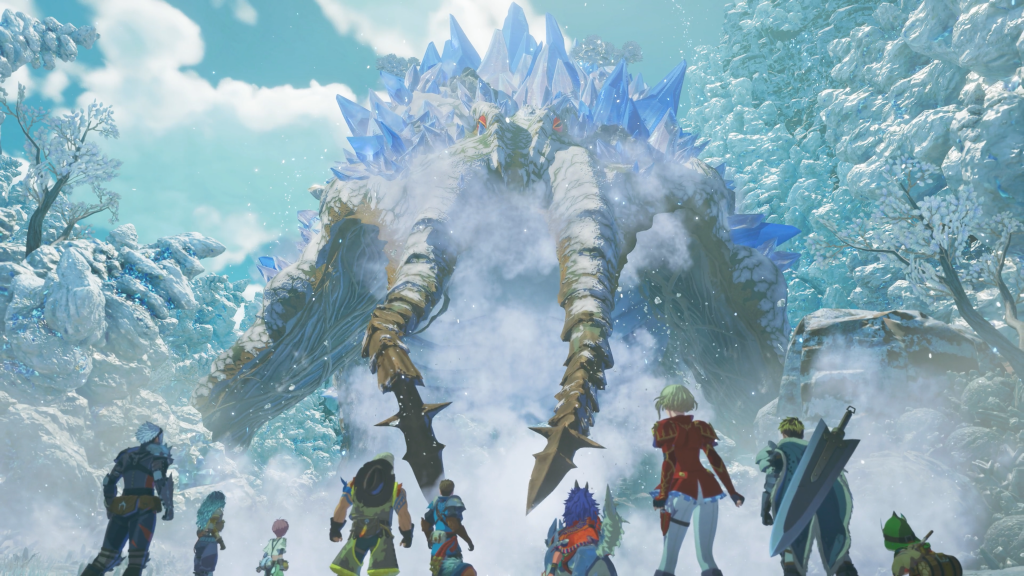
It carries over the on-the-fly decision-making from the mainline games, but adds that additional depth only possible in a turn-based combat system. This came into play during one of the hardest encounters later in my preview session, where I had to break two parts of a monster to expose its weak point.
But if you don’t do enough damage to that weak point within enough turns, it can brutally end the battle, full stop.
A Sharp-Looking Monster – Presentation
Playing a sizable amount of the game on Nintendo Switch 2, Monster Hunter Stories 3′s visuals are impressive on the hybrid handheld. Featuring stunning cell-shaded visuals, the world pops off the console’s large display.
Every location has easily readable landmarks, and of the two starting areas, the vibrant kingdom of Azura stood out the most. Specifically for the imagery of flying from the castle on Ratha, then landing back on the ground for exploration across vast grasslands.
My favorite aspect of the game’s vibrant presentation is the animation work across the entire experience.
Smooth Combat Animations in Monster Hunter Stories 3
Attacks from Monsters have the right amount of impact and weight, while attacks from Leo and his team are delightfully over-the-top. Seeing Elenaor slam her Great Sword into monsters, and Leo stylishly use the Long Sword like a seasoned samurai warrior, are just some examples of the fantastic animation in combat.
The Kinship Attacks are by far the coolest scenes in the entire game so far. Every Monstie has one with Leo, and every Ranger can utilize one as well. They are beautifully animated, showing off the raw strength of Rider and Monstie. My favorite has to be the one with Monster Hunter Rise’s Canynes, with the finishing blow having Okami-like brush strokes after finishing their attack.
The Powerful Musical Score
The Monster Hunter series is no stranger to powerful soundtracks, with Stories 3 being no exception. The main battle themes across my experience so far were emotionally powerful melodies, using varied instruments like violins and more, to add weight to battle encounters. Azuria’s Large Monster theme is a great example of this, playing often and having an effective rhythm to keep the long battles going.
But the music also offers variety, with Feral Monsters adding techno and heavier instrumentation to proceedings.
Rocky Portable Performance
Playing through the preview on Nintendo Switch 2, it was largely stable. Across both handheld and docked play, the game runs at a dynamic resolution and at an unlocked frame rate. While the game can sometimes hit a stable 60 FPS, the majority of my experience hovered around 30-40 FPS.
For a turn-based JRPG, this performance didn’t bother me, and when the game needed to run the smoothest (combat and general exploration), it was good enough. With the strides RE Engine has made on Switch 2, featuring impressive performance across Street Fighter 6 and the recently released Pragmata demo, I have full confidence the final game will iron out the minor performance woes.
Sharpening the Blade – Closing Thoughts
My limited experience with Monster Hunter aside, I loved my time with Monster Hunter Stories 3: Twisted Reflection. Offering a unique JRPG experience with its inventive combat system, engaging cast of characters, and immense depth with its many mechanics, this is one JRPG to keep an eye on when it releases on Nintendo Switch 2, PlayStation 5, PC, and Xbox Series X/S on March 13th, 2026.
If this preview got you itching for more, check out the free demo now across all major platforms!

1 comment
[…] went over this aspect of the game in my preview, and a lot of what I said there applies here. And after playing throught the main questline, I learned more nuances of the different weapons. […]
Comments are closed.