
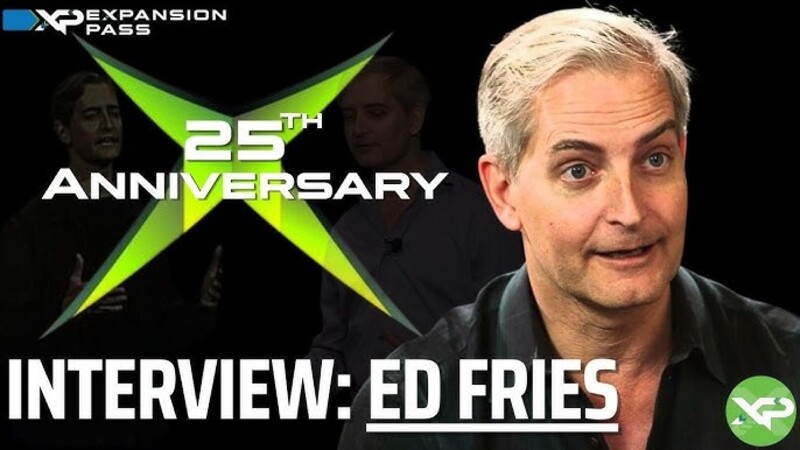
Ed Fries Interview – Celebrating 25 Years of Xbox
To celebrate Xbox’s 25th anniversary, Luke Lohr, host of The Expansion Pass, sat down with Ed Fries, one of the original architects behind the Xbox brand. This Xbox 25th Anniversary interview with Ed Fries offers a rare look at the origins of the Xbox brand, the risks that shaped it, and where the gaming industry is heading next.
Now rebranded simply as The Expansion Pass, Luke and the channel continue to deliver deep, insightful conversations with some of the most influential voices in gaming. This latest interview is no exception, offering a rare look into the origins of Xbox, the risks that shaped it, and where the industry is headed next.
Across the discussion, Fries reflects on everything from Xbox’s unlikely beginnings to the realities of modern game development, touching on industry growth, the rise of AI, and why consoles still matter in an increasingly connected ecosystem.
What makes this conversation stand out isn’t just the history, it’s the perspective. Few people have a clearer view of where gaming has been, and where it’s going, than someone who helped build one of its most important platforms.
A 25-Year Legacy That Almost Didn’t Happen
When reflecting on 25 years of Xbox, Ed Fries doesn’t immediately point to blockbuster franchises or hardware innovation. He starts with something far more grounded: gratitude.
“I’m really grateful that Xbox is still around 25 years later…and that people still care about it.”
That statement carries weight because Xbox’s existence was never guaranteed. At the time, Microsoft’s entering the console market felt like a long shot. The company was known for software, not gaming hardware, and stepping into a space dominated by established competitors was a massive leap.
What makes Xbox’s legacy so compelling isn’t just its success; it’s that it defied expectations from the very beginning.
Xbox Was a Billion-Dollar Gamble
Xbox didn’t begin as a confident expansion. It started as an internal battle.
“It was really unlikely…we had to go into a room with Bill Gates and Steve Ballmer and argue for hours just to get approval to launch it.”
That moment highlights just how fragile Xbox’s origins were. Even inside Microsoft, the idea faced heavy skepticism. Leadership understood the scale of the financial risk, and launching a console meant committing to a long-term investment with no guaranteed return.
At the time, “the big two” Sony and Nintendo controlled the space. Microsoft wasn’t just entering the market. They were attempting to disrupt it. That meant spending heavily, taking risks, and betting on a future that wasn’t fully clear yet.
When Xbox Finally Felt Real
Even after approval, uncertainty followed Xbox all the way to launch.
“That was probably the day the Xbox shipped…everyone was relying on everyone else, and all those pieces had to come together.”
From hardware production to software development and third-party partnerships, everything had to align perfectly. If one piece fell short, the entire platform could fail.
Fries’ reflection shows that Xbox wasn’t just a product; it was a massive coordinated effort across teams, disciplines, and timelines. And according to him, those pieces didn’t fully come together until the final stretch.
The Truth About the Gaming Industry: It’s Still Growing
There’s a growing narrative online that the gaming industry is shrinking. Layoffs and studio closures have fueled that perception, but Fries pushes back strongly.
“It’s just not true…the game business continues to grow.”
While certain sectors face challenges, the bigger picture tells a different story. Gaming continues to reach new audiences, expand into new markets, and grow as a global entertainment medium. Much of the confusion stems from comparing current numbers to pandemic-era spikes. But when viewed long-term, the industry shows steady, reliable growth, not decline.
PC Gaming Isn’t Dying, It’s Booming
For years, one of the most persistent myths in gaming has been the idea that PC gaming is fading. In reality, it’s thriving.
“You know what part of the business grew the biggest last year? PC games…it was the largest growing part of the game business.”
That statement highlights how much the landscape has changed. PC gaming has become more accessible, more powerful, and more integrated into the broader gaming ecosystem. Rather than competing directly with consoles, PC now exists alongside them, giving players more options and flexibility than ever before.
Why Consoles Still Matter in 2026
Even with the rise of PC and mobile gaming, consoles continue to hold a critical place in the industry.
“When I want to play a game after working all day, I just want to sit down in my comfy chair…nothing really matches that experience but a console.”
That statement captures what consoles do best: remove friction from the gaming experience. No configuration, no troubleshooting. You just pick up a controller and play. While high-end setups appeal to enthusiasts, consoles remain the most approachable and consistent way for millions of players to enjoy games.
The Challenge That Defined Halo
One of Xbox’s defining moments came with Halo: Combat Evolved, but its success wasn’t guaranteed.
“How do you take a mouse-and-keyboard genre and make it work on a controller?”
That challenge reshaped game design. Bungie introduced solutions like dual-stick aiming, aim assist, and refined movement systems. These are features that are now standard across console shooters. What feels natural today was once revolutionary, and it played a major role in defining Xbox’s identity early on.
AI Is Already Transforming Game Development
AI isn’t a future concept. It’s already part of the industry’s foundation.
“Virtually every game team is doing it already…AI is just going to be built into everything.”
From art tools to development pipelines, AI is being used to streamline processes and improve efficiency. It’s not replacing developers, it’s enhancing their ability to create. That shift allows teams to focus more on creativity and less on repetitive tasks.
The Future of AI in Gaming
Looking ahead, Fries believes the biggest change will be how seamlessly AI integrates into development.
“There won’t be a line where it’s AI and not AI anymore…it’s just going to be smarter software.”
That future suggests a more efficient and creative industry. One where developers can focus on ideas rather than limitations. If used correctly, AI could unlock a new era of innovation across gaming.
Final Thoughts: Xbox at 25 and Beyond
This Xbox 25th Anniversary interview with Ed Fries highlights just how far the platform and the industry have come over the past 25 years. Looking back, Xbox’s journey is defined by risk, innovation, and persistence. What began as a bold and uncertain project has become one of the most influential platforms in gaming.
For Ed Fries, that journey reflects the industry itself, constantly evolving, expanding, and redefining what entertainment can be. From billion-dollar risks to shaping how we play today, Xbox’s legacy is deeply tied to the growth of gaming as a whole.
That perspective is what makes this conversation so impactful. Thanks to Luke Lohr, also known as Insipid Ghost, for delivering a thoughtful and in-depth interview on The Expansion Pass. Conversations like this don’t just revisit history; they help contextualize where the industry is heading next.
As Xbox celebrates 25 years, one thing is clear: Gaming isn’t slowing down, it’s evolving faster than ever!
