
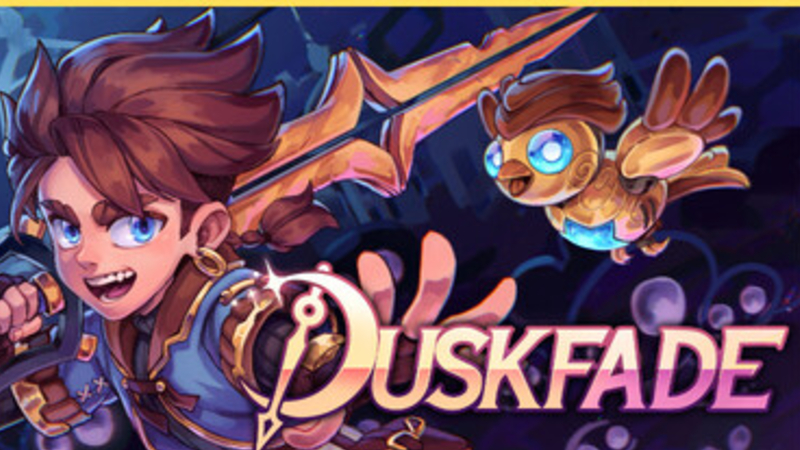
Thanks to the likes of Astro Bot and Donkey Kong Bananza, 3D platformers are enjoying something of a renaissance of late. While the heady platforming days of the late 90s are likely never to be repeated, the genre is undoubtedly back, and developer Weird Beluga has decided to get in on the act with Duskfade, a colourful platforming adventure that the studio hopes can leave a lasting impression.
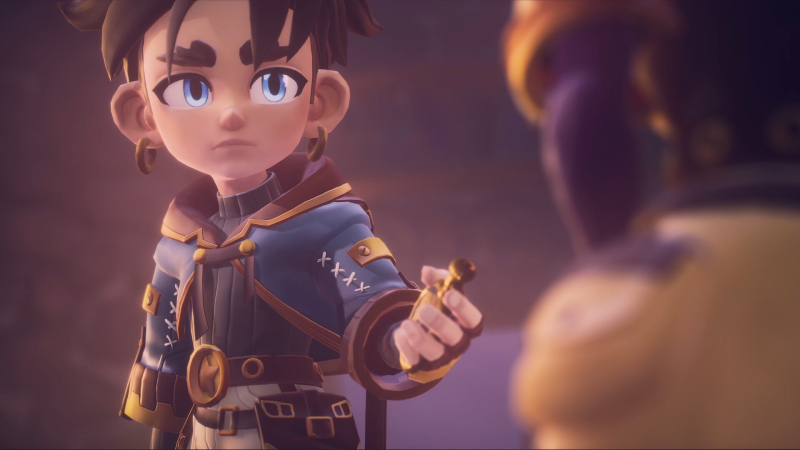
Duskfade introduces players to Zirian, a young adventurer who wields his grandfather’s huge sword as he attempts to save his sister from a huge, imposing clock tower that has plunged his entire world into darkness. It’s a tried-and-tested premise, but Duskfade‘s interesting ‘clockpunk’ aesthetic, which sees the world and environments intertwined with clocks, is what the studio hopes will set it apart from other similar platform games. Truthfully, it doesn’t quite succeed. Platforming and combat bounce between competent and repetitive, and the world is nowhere near as interesting to explore as the premise would initially suggest.
Developer & Publisher // Weird Beluga & Fireshine Games
Platforms // PC, PlayStation 5, Xbox, Nintendo Switch
MSRP & Release Date // $29.99, August 13th, 2026
Reviewed On // Xbox ROG Ally (Via Steam)
What is Duskfade?
At its core, Duskfade is a standard 3D platformer that anyone who has dabbled with the genre before will be instantly familiar with. Your time will be spent running, jumping, and swinging your giant sword to combat enemies and navigate the world. The game isn’t broken up into individual levels; instead, you explore a giant world through a linear route, with other paths opening up once you acquire tools such as a handy grappling hook.
Biomes in the game are varied, from volcanoes to lush forests, but they don’t exactly offer a huge amount of exploration. What little opportunity there is to stray off the beaten path will present players with either extra currency or gears to purchase upgrades, with little else of value to discover. The world as a whole, despite its variety, feels slightly bland and empty, with one biome slowly blending into the next until, unless you really concentrate, all that seemingly changes is the colour palette.
Duskfade’s Narrative Explained
Duskfade‘s world has been constructed by a mysterious group known as The Clockmakers. However, after something goes wrong with time itself, the world is stuck in a perpetual state of nighttime. The daunting Clock Tower at the centre of the world is the cause of this, and with Zirian’s sister, Allira, trapped inside, he sets out with a mechanical bird named Cuckoo in order to save her. It hits all the narrative beats you’d expect, with Zirian growing throughout his journey in order to face and overcome his challenges.
The game’s conclusion wraps the story up with a few interesting twists, but it doesn’t do enough to compensate for the blandness of the characters’ personalities or their writing. On the whole, the game’s narrative does little to differentiate itself from other similar titles, and truthfully most, if not all, of the characters will be quickly forgotten not long after the credits roll.
Duskfade’s Traversal and Navigation
Zirian is extremely agile while traversing the world. He can jump (and double jump) huge distances, even further when you combine these jumps with a dodge roll that can be performed in mid-air. However, as useful as this first seems, his initial jump feels extremely floaty. It feels like he glides through the air far too quickly, resulting in some of the platforming segments being trickier than they were likely intended to be. In fact, Zirian’s movement in general almost feels like someone pressed fast-forward, as he seemingly tries to do his best Sonic the Hedgehog impression when at full speed.
Gadgets like the grappling hook, once unlocked, open up new traversal options, and require you to hit the right trigger when a grappling point is highlighted. This does mean you need to point the camera in the general direction of the grappling point for it to appear, though. Given the fact that Zirian’s jump is so floaty, it’s no easy task to jump from point to point while panning the camera in mid-air.
This wouldn’t be such a huge issue if the world itself wasn’t so easy to get lost in. The game has no map markers, and no map either, so navigation relies on you finding and ringing bells around the world that give you a hint of which direction to go in next. With Zirian moving at such high speed, and chunks of the world looking not particularly memorable, navigation becomes far more of a problem than the developers would’ve likely intended.
Combat and Gameplay in Duskfade
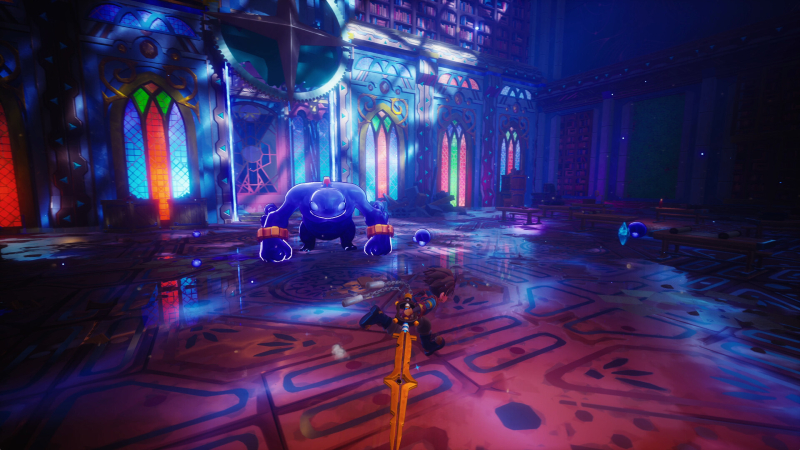
When he isn’t orienteering or blazing a trail across the world, Zirian will be fighting. The fighting in Duskfade is perfectly competent, but offers little in the way of innovation. You have the standard 3-hit combo with the sword, you can dodge-roll to move out of the way of attacks, and you slowly unlock other abilities like a wave of energy that you can use to hit enemies, all of which help you turn the tide in combat. The issue is, these abilities are rarely needed. Most combat with enemies comes down to spamming the attack button and dodge-rolling frequently.
Of course, 3D platformers are not known for their complex combat systems, so this isn’t necessarily a unique problem for Duskfade to contend with, but it’s hard to ignore the repetition on display here when a limited range of attacks is combined with generally poor enemy variety.
The enemy design and the overall variety (or lack of) in Duskfade means that combat encounters become a part of the game that isn’t particularly enjoyable. You’ll find yourself going through the motions almost on autopilot at times. To its credit, though, the combat controls in Duskfade are smooth and responsive, with animations to match this responsiveness. Zirian is snappy to control in combat, and this isn’t always a given, so it deserves a mention here.
Duskfade’s Boss Fights and Difficulty
As a 3D platformer, Duskfade is perfectly accessible for most on the standard difficulty. Combat encounters provide minimal challenge and can pretty much be breezed through most of the time. There are a couple of higher difficulties that will up the enemy’s health and damage output for those seeking a tougher test. The game’s boss fights require a lot more thought, even on the standard difficulty. Most of them provide specific windows in which to strike the boss, and often you’ll need to navigate platforms or use your gadgets in order to manoeuvre to the right position. It’s a welcome bit of challenge, and each boss design has clearly had plenty of thought put into it.
Each is unique, and in opposite of standard enemy encounters, each proves to be enjoyable throughout. One of the highlights, for example, is a huge creature that turns the entire floor to lava at specific points during the battle, forcing you to quickly get off the ground, grappling from point to point and waiting it out until it’s safe to land on the floor and pummel the boss with attacks. These boss battles are definitely some of the highlights of the game.
Art Style and Sound Design in Duskfade
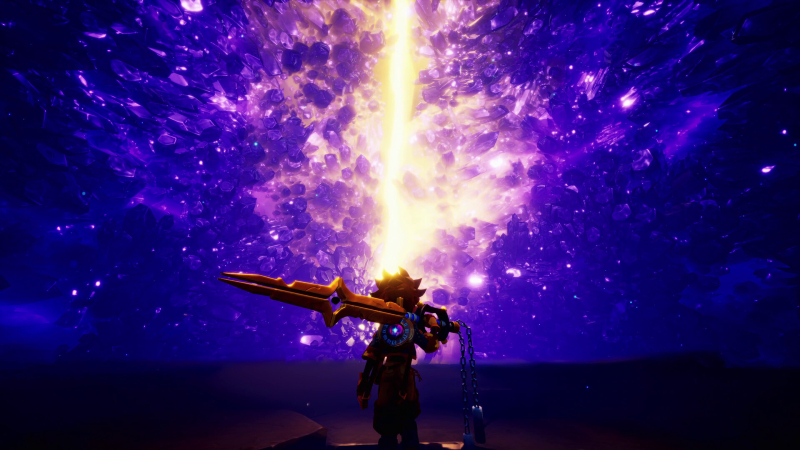
Zirian’s art style and even the design of his weapon seem to take inspiration from Kingdom Hearts protagonist, Sora, and it works well. The game’s art style in particular is unique, with characters and environments striking a balance between cartoonish and realistic, and younger audiences will no doubt have a blast playing as Zirian, especially given the simple nature of combat encounters. The world is colourful, but as mentioned above, biomes do tend to get a little samey once the initial novelty of a new area wears off. The sound design in Duskfade is one of its strong points. Music hits the mark, and the voice acting is perfectly in line with the game’s tone and visual design.
Final Thoughts on Duskfade
To be clear, Duskfade is a perfectly competent 3D platformer. Fans of the genre will no doubt find that there is some fun to be had with it. However, those expecting innovation won’t really find it here. Basic combat encounters become dull pretty quickly, and platforming can be less precise than expected thanks to the protagonist’s floaty jump making things far trickier than they need to be. Boss fights are a high point, with each encounter well thought-out, but Duskfade‘s world is nowhere near as intriguing to navigate as it first appears. There’s not much in the way of exploration to be had, or secrets to find, and the game’s largely forgettable cast and narrative do little to ensure Duskfade doesn’t quickly fade into a distant memory once the credits roll.
Disclaimer – A Steam key was provided by the developer for the purposes of this review.
Duskfade
Pros
Smooth combat controls
Fun boss fights
Art style and sound on point
Cons
Lack of innovation
Floaty jumping mechanics
World fairly dull
Lack of meaningful exploration
