
What is Nioh 3?
Since its launch in 2017, fans of Soulslikes have generally agreed that the Nioh franchise is pound-for-pound one of the best in the sub-genre. This opinion was reaffirmed when Nioh 2, which doubled down on everything the original did well, launched to critical acclaim in 2020. Both games delivered satisfying combat, distinctive art design, and epic, tough-as-nails boss fights. Now, after lying dormant for almost six years, the action-RPG franchise is back with Nioh 3, to once again prove it’s the best of the bunch.
Given the success of the first two entries, developer Team Ninja could’ve quite easily played it safe with Nioh 3. Iterating on the core mechanics without changing anything fundamental would probably have resulted in another success, albeit a low-risk one. However, it seems the Japanese studio didn’t get that particular memo. Instead, they have introduced a couple of core changes that ensure this third entry feels fresh, significantly different, and much larger than its predecessors.
Developer & Publisher // Team Ninja, Koei Tecmo
Platforms // PC, PlayStation 5
MSRP & Release Date // $69.99, February 6th, 2026
Reviewed On // PlayStation 5
Nioh 3 Switches Linear Missions For Huge Open Maps
- Nioh 3 moves away from linear mission design, instead focusing on large explorable maps
- This new approach does not compromise the game’s level of challenge
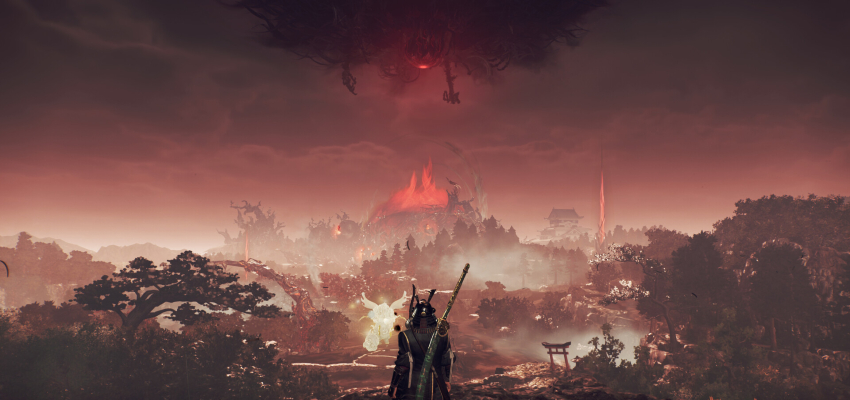
The game moves away from Nioh‘s traditional mission-based structure in favour of what Team Ninja is calling an ‘open-field’ approach. This is basically as close to open world as it gets without being fully open-world.
The majority of the game takes place on four large maps that players unlock as the game progresses, and are free to roam at their own pace. These maps are packed with activities, secrets to discover, and bosses to fight. Aside from following the main mission path, you are literally free to tackle things in any order you like. There’s no doubt this is a risky deviation from Nioh‘s usual format. Fortunately, within a few hours of playing, you’ll quickly realize that it pays off.
One of Nioh‘s core components has always been its brutal difficulty. Team Ninja’s new evolved formula hasn’t compromised on this. Instead, it simply grants players more ways to overcome tough challenges. For the first time in the series, you can return to a challenging fight if it feels too difficult, after leaving to explore a different area of the map. It’s extremely similar to how Elden Ring was an evolution of Dark Souls‘ formula, never compromising on tough fights, and just like From Software did with its Game of the Year winner, Team Ninja has managed to pull off this transition impressively well.
Story & Narrative
- Nioh 3’s story is serviceable, but it is not the game’s central focus
- The narrative involves the protagonist travelling to different time periods, fighting demons
Nioh 3‘s story is, perhaps, predictably messy for veteran fans of the franchise. Narrative has never been the series’ main focus- nor should it be- but in fairness, the third entry does attempt to tell a complex story that spans numerous time periods. The protagonist, Takechiro, is the son of the current Shogun and is next in line for the title. However, he is caught off guard by an attack from his younger brother, who wants the title of Shogun for himself. Saved at the last moment by a mysterious force, Takechiro is dragged through time on a quest to defeat various demons and corrupt generals from Japan’s storied history. The story serves its purpose well enough, but with few memorable characters or moments, it does little more than act as a backdrop for Nioh 3‘s main clear focus: its combat.
Smart Changes in Nioh 3’s Combat
- Nioh 3 introduces two distinct combat styles: Samurai and Ninja
- Samurai is the traditional combat series fans are used to, and Ninja focuses on fast attacks and dodging
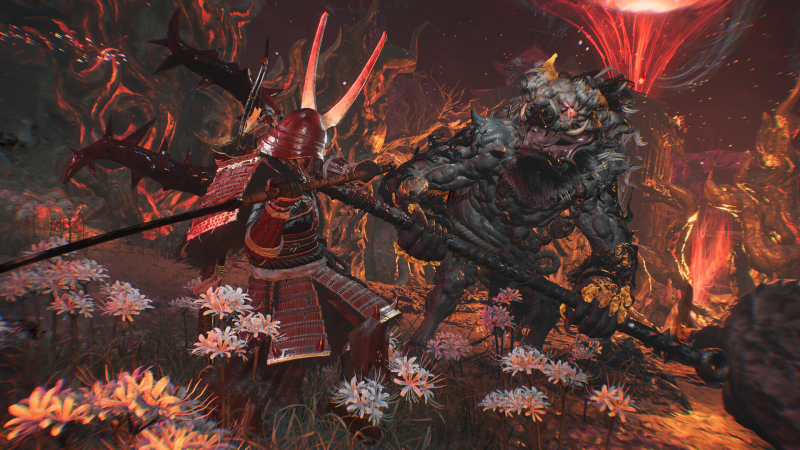
The other big change in Nioh 3 is the introduction of two distinct combat styles: Samurai and Ninja. Samurai is the system that returning franchise fans will already be familiar with. In this style, you can wield weapons such as swords, axes, and spears, learning and using a wide range of skills and abilities. As in previous games, you can also switch between high, medium, and low stances, although this time they must be unlocked. This would change the flow of combat, shifting from offensive to defensive attacks.
Stamina in Nioh is called Ki, and must be managed tightly to ensure players aren’t left exposed. To help with this, players can perform a Ki pulse at just the right time after attacking, instantly regaining some of their lost stamina. There’s also a deflect mechanic (called a burst counter) that players can use to turn the tide. Blocking as an enemy attack glows red to negate stamina loss and deal huge damage to the opponent.
Combat Styles
- Both combat styles have a part to play, with both having numerous pros and cons depending on player needs
- Stealth is now much more viable thanks to the open field maps
The Ninja style is Nioh 3‘s new combat addition, and it completely changes the way combat works. Ninja is focused on fast, fluid attacking. Ninja style does away with the Ki pulse, replacing it with a ‘mist’ mechanic that players use to quickly spin away from enemy attacks while maintaining a proximity to them. Combined with the dodge, which is far more effective in this style, timing it perfectly to negate stamina loss, creates a huge contrast to the Samurai style.
This system effectively gives players two distinct ways to approach combat, both with pros and cons. Both styles come with their own sets of weapons and armor, and players can switch between styles with a single button, ensuring combat doesn’t lose any of its flow. Samurai focuses on powerful martial arts abilities and deflecting, and Ninja instead comes equipped with throwing knives and powerful magics.
Stealth in Nioh 3
Stealth is also a much more viable option in Nioh 3, with open-field areas granting players plenty of chances to catch enemies off guard by approaching them from different directions. The maps feature plenty of verticality, and a couple of smart additions to traversal mechanics, such as a double jump, help you explore areas with ease. All in all, there’s something here to suit most players’ preferences, and if one approach isn’t working, you can always switch it up and try something different.
The styles feel different enough to warrant changing between them regularly in-game. It’s hard to say which is better, as both have equal benefits. I personally leaned towards the Ninja style more due to the sheer speed of attacking and dodging.
Nioh 3’s Size & Scale
- Nioh 3 feels bigger than its predecessors, in both the size of the world and the amount of content in the game
- The game has solid sound design and voice acting
The size and scope of Nioh 3 are impressive, easily eclipsing those of its predecessors. The first map, once it fully opens up, could probably be a game on its own. The other three maps also contain multiple hours of content. There are side quests to undertake (although these amount to simple fetch quests or defeating yokai), optional dungeons and bosses to fight, and plenty of hidden secrets off the beaten path.
Team Ninja has clearly taken note of how From Software converted its tight combat and exploration to an open-world format with Elden Ring, and has taken extra care to ensure none of Nioh‘s trademark tension has been lost despite the larger maps. The strength of the game’s combat creates a game flow that even the most cookie-cutter side quests, which usually involve engaging fights, are worth undertaking.
Nioh 3‘s sound design and music are in keeping with the overall tone, and some of the boss themes really add to what is already an adrenaline-fueled experience. The English voice acting is okay, and does its job well enough- although purists may want to play with the more traditional Japanese voice acting, which more closely fits the game’s atmosphere.
A Couple of the Nioh Series’ Shortcomings Still Remain
- Healing in Nioh 3 feels outdated, and the mechanic needs to change
- This mechanic can get in the way of the player having fun, especially in the game’s early hours
While the franchise has evolved, some mechanics have stayed the same, despite frustrations like in prior games. The most obvious of these is the way that healing works. To heal, you must use elixirs, items you collect from looting enemies and chests around the map. These elixirs are then replenished from your existing stock at shrines (checkpoints where players can level up and enemies are revived).
The issue with this, particularly in the early game, is that when you come up against a roadblock in the form of a tough boss (of which there are a couple in the game’s first dozen or so hours), if you haven’t got sufficient supplies in reserve, you’ve got to stop fighting the boss and replenish your stocks before coming back.
It feels like an unnecessary step, and once you’re getting the hang of the bosses’ attack patterns, the last thing you want to do is be dragged away to replenish elixirs. Why not just have your elixirs replenish every time you visit a shrine, without needing endless reserve supplies? It feels like a poor design choice. Thankfully, later, once you have hundreds of elixirs in reserve, this is no longer such an issue.
Loot Issues in Nioh 3
- The loot issue from the previous games is back; there’s far too much of it
- Most loot will be armor or weapons that are a downgrade on what you’re currently using
The other problem synonymous with the Nioh series is the abundance of loot. At times, it feels like you spend almost as much time trawling through the piles and piles of loot you pick up as you do in combat. Nioh 3 does little to address this problem. There’s still far too much loot to find, and 90% of it will be armor or weapons that you’ll never equip, so you’ll sell them and turn them into crafting materials.
It’s not a deal breaker, but it’s a frustration that has puzzlingly been overlooked by a developer who has clearly made some very smart, impactful changes here. A couple of accessibility settings help speed up dismantling loot, and I’d highly recommend using the feature. These shortcomings are annoying, sure, but they do very little to diminish the overall experience.
Nioh 3’s Visuals
- Nioh 3 has solid visuals with varied biomes
- Many monsters from previous games return, alongside new ones
- Almost no performance issues when playing on PS5
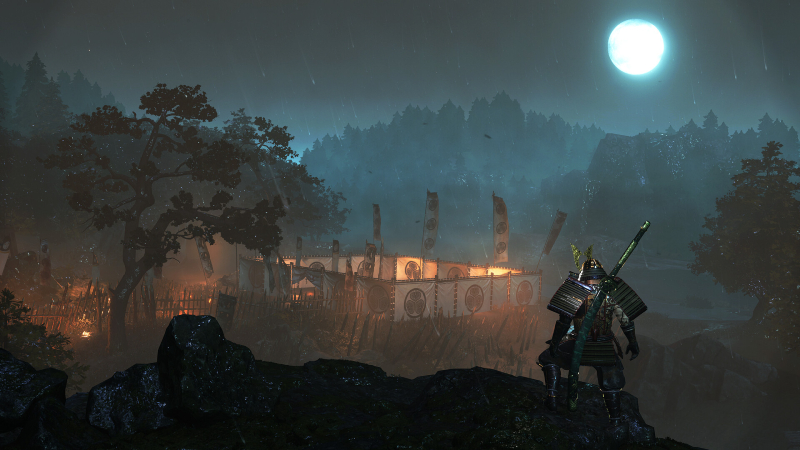
Visually, Nioh 3 isn’t much of a noticeable upgrade over its predecessor. However, Nioh 2 was hardly a poor-looking game, so this is no bad thing. It offers varied biomes, from snowy mountains to war-torn battlefields, as well as the series’ usual array of visually striking enemies in the form of Yokai.
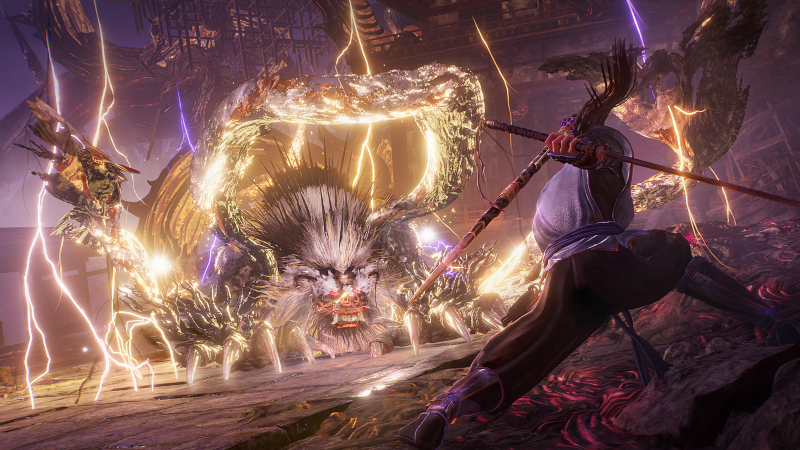
Many Yokai return from previous games, alongside some new, equally hellish designs. There’s enough variety in the enemy design that none ever feel overused. The game’s art style is the perfect complement to its visceral combat. During my forty-plus hours playing on PS5, there were no performance issues of note, and just a handful of framerate dips during some busy fights.
Exciting Boss Fights
- Nioh 3 features stunning boss fights
- There are particularly tough areas called Crucible zones that players will find punishing
- A couple of difficulty spikes can be jarring
Speaking of busy fights- the bombastic boss battles that you will be expecting definitely live up to the hype. Despite the game’s difficulty, Team Ninja’s design ethos is about ensuring a firm but fair challenge, and the developer has once again decided not to include difficulty options, ensuring everyone gets the same experience.
There’s an area in each map (sometimes more than one) called the Crucible, where the challenge really ramps up. The Yokai here hit harder, and it’s in these zones that players will be pushed to their limits. These areas are not optional, so it remains to be seen if players find the difficulty too punishing.
The challenge can be somewhat lessened by summoning allies, either NPC spirits or online players, via co-op. These allies can aid in both boss fights and general exploration, should you wish to lighten the load a little. There are also plenty of accessibility options, although none will affect the toughness of enemies and bosses. A couple of difficulty spikes do seem oddly placed throughout the game’s fifty-plus-hour main campaign, with one boss in particular halfway through the second map proving to be far tougher than those immediately before or after it, which will likely catch players off guard.
Final Thoughts on Nioh 3
Nioh 3 somehow further sharpens the series’ already razor-sharp combat, elevates the series’ world design to a whole other level thanks to its large explorable maps, and packs enough meaningful content into the experience to fill at least two games. Team Ninja is a developer at the top of its game, and you can see how the lessons the studio has learned over the past few years have been put into practice in making Nioh 3 the absolute best it can be. It takes all the best bits of the studio’s previous games and blends them almost seamlessly for a near-perfect experience. It once again sets the standard for any Soulslike not developed by From Software.
Score: 9/10
Pros
- Engaging, deep combat mechanics
- Open field maps are packed full of secrets and enemies to fight
- Plenty of content to keep you playing for hours
- Varied build variety and loads of different ways to play
- Solid performance and memorable art design
Cons
- Dated healing mechanics
- Still far too much loot
- The story does little to enhance the experience
A PlayStation 5 code was provided by the developer for the purpose of this review.
