
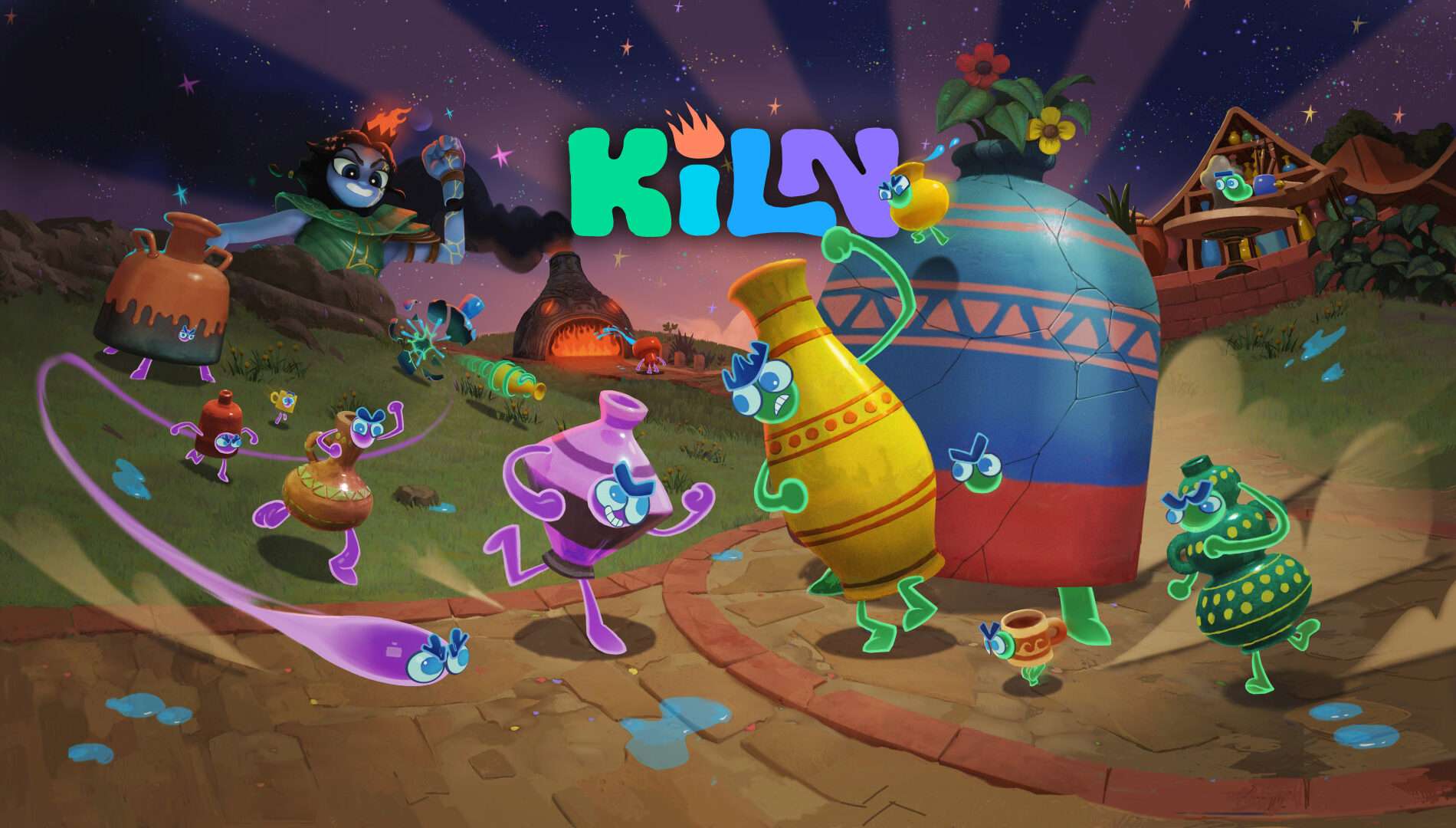
What is Kiln?
Kiln is Double Fine’s latest unconventional swing—a 4v4 online pottery party brawler where you mold your own ceramic warrior on a pottery wheel, then pilot it into a MOBA-lite arena to smash, splash, and douse the enemy team’s Kiln. It’s the kind of pitch only the studio behind Psychonauts and Keeper would greenlight, and on paper, it’s instantly endearing. Sculpting your own fighter, watching it morph in real time, then sending that unique creation into chaotic battle? It’s a setup I wanted to love.
Unfortunately, a wonderful idea doesn’t always translate to a wonderful game, and Kiln proved that point with every passing hour played. The pottery wheel is a genuinely great time, but the combat is shallow, and the content is sparse. There’s a special game buried in here, but what’s at launch feels like it needed more time on the wheel.
Developer: Double Fine Productions
Publisher: Xbox Game Studios
Platform: Xbox Series X|S, PlayStation 5, PC
MSRP: $19.99
Release Date: April 23, 2026
Reviewed On: PC & Xbox Series X
Presentation & Soundtrack — Glazed in Charm
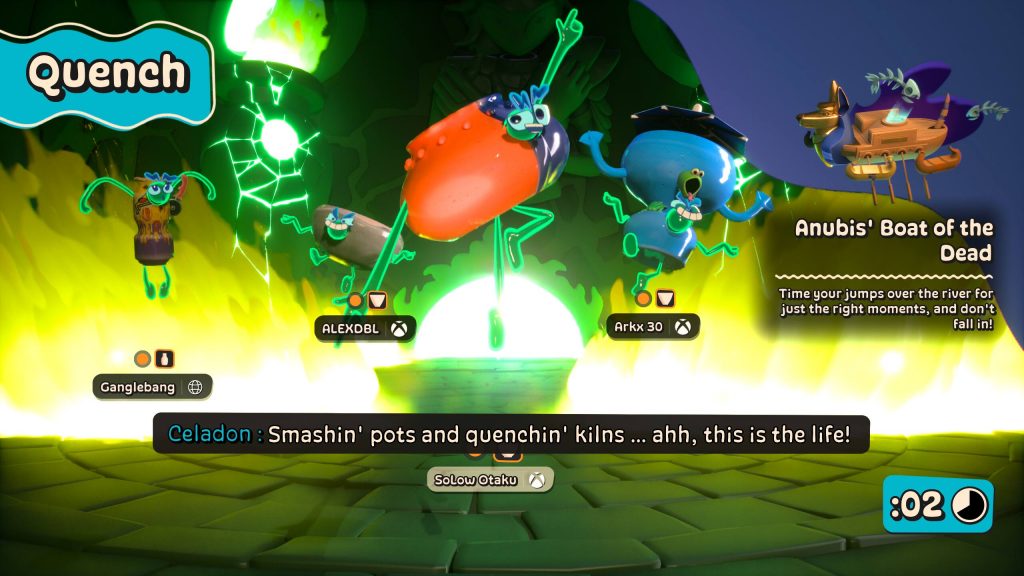
- Cartoon-bright art direction and unique animations per pot type give Kiln a distinct visual identity
- Quench arenas are vibrant, chaotic, and packed with environmental gimmicks
- Smooth jazz in the lobby, surreal grooves in the menus, and chaotic battle tracks all set the mood without standing out
Visually, Kiln is everything you’d expect from Double Fine—charming, weird, and bursting with personality. The cartoon art direction extends from the pottery studio hub all the way to the arenas, and every element feels hand-crafted. The spirit animations are adorable, and I love that each pot type gets its own unique idle and combat flourishes. Pots don’t just slide around; they have weight, posture, and character.
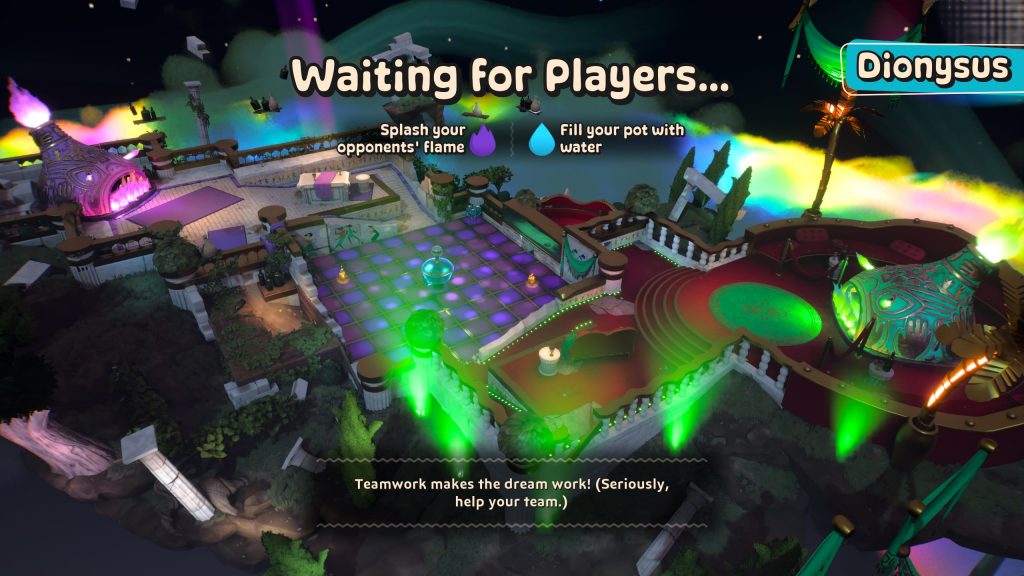
The Quench maps run the gamut from a literal disco dance floor that forces you to break into a groove if you wander into the spotlight, to mythological arenas pulled straight from a Greek pottery painting. They’re chaotic in the best way, with environmental hazards that mess with your plans constantly. And then there’s Celadon, the creator and destroyer of this strange universe, whose character design is one of the coolest things in the game.
The soundtrack does its job without ever announcing itself. The lobby and pottery wheel are scored with smooth, jazzy tracks that turn shaping clay into something peaceful. The menu theme leans surreal and groovy, while battle tracks ramp up with frantic energy that fits Quench’s pace. It’s all solid, but coming from the studio behind Psychonauts, Kiln‘s music isn’t the best Double Fine has to offer.
Characters & Story — Creation & Destruction
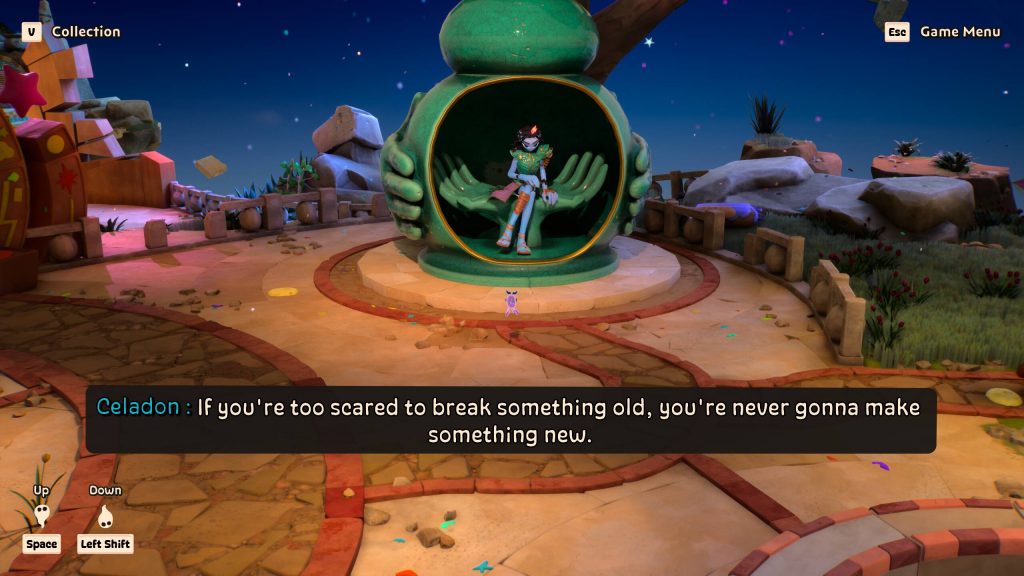
- Celadon, Potty, and Slip make up the entirety of Kiln’s named cast
- Celadon is a charming character with great dialogue
- The lore around destroying and rebirthing the universe is barely sketched in
There isn’t much to Kiln‘s story, but the small cast you do meet has charm to spare. Celadon, the creator and destroyer of this universe, wants to destroy reality to rebirth it—and somehow your pottery brawls are part of that plan. The how and why are left almost entirely vague, which is a shame because she’s easily the most interesting thing here. Her dialogue is fantastic. She compliments every creation you bring her, no matter how hideous, picking out specific details like the color, handle, spout, or topper to make the praise feel personal. It’s a small touch that makes crafting feel rewarding on an emotional level.
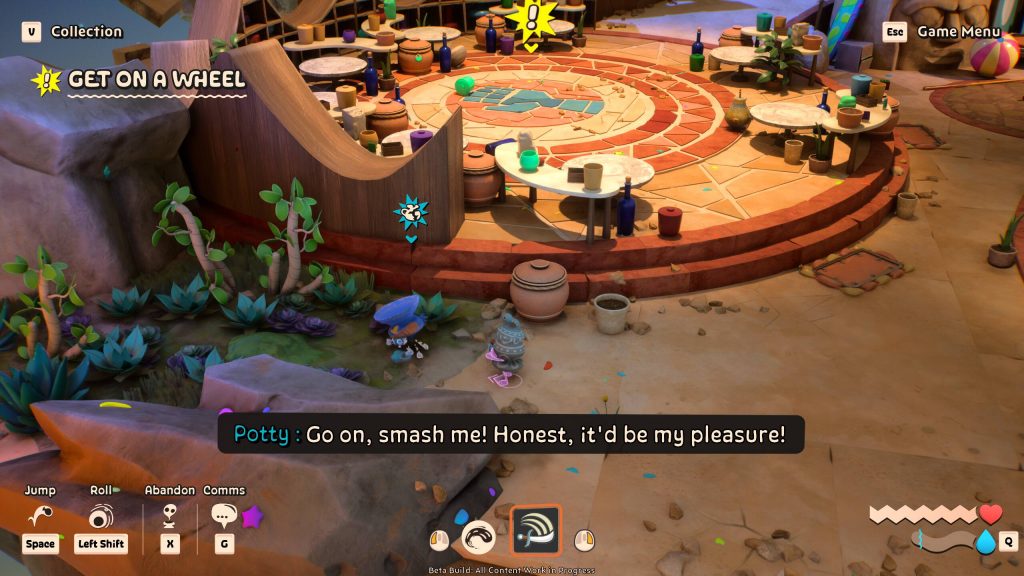
Then there’s Potty, a masochistic pot who lets you beat him up and destroy him once a day for rewards while serving up some hilarious unintentional(?) innuendo that’ll make you chuckle. Slip rounds out the cast—a dripped-out dog made of paint who runs the cosmetics shop, where you spend the currency you earn from battles. That’s basically it. It’s not necessarily a negative that there isn’t much in this area for an MP-focused party brawler, but with Double Fine’s knack for storytelling and creating great characters, it would be a great bonus if they provided a little bit more to grab on to.
Pottery Creation (Crafting) — Therapy at the Wheel
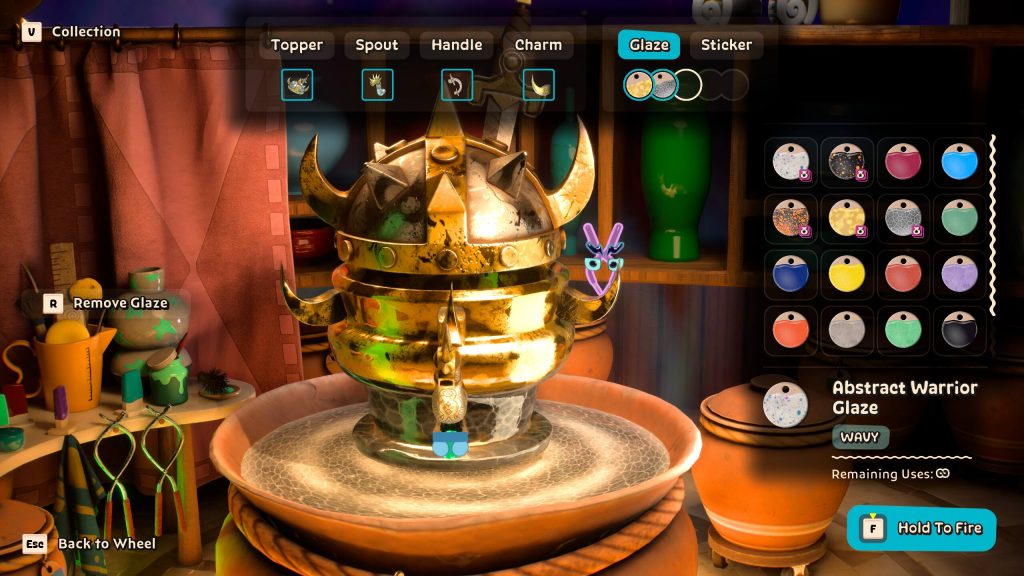
- Sculpting clay on the in-game pottery wheel is intuitive, tactile, and genuinely meditative
- Tools like the shaper, sponge, and ruler unlock with progression and offer deeper customization
- Watching your vessel morph in real time is the highlight of Kiln‘s entire experience
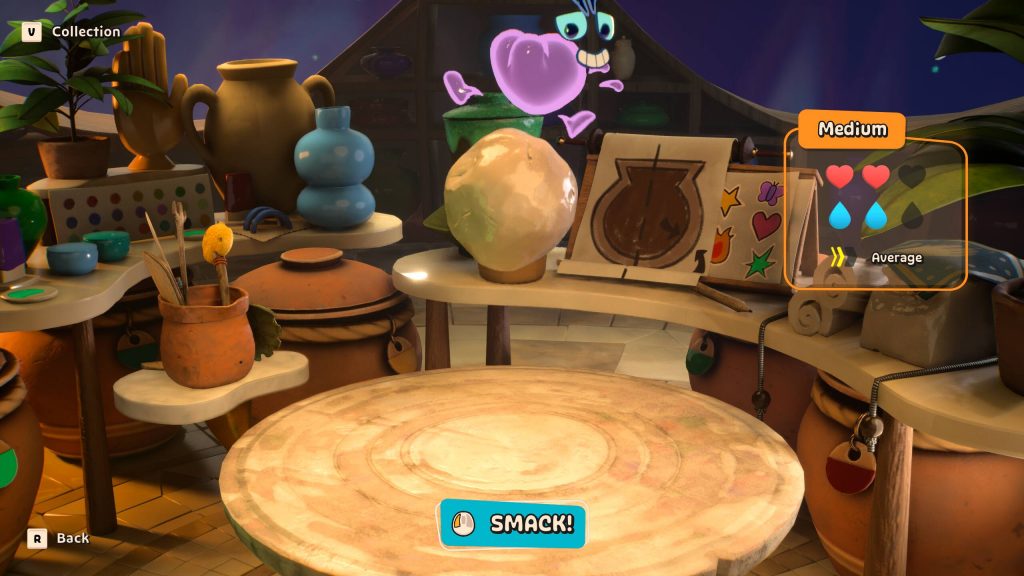
The pottery wheel itself is the soul of Kiln, and it’s where Double Fine’s craft really shines. Throwing clay is shockingly intuitive—you stretch, narrow, and flare your vessel with a precision that feels closer to a real wheel than I expected from a controller. I’m not the most creative person in the world, but I lost track of time just shaping shapes, watching the clay morph and breathe under my hands. It’s a joy I didn’t know I needed in a game.
Decorating is just as satisfying, with paints, glazes, stickers, and toppers all unlocking as you level up. More advanced tools like the shaper, sponge, and ruler open up later for players with sharper artistic instincts than mine. I didn’t lean on them much, but seeing what other players bring into the lobby has been genuinely jealousy-inducing. There are some absolute masterpieces out there. The act of creation in Kiln is something I’d love to see come back in future games in some form.
Pottery Creation (Classes) — Form Defines Function
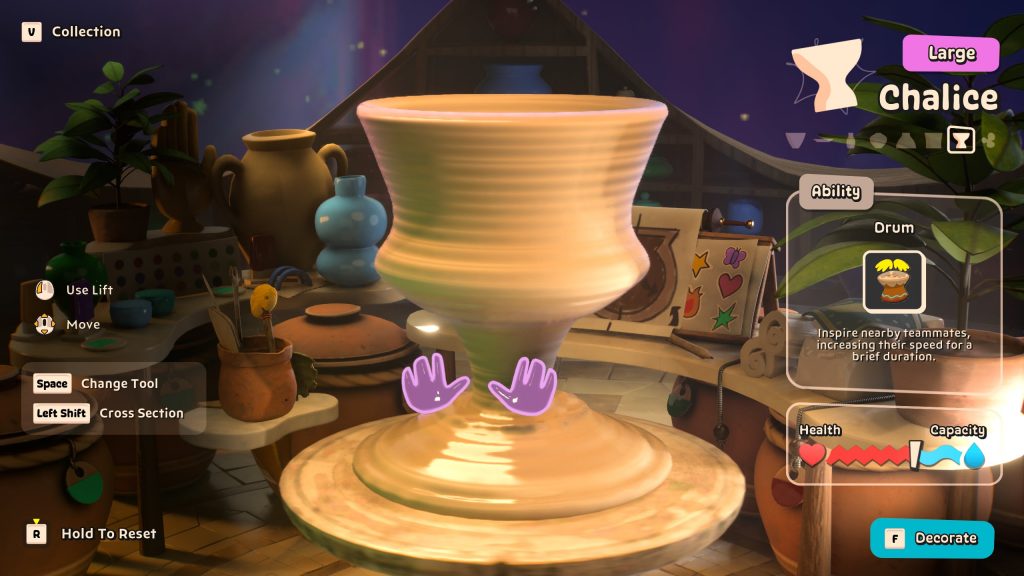
- Pottery type acts as Kiln’s class system: Cup, Chalice, Bowl, Vase, Bottle, Jug, Plate, and Vessel
- Three sizes (small, medium, large) further alter speed, moveset, and special ability
- Shape and size determine health pool and water capacity, creating built-in tradeoffs
Where Kiln gets clever is how your creation determines your role in battle. The game reads your pot in real time and assigns it a class—Cup, Chalice, Bowl, Vase, Bottle, Jug, Plate, or the catch-all Vessel for anything that doesn’t fit cleanly into the others. Each type comes with its own moveset and special ability, and the three size tiers further reshape your speed and capabilities. A small chalice and a large chalice play almost nothing alike.
Shape and size also dictate your health bar and water capacity, with built-in tradeoffs that genuinely matter. A shallow plate carries barely any water, but a tank hits with an enormous health pool, while a tall vase becomes a walking reservoir that shatters if you so much as look at it sideways. It’s a smart system that rewards experimentation and lets your aesthetic choices have mechanical consequences. The depth here is real, even if the surrounding game doesn’t always do enough to highlight it.
Quench Mode (Objective) — A Splash of MOBA
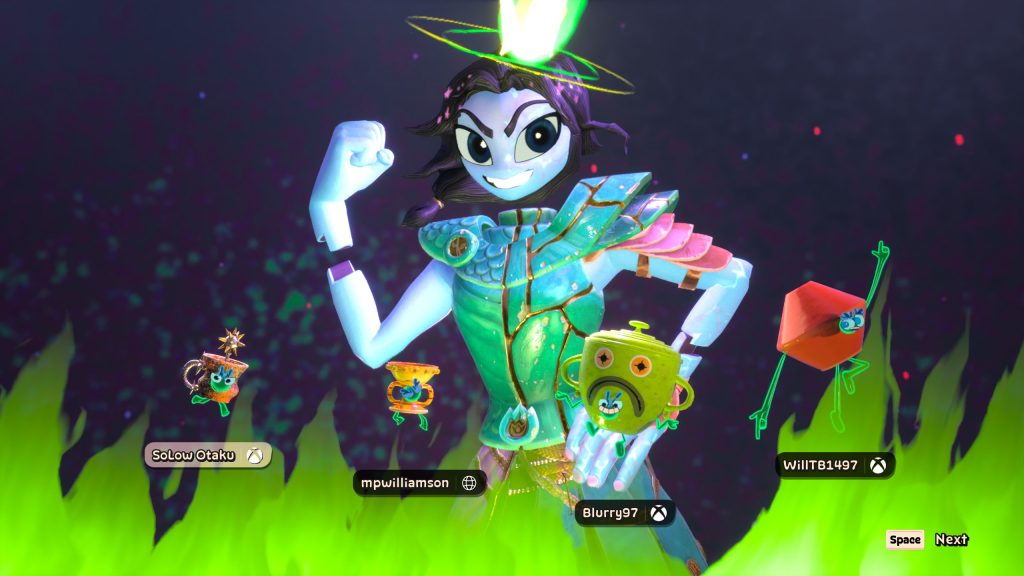
- Quench is a 4v4 objective mode where teams collect water to douse the enemy team’s Kiln
- Filling your vessel triggers a Super Splash that opens the Kiln up for direct damage
- Deplete all three Kiln health bars to win, and watch out for the fire-breathing retaliation
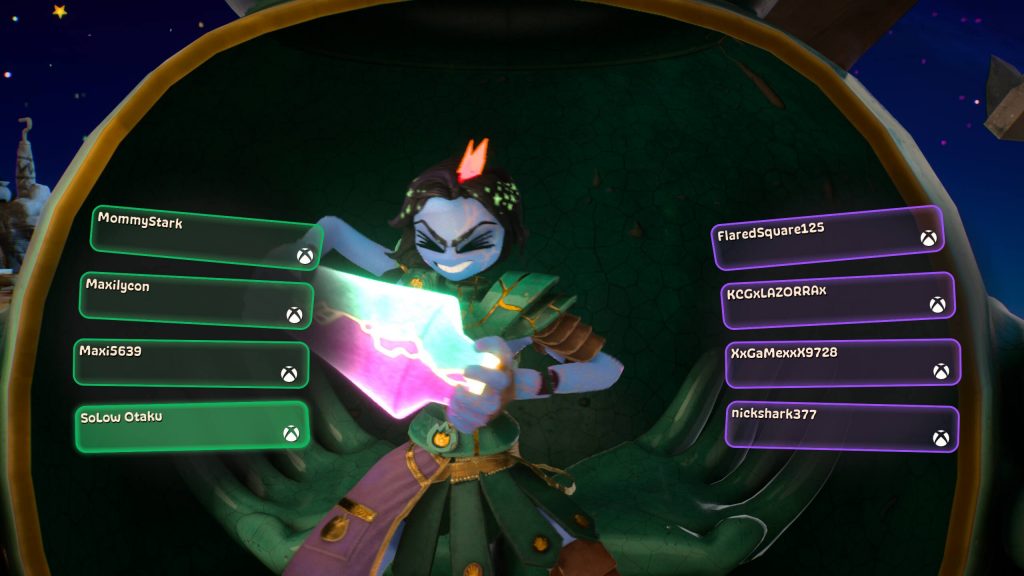
Quench is Kiln‘s only mode and works as a very simplified MOBA. You and three teammates spawn as customizable spirits, possess your pottery creations, and fight to extinguish the enemy team’s Kiln before they extinguish yours. The maps are surprisingly well designed, with branching paths and environmental shortcuts that only certain shapes and sizes can navigate. It’s a nice wrinkle that actually makes pot selection matter.
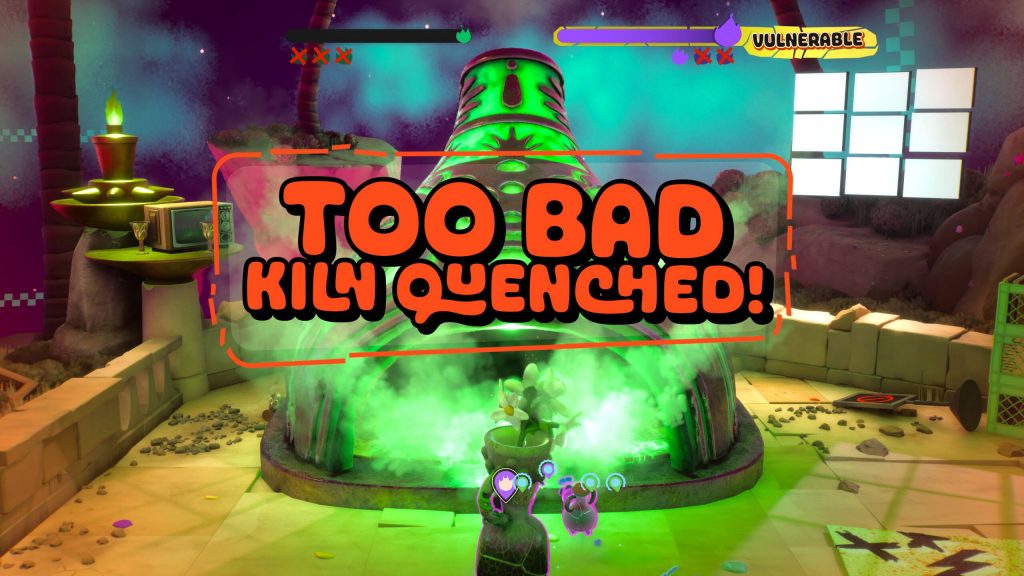
Water is your ammunition, collected from strategic points scattered around the arena. Filling your vessel to the max and reaching the enemy Kiln lets you unleash a Super Splash, exposing one of its three health bars for extra damage. Deplete all three to win. Each time you crack a health bar, the Kiln retaliates by breathing fire at anyone nearby, so the finishing blow comes with a quick scramble for cover. There’s a real strategic shape here. Attack and defense both matter (even if most lobbies devolve into a race to splash faster than the other team).
Quench Mode (Combat) — Lacking Depth and Impact
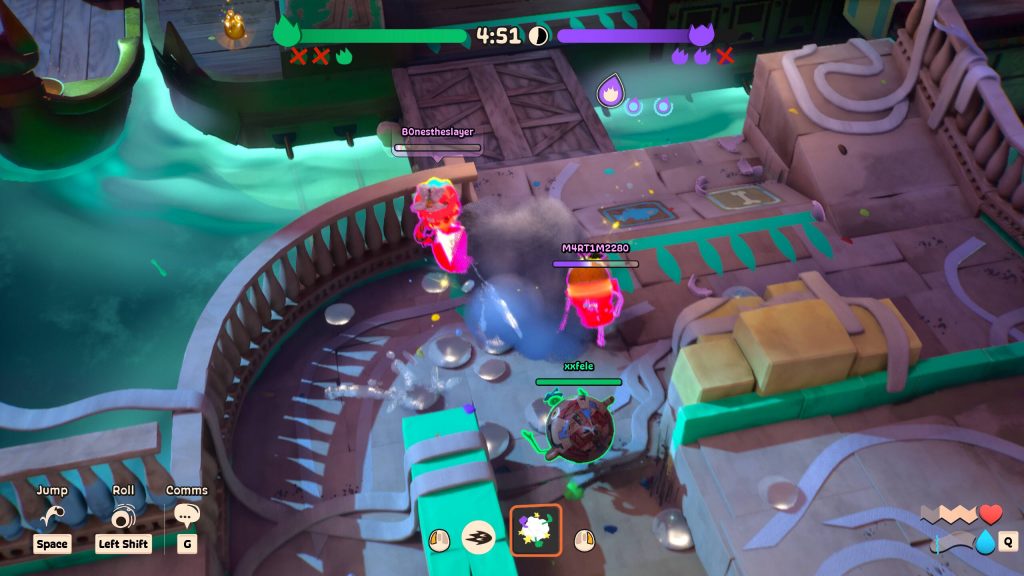
- Combos boil down to mashing X with the occasional aerial dive or drop attack
- Special abilities tied to pot shape are creative and flashy, but not enough to carry the loop
- Defensive play feels weak — opponents can spam splash through your combos without flinching
This is where Kiln starts to crack. The brawling itself just isn’t as satisfying as it needs to be. Your basic combo amounts to mashing X, with the occasional aerial dive or drop attack to mix things up. The special abilities are creative and flashy—a large jug that rings like a bell to stun nearby enemies, a long vessel that fires bursts of popcorn—but they’re on cooldown often enough that the moment-to-moment combat ends up pretty thin.
Worse, hits don’t carry the impact they should. There have been too many moments where I’m defending my Kiln, slamming away at an attacker, only to watch them keep splashing my Kiln while my combo is on cooldown. For certain builds, like a large jug, the water knocked out doesn’t feel proportional to the hits I’m landing. Spamming the right trigger when you’re close enough to the Kiln will allow you to douse through almost any attack with no skill. Defensive play, in theory, should be a challenging but worthwhile role; in practice, it feels like trying to swat a fly with a paper towel.
There’s a foundation here, but the brawler underneath the pottery is undercooked. On top of that, I noticed a few brief stutters during the heavier gameplay moments on Xbox Series X—nothing game-breaking, but for a game of this visual scale, it’s something that shouldn’t be happening on current hardware.
Content & Longevity — Half-Baked at Launch
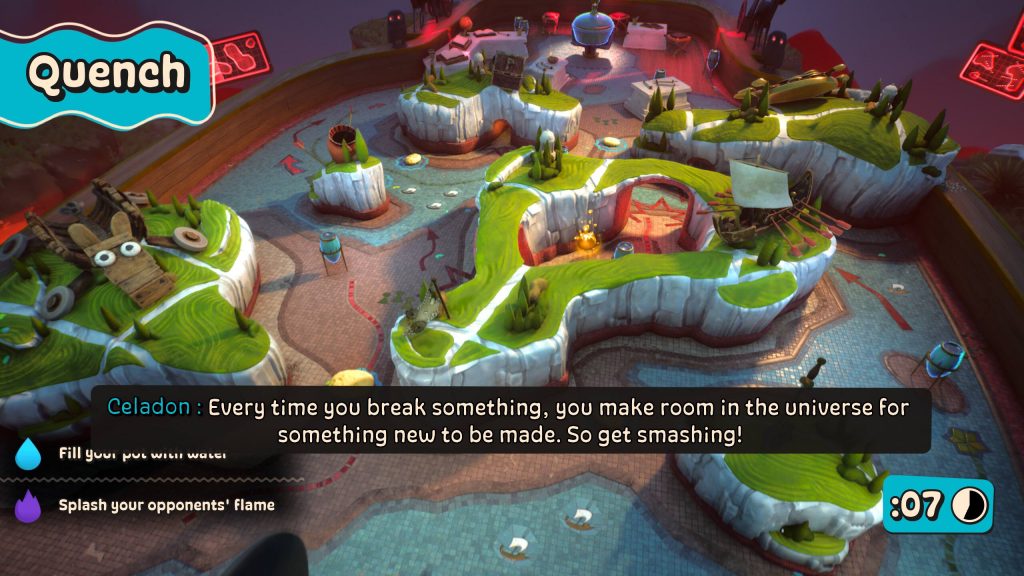
- One game mode (Quench) and a small handful of maps make for a thin launch package
- Cosmetic and tool unlocks dry up around level 10, leaving little reason to keep grinding
- The whole package feels closer to early access than a full retail release
Kiln‘s biggest problem is what’s not in the box. There’s exactly one game mode, a small handful of maps, and a progression system that doesn’t bring any gameplay additions around level 10 once you have all your tools and clay sizes. After that, you’re playing for cosmetics, and once those run out, you’re playing for nothing.
Quench isn’t a bad mode, and the maps aren’t bad, but a single-mode multiplayer game lives and dies on depth, and the brawling here doesn’t have enough texture to carry the load by itself. There are no leaderboards, no real solo content, and nothing approaching a campaign or alternate loop to fall back on when the matchmaking isn’t cooperating. Coming from a studio that’s juggling multiple ambitious projects, Kiln has the unmistakable feel of a game shipped before it was ready. With more modes, more maps, and more reason to keep showing up, this could grow into something special. As-is, it feels more like an early access game in disguise.
Final Thoughts — All Decor, Not Enough Substance
Kiln is one of the most frustrating disappointments I’ve experienced this year because everything surrounding the multiplayer is good to great. The pottery wheel is a delight, the art direction is gorgeous, and Celadon’s a charming character even in her limited capacity. But Double Fine built a beautiful frame around a hollow center. Quench is shallow, combat lacks impact, and there isn’t enough content to keep me in it for the long haul. If you’ve got friends, a few free hours, and you love the idea of throwing virtual clay, there’s a good time waiting here. If you’re looking for a multiplayer mainstay, this isn’t it—at least not yet. With more modes and meaningful updates, Kiln could grow into the game its premise deserves. Right now, it’s a charming idea that needs another year on the wheel.
Final Score: 6.5/10
Pros
- Pottery creation is intuitive, tactile, and genuinely joyful
- Class system ties form to function in smart, meaningful ways
- Vibrant Double Fine art direction packed with personality
- Celadon’s personalized post-creation dialogue is a standout touch
- Creative and wholly unique concept with real potential
Cons
- Combat lacks depth and impact
- Only one game mode (Quench) at launch
- Content and progression dry up around level 10
- No solo options or leaderboards
- Feels like an early access release rather than a full launch
A review code of the Kiln Fired Up Edition was provided by Xbox.
