
Beast of Reincarnation Review: More Than Just a Soulslike
Developer & Publisher // Game Freak, Fictions
Platforms // PC, Xbox Series X|S, PlayStation 5
MSRP & Release Date // $59.99, August 4th, 2026
Reviewed On // PC (Steam)
Some comparisons help players understand a game before they ever pick up a controller. Others become so dominant that they create expectations the game was never trying to satisfy. Since Beast of Reincarnation was revealed, one comparison has followed it everywhere: this is Game Freak‘s Soulslike. After roughly thirty hours with the game, I understand why people say that. I also think it is the wrong way to approach what Game Freak built.
The similarities are easy to see. Emma carries a sword through a haunting, post-apocalyptic Japan. Bosses demand attention, parries matter, and careless attacks can leave you exposed. Those elements naturally evoke Sekiro and Dark Souls. Yet I eventually stopped measuring Beast of Reincarnation against either game. The more I explored and unlocked, the clearer its real goal became. Game Freak was not asking me to endure punishment through sheer persistence. It was asking me to enjoy learning.
That distinction changed my experience. My opening hours were full of questions. Why are there so many progression systems? How do Emma‘s Hair abilities interact with Koo? What is Entanglement Overdrive? Why am I managing cooking, farming, research, and Rapport beside an expanding combat system? Each answer unlocked another layer. Systems that first felt separate began reinforcing one another. Before long, I was no longer thinking about mechanics one at a time. I was fighting, exploring, and looking forward to whatever the next expedition would teach me.
The game has real weaknesses. Enemy variety repeats sooner than it should. Technical rough edges interrupt movement and exploration. Stability became a serious concern in later sections. Even so, I kept returning to the Cleansing Walker with the same thought: one more expedition, one more upgrade, one more mechanic to master. That was not because Game Freak successfully copied FromSoftware. It was because Beast of Reincarnation rewards curiosity as much as skill.
Players who want a faster introduction to its systems can also read my Beast of Reincarnation beginner guide, which covers the early lessons that took me several hours to understand.
What Is Beast of Reincarnation?
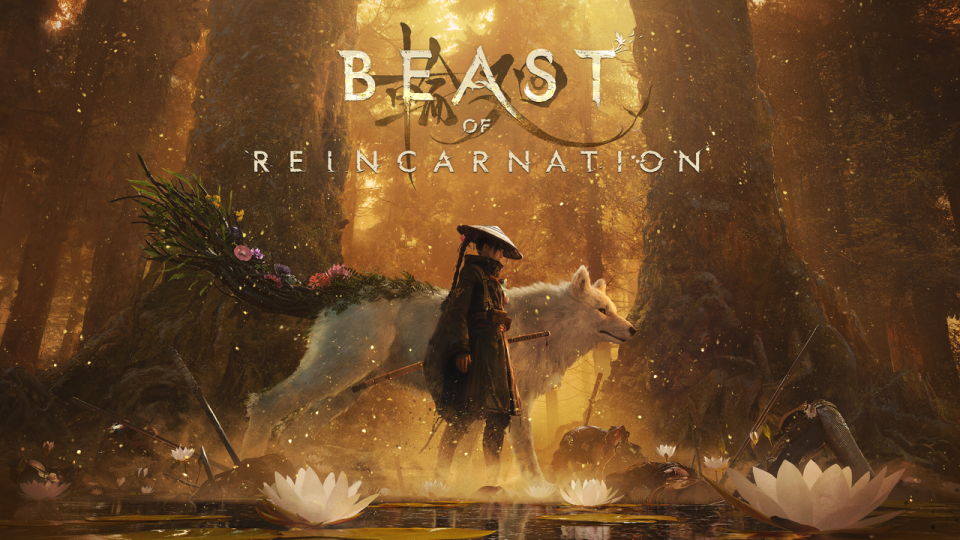
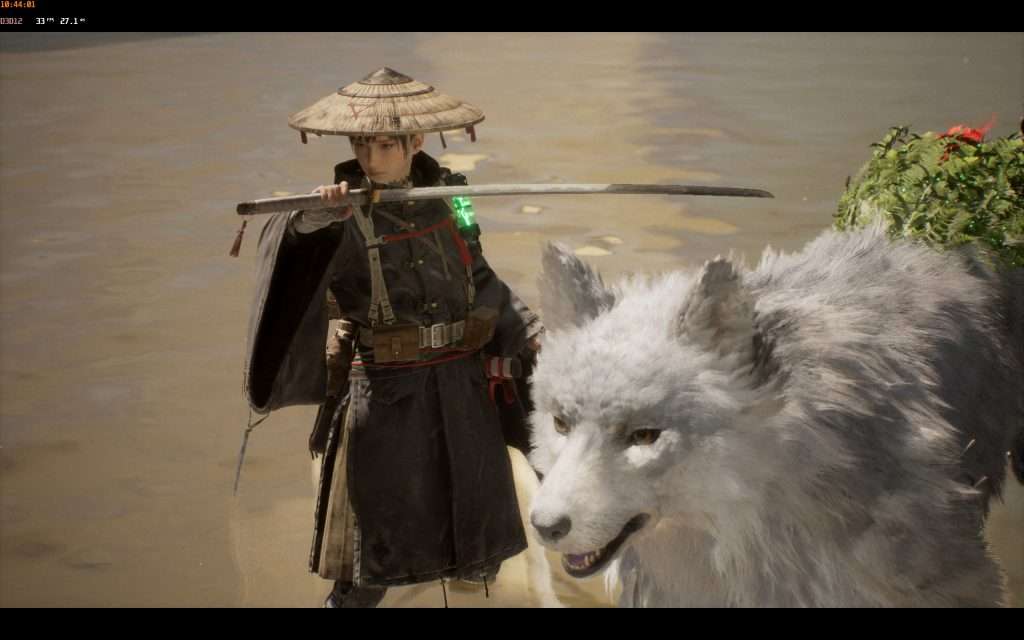
Set in a post-apocalyptic Japan consumed by a corruption known as the Blight, Beast of Reincarnation follows Emma, a Purifier whose existence is tied to the catastrophe threatening humanity. The game reveals its mysteries through fragmented memories, chance encounters, and quiet conversations. At Emma‘s side is Koo, a wolf-like companion who becomes both the emotional center of the journey and a core part of combat.
The story begins as a familiar conflict between humanity and monstrous creatures. It gradually becomes more thoughtful. Many Golems are more than simple machines, and their origins raise questions about identity, memory, and what it means to remain human when consciousness can survive beyond the body. The game gives players enough information to encourage another hour of exploration, then pulls the curtain back a little further.
Fictions describes it as a “one-person, one-dog action RPG”. That description is more useful than the Soulslike label because it centers Emma and Koo’s partnership rather than another studio’s formula.
Story & World
A Mystery That Unfolds Slowly
Beast of Reincarnation tells its story with patience. It avoids burying the opening in exposition and instead reveals Emma, the Blight, the Golems, and the fractured world through memories and discoveries. Most answers create another question. That structure encourages curiosity rather than racing toward an immediate explanation.
The central mysteries evolved alongside my understanding of the world. What first looked like a basic conflict between humanity and monsters became more reflective. Revelations about the Golems, the nature of the Blight, and Emma‘s existence challenged my assumptions about who the victims were. The game rarely settles for a simple good-versus-evil conflict.
Relationships Give the World Weight
Emma‘s relationships provide much of the emotional grounding. Koo quickly becomes more than a combat companion. Kagura‘s arrival gradually transforms the Cleansing Walker into something resembling a home rather than a mobile menu. Sharing meals, checking research, and speaking with companions before another expedition create the sense that these characters are building a life amid extraordinary circumstances.
The pacing asks for patience. Revelations are spaced apart, and players who want constant narrative momentum may find the quieter stretches slow. Those moments still serve a purpose. They allow exploration, progression, and relationships to breathe. I wanted to understand the world and the people living in it, not merely reach the next boss.
Exploration & World Design
The Main Path Is Only a Suggestion
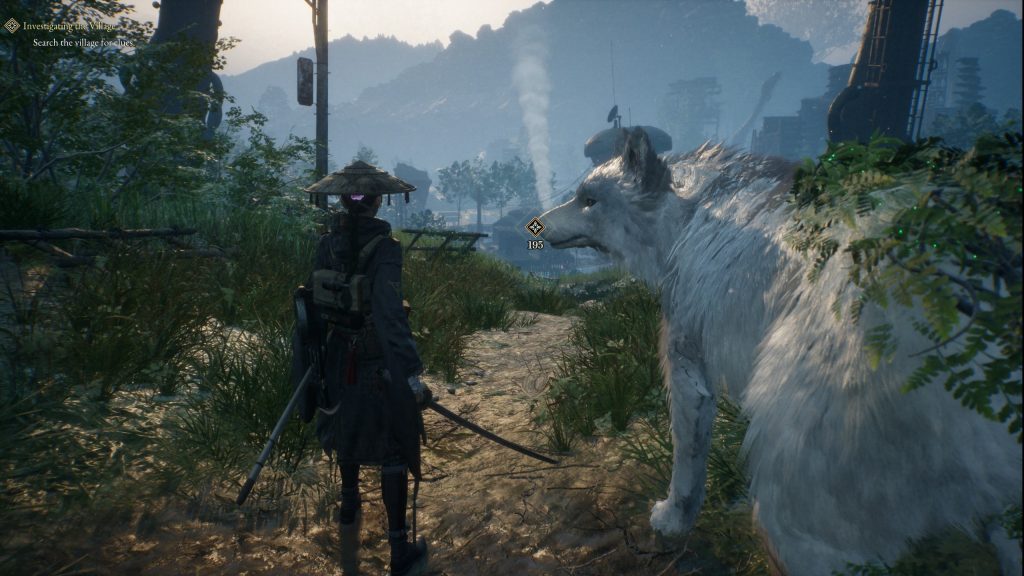
If combat pulled me forward, exploration pulled me sideways. Guiding wisps, objective markers, and distance indicators provide clear direction when players want it. The game rarely leaves you completely lost. What surprised me was how often it rewarded me for ignoring that guidance.
Some of my best discoveries began with something that looked slightly out of place. A cave away from the objective led to equipment. An elevated platform revealed an alternate route, upgrade materials, and a control room that opened a shortcut. Dragon Vein Shrines contributed to long-term healing progression. Hidden Iron Boxes offered useful crafting materials. The game repeatedly taught me that wandering was not wasted time. It was progression.
Verticality Changes How You Read the Map
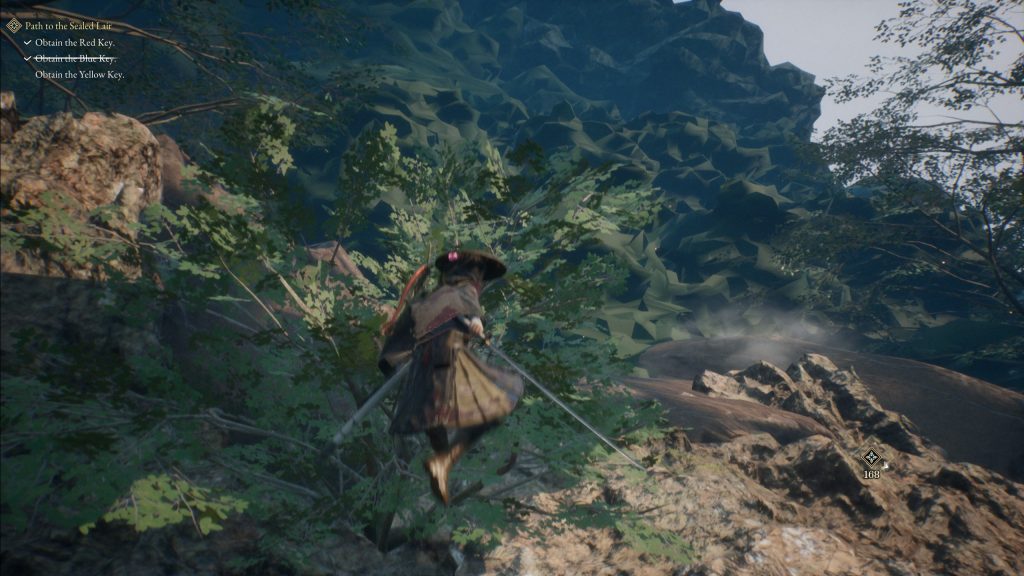
Emma‘s Hair powers gradually turn traversal into something fluid and expressive. Grapple points, extended jumps, aerial movement, and environmental interactions encourage players to look upward instead of only forward. More than once, I thought I had reached a dead end. The solution was not behind a puzzle. It was above me.
The world supports that curiosity. Ancient ruins reclaimed by nature, abandoned facilities, and forgotten settlements feel worth exploring before any reward appears. There is a quiet loneliness to the landscape, broken by the occasional campsite, wandering Golem, or massive Nushi in the distance. By the second half of my playthrough, I trusted unusual paths because the game had earned that trust.
Movement Has Rough Edges
Invisible walls sometimes blocked jumps that looked reasonable. Collision could reset Emma after awkward landings, and certain ledges behaved inconsistently. These issues never erased the joy of exploration, but they interrupted its momentum often enough to notice.
Combat
From Overwhelming to Instinctive
I was not sure the combat would work for me during the opening hours. The game introduced parries, ranged attacks, Hair abilities, Koo‘s commands, Entanglement Overdrive, aerial movement, weapon effects, attributes, and several skill trees. It seemed to trust that everything would eventually make sense. At first, I did not share that confidence.
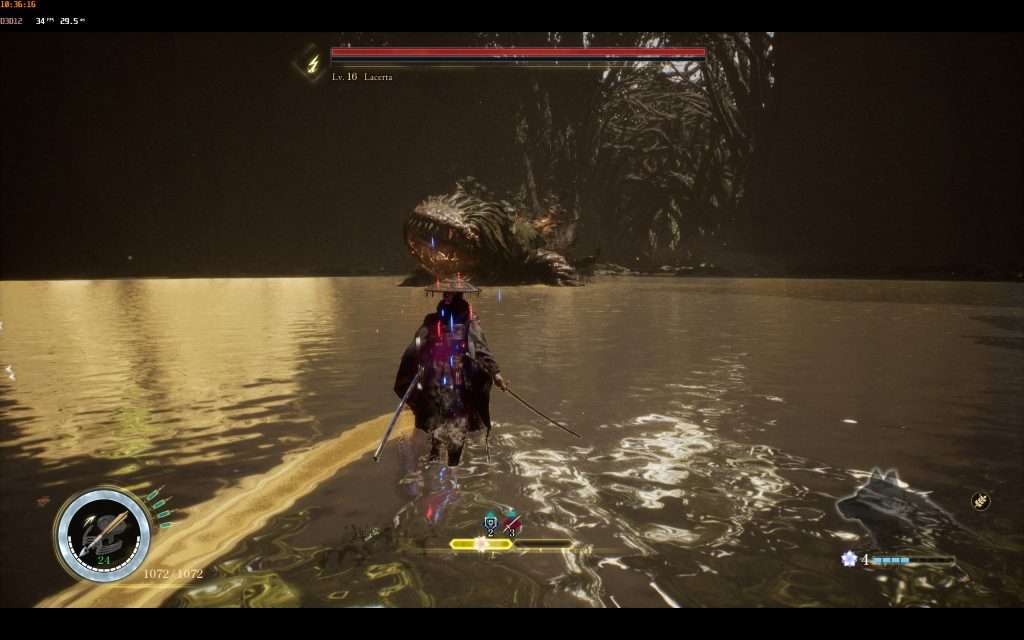
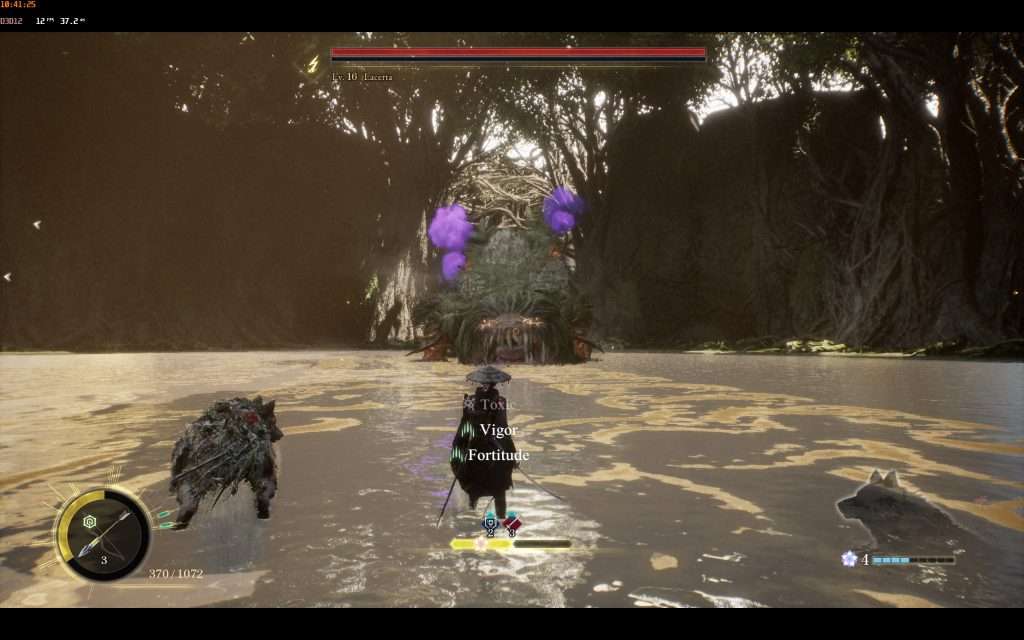
Then the combat clicked. A parry stopped being only a defensive move and became the first step in a longer sequence. Parries built resources for Koo‘s follow-up attacks. Those attacks created openings for Emma‘s Hair abilities. Entanglement Overdrive slowed enemies long enough to execute combinations that had felt impossible a few hours earlier. Once I began chaining aerial attacks into finishers such as Biting Tempest, I was no longer selecting systems. I was reacting.
Progression Expands Your Vocabulary
Character growth is not limited to higher damage and larger health bars. New Hair techniques change movement. Weapon effects reward successful parries with unique bonuses. Koo‘s skill tree opens offensive and defensive options. Even learning that four airborne strikes can lead into a finisher changes the rhythm of an encounter. The game expands your combat vocabulary instead of merely raising numbers.
This depth remains approachable. The parry window is far more forgiving than Sekiro‘s, so success feels earned without requiring frame-perfect inputs. Difficulty settings, the ability to pause, Koo‘s support, and several viable styles all make the system more welcoming. Game Freak is not trying to filter players through frustration. It is teaching them how much fun the system can become.
The Enemies Do Not Keep Pace
The enemy roster does not match the range of the combat system. I fought familiar Golems and recurring Nushi archetypes again and again. Their moves became predictable. Repetition can help players learn the combat language, and I often enjoyed executing that language more cleanly. The game still deserved more opponents capable of testing everything it taught me.
By the later part of my playthrough, I was not only looking for the next story beat. I was looking for the next fight.
Progression & The Cleansing Walker
A Lot of Systems, Introduced With Restraint
The systems around combat initially concerned me even more than combat itself. Emma has attributes, skill trees, weapon upgrades, and ranged abilities. Koo has attributes, equipment, research, Rapport, and another large skill tree. The Cleansing Walker adds cooking, farming, crop management, crafting, fast travel, equipment enhancement, and relationships. On paper, it sounds ready to collapse under its own weight.
Game Freak avoids that outcome by refusing to explain everything at once. Systems usually arrive because the story creates a reason for them. Kagura does not merely unlock cooking. She becomes someone to speak with before resting. Koo‘s research is not only another menu. It is a task you assign before leaving. Growing rice and preparing meals become part of a routine rather than an inventory chore.
The Cleansing Walker Feels Like Home
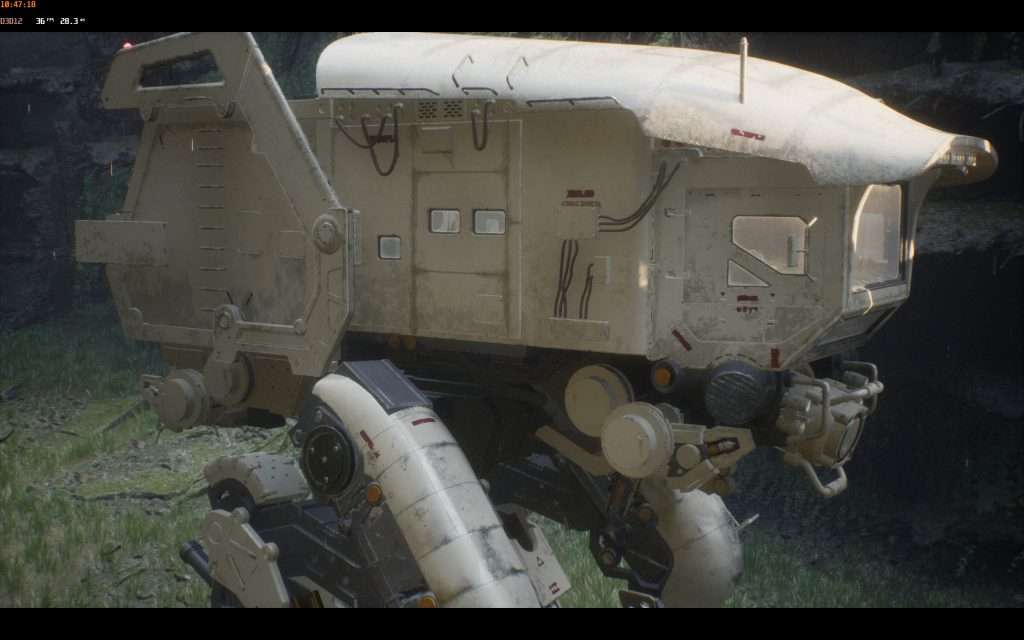
After an expedition, I returned to the Walker almost automatically. I checked Koo‘s research, looked for Kagura‘s new recipes, spent attribute points, reviewed equipment, adjusted crops, and prepared for the next day. None of those actions is revolutionary by itself. Together, they give every expedition a beginning and an end. The Walker becomes the place where the adventure breathes.
Progression also adds options rather than only power. Hair abilities open movement choices. Weapon effects create new incentives around parrying. Koo grows alongside Emma and develops new attacks and support skills. Even late in my playthrough, I continued unlocking techniques that changed familiar encounters. Around thirty hours in, the systems that once looked intimidating had become second nature.
Graphics & Art Direction
A Restrained World Built Around Contrast
My opinion of the visuals changed as I played. The world first struck me as muted, with earthy browns, faded greens, and washed-out grays. Compared with more colorful fantasy games, the presentation could feel flat. After adjusting settings and testing the game on two different PCs, I realized its identity is built around contrast rather than saturation.
Darkness gives light room to command attention. White blossoms, glowing Blight growths, and sunlight cutting through forests stand out because the rest of the world shows restraint. Beast of Reincarnation does not chase spectacle in every scene. It gives individual moments space to breathe.
That visual identity was apparent even before release, as our earlier Beast of Reincarnation visual analysis noted the unusual blend of organic growth, machinery, and vertical movement.
Creature Design Carries the Spectacle
The Nushi designs are consistently imaginative. One early creature looked like a bull, a stag, and an ancient forest had merged into one organism. Antlers intertwined with wood. Organic growths pulsed beneath bark-like armor. Flowering corruption spread across its body. Even when later battles reused familiar archetypes, the designs remained memorable.
Emma‘s animation also deserves credit. Her movement has momentum, especially once Hair abilities become central to traversal and combat. Aerial attacks and finishers reinforce the expressive combat system. Emma and Koo develop a visual language that communicates their partnership without relying entirely on dialogue.
Technical Presentation Falls Short of the Art
Cutscenes appeared noticeably less fluid than gameplay. Environmental rendering issues and collision quirks also pulled me out of strong scenes. Those problems do not erase the art direction, but they keep the presentation from reaching the polish it often seems close to achieving.
Audio
Music That Blends Into the Journey
The soundtrack shows restraint. It carries a relaxed, contemporary Japanese feel and quietly blends into the experience. It supports the world instead of competing with it. Exploration stays calm, while combat and story moments retain room for their own emotional weight.
Environmental sounds, distant wildlife, mechanical footsteps, and subtle ambient effects often establish the mood before the score asks for attention. Returning to the Cleansing Walker sounds different from entering a corrupted wilderness or confronting a Nushi. Those shifts support the rhythm between danger and preparation.
I played with Japanese voices and English subtitles throughout the review period. The performances complemented the setting, and the option to advance dialogue helped maintain momentum once I finished reading a subtitle. I rarely thought about the soundtrack during long sessions, yet I never wanted it gone. It became part of the world, which is a compliment.
Performance & Stability
Strong Frame Rates on Two Very Different PCs
I tested Beast of Reincarnation on two different PC systems. On a Ryzen 9 9950X3D and RTX 5090 desktop, gameplay regularly exceeded 120 FPS at maximum settings. Combat felt responsive. On the ASUS ROG Flow Z13, powered by a Ryzen AI Max+ 395 with 64GB of memory, tuned settings produced performance in the mid-50 FPS range. The portable system remained playable and looked much better after moving from aggressive upscaling to FSR 3 Quality.
Comparing both machines helped separate configuration issues from art direction. It also exposed the difference between performance and stability. The game can run quickly and still fail to remain running.
Persistent Bugs Interrupt the Flow
Environmental collision produced invisible walls, movement resets, and moments where Emma became stuck before the game repositioned her. Interaction prompts behaved inconsistently. Doors and campsites could activate when no prompt was visible. Other actions pulled Emma into fixed approach animations. Koo also stood close enough to block the camera or overlap with Emma.
An early Unreal Engine crash occurred while I used the bathing area inside the Cleansing Walker. Frequent autosaves preserved my Grow Chamber setup, so the first crash felt like an isolated interruption.
Late-Game Crashes Became a Barrier
Stability worsened in later sections. During one session of roughly one to two hours, the game crashed two or three times. One crash was followed by the entire system shutting down. Later crashes returned me to the desktop or forced another restart. Autosaves protected most progress, but they could not protect the pacing.
By the third crash in that stretch, I stopped playing because I did not want to restart again. That is significant. Strong frame rates do not compensate for software that repeatedly stops running. The game remained something I wanted to play, which made the crashes more frustrating.
Accessibility & Quality of Life
A More Welcoming Philosophy
My hesitation to call Beast of Reincarnation a Soulslike comes down to philosophy. Dark Souls and Sekiro are intentionally uncompromising. Players adapt to those games. Beast of Reincarnation borrows parts of their vocabulary, but it repeatedly looks for ways to welcome players instead of filtering them out.
The generous parry window gives players time to learn patterns without requiring frame-perfect inputs. Difficulty settings tailor the challenge. The game can be paused. Frequent autosaves limit the damage from interruptions. The Cleansing Walker gives players a reliable place to regroup and prepare.
Small Conveniences Respect Your Time
Fast travel between camps prevents exploration from becoming tedious. Objective guidance keeps players oriented without removing discovery. Dialogue can be advanced after reading subtitles. These features are small, but together they make the game easier to fit into real life.
The game also teaches complexity well. Early on, I wondered whether I could track its systems. Thirty hours later, I was naturally combining parries, Hair abilities, ranged attacks, Koo‘s skills, cooking, farming, and research. Beast of Reincarnation asks, “Are you ready to learn something new?” more often than it asks, “Can you survive this?”
Should You Play Beast of Reincarnation?
If you enjoy action games, there is a strong chance you will enjoy Beast of Reincarnation. Do not expect Elden Ring‘s range of enemies or FromSoftware‘s relentless encounter design. Expect a fully developed battle system that borrows familiar ideas, blends them into a cohesive whole, and keeps finding new ways to let you play.
The repeated Golems and familiar Nushi variations may bother players who need every region to introduce a new set of threats. Players who enjoy mastering combos, experimenting with builds, and finding cleaner ways through familiar fights will find the repetition easier to forgive.
There is an excellent foundation here. The combat offers enough freedom and expression to carry long stretches of the game. The problem is that enemy diversity and stability do not always rise to the same level.
Closing Thoughts on Beast of Reincarnation
This Beast of Reincarnation review began with a question about the Soulslike label. After approximately thirty hours, I think that label still misses the point. This is a more welcoming and experimental action RPG. It is interested in teaching players rather than testing how much frustration they will tolerate.
That accessibility comes with compromises. Enemy variety never keeps pace with the sophistication of the combat, and technical problems became increasingly difficult to ignore. Even so, I kept wanting one more fight. Game Freak built a combat foundation that grows into a playground for experimentation.
Do not come expecting Elden Ring. Come expecting an action RPG that is more interested in making you feel capable than making you feel defeated.
Review Score
8.5 / 10
Pros
- Deep combat that continues expanding across the playthrough
- Progression adds meaningful options instead of only larger numbers
- Exploration rewards curiosity and vertical thinking
- The Cleansing Walker creates a memorable home-base rhythm
- Welcoming design makes parry-centered combat approachable
- Distinctive art direction and understated audio support the world
Cons
- Limited enemy and boss variety weakens long-term freshness
- Late-game crashes became frequent enough to block progression
- Interaction detection, forced positioning, and collision feel unpolished
- Cutscenes appear noticeably less fluid than gameplay
Disclosure
A Steam review code was provided for coverage. This did not influence the review or score. This review reflects approximately thirty hours with the PC version during the review period.
