
What is Stranger Than Heaven?
Building on the growing success of the Like a Dragon franchise and spearheading an exciting iteration of Virtua Fighter, RGG announced Stranger Than Heaven in 2024 (under Project Century) and stunned everyone with a major departure from past releases.
With weighty combat and a narrative told across several time periods, this is RGG’s most ambitious project in a long time. Following up on our coverage of SEGA and RGG’s Stranger Than Heaven preview from Summer Games Fest, Lord Cognito and I played over three hours of content spread across three of the game’s five eras.
Musically punching and brawling my way to victory, I have a lot to say about my experience with SEGA and RGG Studio’s exciting adventure.
Finding a Place – Intro Section
The demo started with Makoto Daito, a Japanese-American. He’s on the run, rushing toward a ship to leave America. I loved how well-animated the intro sequence felt, with Daito carefully navigating through tight alleys; it was tense. Eventually, Daito was forced to fight his pursuers, introducing the basic combat mechanics.
Combat gameplay feels different from past Yakuza titles, with attacking mapped to the shoulder buttons instead of the face buttons. Light attacks use the bumpers and heavy attacks use the triggers; Daito’s blows feel heavy, with heft and weight. In many ways, the combat felt like a modern-day brawler.
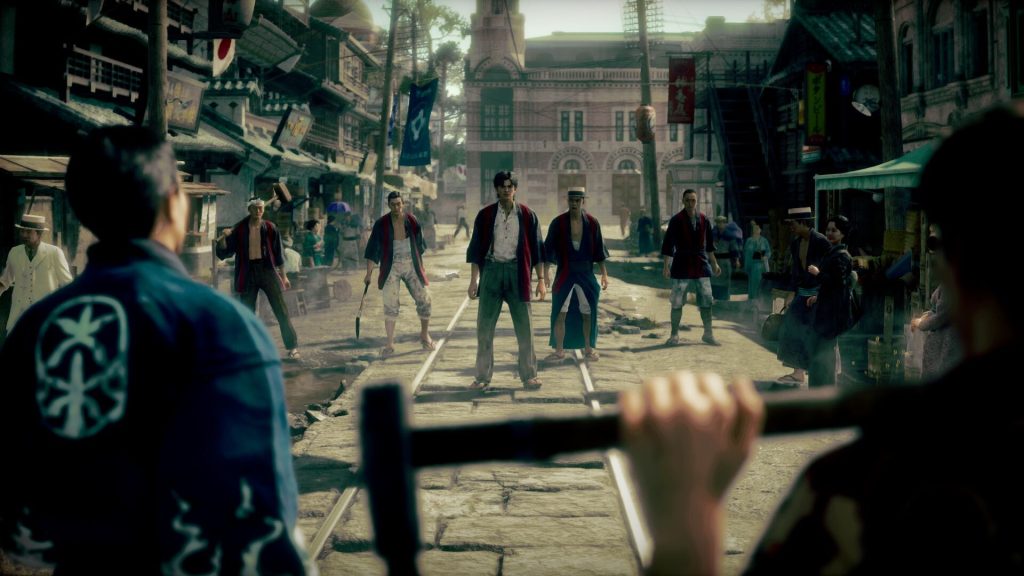
The opening section concluded with a tutorial on blocking and countering. Blocking feels great to pull off, though countering has a tight window, with specific attacks demanding you press the correct attack button while holding down B.
But the combat has several nuances that both Lord Cognito and I noticed during our hands-on experience.
Bear Knuckle Rumbles – Weapons & Nuances to Combat
But we didn’t only go hands-on with the game’s opening; one era we went through involved two lengthy gameplay sections.
Both had us exploring a somewhat run-down town near the docks, with the first of these introducing a combat-focused side quest. This involved Daito catching people trying to steal from warehouses. This let me experiment with the game’s various weapons, each one feeling distinct.
You can go with lighter weapons, like knives, to get the speed bear-knuckle fighting offers. Or, you can use heavier weapons, like Hammers or Swords, with immense power that can easily kill your foes. The trade-off is that countering with these weapons runs on a strict countering window, and your dodge ability is heavily hindered.
I really felt this in the second part of this era’s demo, with Diato storming through a construction site and brawling his way through foes. Fighting the normal enemies felt fine, since I stocked up on drinks and health items in the open world before engaging with this challenging sequence, so my inability to counter wasn’t too bad.
But against the main boss, using a weapon made the fight much harder. I eventually switched back to fist-based combat, and on a second try, I won. The best part of using your fists is the fantastic dodge ability, and with the right timing, you get a Bayonetta-esque slowdown effect. This lets you either land additional blows or get out of the way.
With nuances to each weapon type, bosses hitting like a truck if you aren’t careful, and a strict counter system, major battles could be somewhat Souls-coded. Thankfully, people at the event confirmed a ‘Story Difficulty’ will be usable for those who struggle, and some accessibility options will be in the final game.
City Blues – Open World Breakdown
But Stranger than Heaven isn’t just brawling through the streets, as each era has its own major city to explore. Similar to past RGG games, each city has shops you can enter, side quests to complete, and several mini-games.
Exploring the Open World
Exploring three different cities, the vibes were distinct. The first was a somewhat run-down docking village, and people didn’t fully respect Diato (he’s early in his career). One wrinkle I really liked, however, was how Diato carried himself with the NPCs.
Many speak to him in Japanese, but some NPC’s, like Snoop Dog’s character, speak to him in clear English. This distinction is throughout the entire demo, with the other Eras leaning harder into this aspect of his character.
Another highlight of exploring the open world is that you naturally go inside most buildings without any loading screens. It adds immersion, amplified by the later era’s gorgeous backdrops. Of the two later eras, I had most fun exploring a snowy town, with muted background music and a night-time setting adding to the immersion. But when casually exploring, what can you do to pass the time?
Underground Fighting
A major side mission is the underground fighting ring. Fighting a series of tougher opponents, it pushes you to test your fighting chops. However, it’s not mindless fighting, as when you re-challenge an opponent, you can select various modifiers. The demo included ones like being limited to fist combat, forcing you to play into one specific weapon type.
Beating re-challenged opponents earns you additional money, encouraging players to accept the higher challenge.
Mini-Games
And what is any RGG open-world adventure without fun mini-games to play? In the final open-world section, taking place in a neon-lit Japanese city, Diato can enter a gaming area full of mini-games.
Unlike the Yakuza games, there are no SEGA arcade games in sight. Instead, mini-games are inspired by eras across the nineteen-hundreds. My personal highlights are a spinning-top game where you knock your rival’s top off the board, and a shooting gallery shoot down bottles of alcohol.
These add so much life to the game, making the world feel even more lived in.
I Found a Place… – Music in Stranger Than Heaven
Exploring open cities and fighting your way through isn’t what Stranger Than Heaven is about. Those elements are there to carry an experience deeply inspired by music, melding cultures from across the world.
Before even going hands-on with the game, we watched a video of Stranger Than Heaven’s main theme. It combines jazzy female vocals, smooth male vocals, and a killer beat. Later, we watched several music videos performed by Diato himself, as well as a major female character he meets early in his journey.
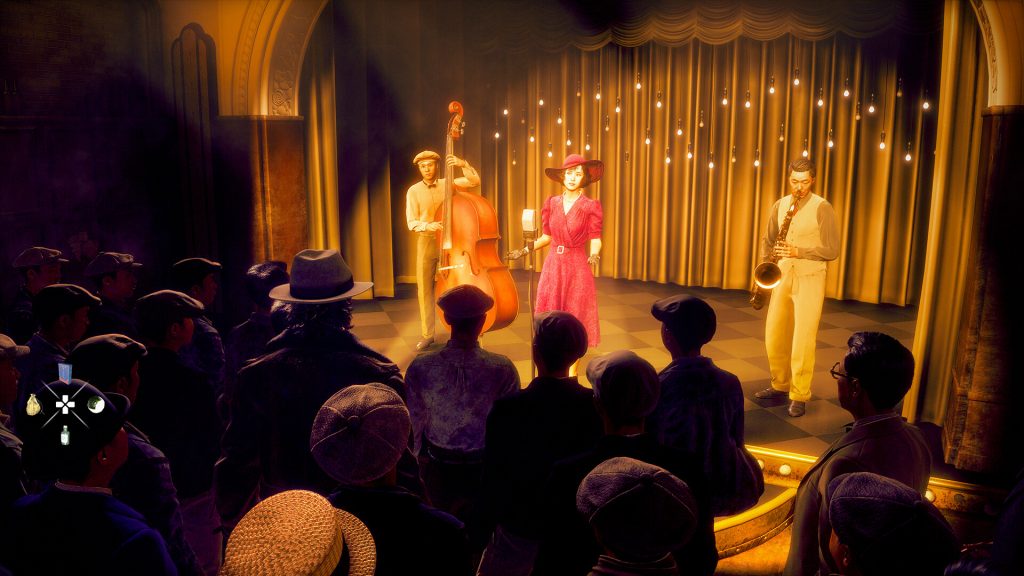
The music is a character of itself, and the musical performance that Diato and his buddy sang together was delightfully heartwarming. Another person also previewing the game described this specific sequence ‘like a Disney Channel musical’. That’s not an insult at all; it felt so earnest, with Diato expressing the musical culture he experienced in America to people in Japan.
Music isn’t only tied to the game’s story sequences, as a major side activity involves Diato running a production house. Using ‘musical inspiration,’ he learns through combat encounters (colorful orbs that pop in combat that you can collect with X) that he can add modifiers to song performances.
Hiring the right people, selecting the best modifiers, setting the right admission costs, and playing the music mini-game itself will earn you serious money. That additional money can buy healing items and powerful weapons for combat, alongside investing in more profitable productions.
Clawing to the Top – Character of Diato
The musical focus wasn’t Stranger Than Heaven’s only surprise, as the game’s narrative elements pulled me in.
Specifically, how Diato carries himself. Speaking to his love interest, for example, Diato stumbles his way into her good graces and speaks only Japanese to her. Meanwhile, he’s very casual with Snoop Dog’s character, speaking in clear English with him while learning how to roll cigarettes (which offer perks in combat).
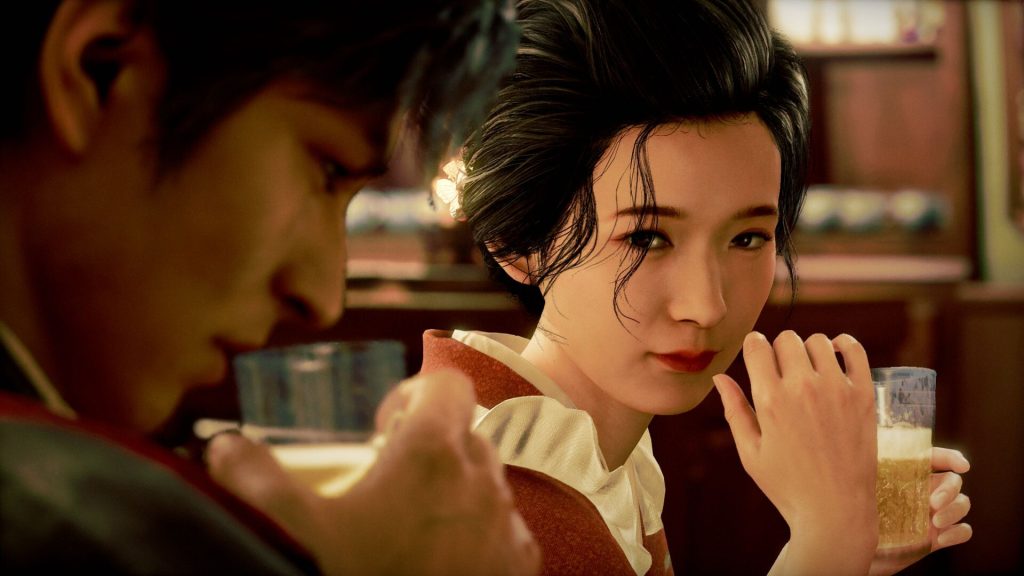
Seeing him care about his allies trying to save his love interest later in the demo, and how his more confident side gradually reveals itself during that gameplay section, has me excited to see how his journey further develops.
Closing Thoughts on Stranger Than Heaven
To say this has the makings of one of 2027’s surprise hits would be underselling things, combining the best elements of RGG Studios’ efforts with past titles into something strikingly different.
While its unique combat system could run into difficulty walls with strict countering windows, everything else about the experience was positive. The story pulled me in with interesting characters, amazing production values, and musical elements that took me completely off guard.
I didn’t expect music to play such a pivotal role in the game’s themes. I can’t wait to see how Stranger Than Heaven evolves when it launches on Xbox Series X/S as a Day One Game Pass release on January 15th, 2027, also releasing on PlayStation 5 and PC.
Stay tuned for coverage on Stranger Than Heaven and SEGA, here at Lords of Gaming!
