

What Was Eric Rios’ Championship Team in Pokémon Champions?
Winning a competitive Pokémon tournament is impressive enough, but doing so without losing a single match is something entirely different. That is exactly what Eric Rios accomplished at the Frankfurt Regional Championships, finishing with a perfect 17–0 record using a Pokémon Champions Battle Team featuring Mega Raichu Y, Mega Garchomp Z, Volcarona, Gholdengo, Rillaboom, and Incineroar.
After discovering this championship-winning team through Aaron “Cybertron” Zheng, I decided to give it a try myself. While I certainly wasn’t expecting to match Rios’ undefeated performance, I managed to finish with a respectable 4–1 record. Between its powerful special attackers, excellent support options, and surprising flexibility, this is another team worth taking a closer look at.
Before We Break Down the Team
Before getting into everything, I want to make one thing clear: I am by no means an expert competitive Pokémon player. These Battle Team Setup articles are about sharing teams I have tried, explaining how I have learned to use them, and hopefully helping other players who want to give them a shot. There are always going to be different ways to approach matchups, leads, and individual turns.
I also cannot take credit for creating this team. Eric Rios, one of the most accomplished players in competitive Pokémon history, piloted this composition to an undefeated 17–0 finish at the Frankfurt Regional Championships. Rios has already established himself as one of the best players in the world, with multiple Regional Championship victories, a European International Championship title, and impressive performances at the World Championships. However, completing an entire Regional Championship without dropping a single match is an accomplishment that deserves special recognition.
I also want to give a special shoutout to Aaron “Cybertron” Zheng. His Pokémon Champions Road to Ranked video showcased Rios’ championship-winning team and provided an excellent breakdown of its individual Pokémon, strategies, and potential weaknesses. His explanation was an invaluable resource in helping me understand how the different pieces work together before trying the team myself.
With the proper credit out of the way, let’s take a closer look at what makes this undefeated championship team so effective.
Team Characteristics
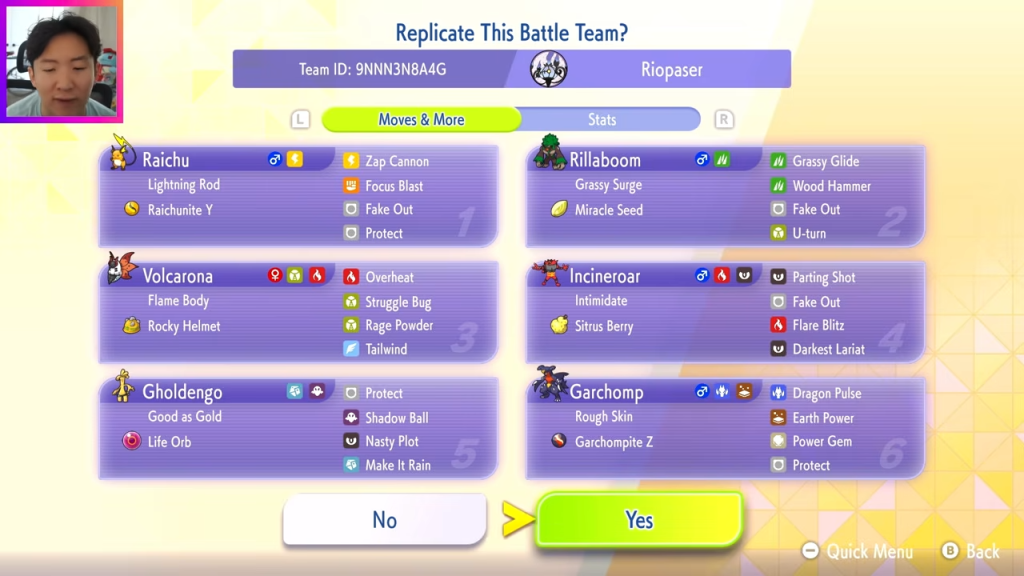
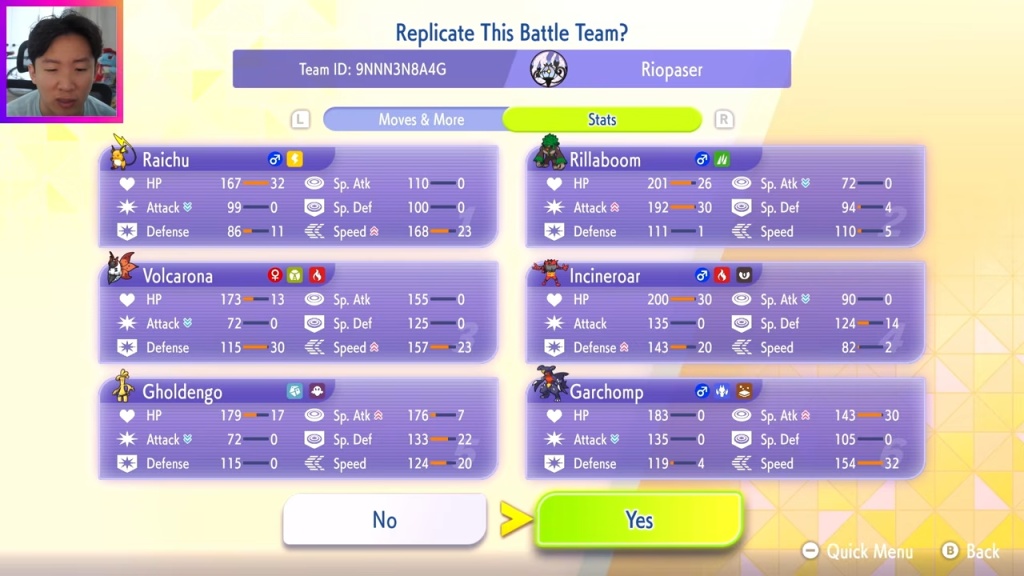
The most interesting characteristic of this team is its flexibility. Rather than relying on one specific strategy to win battles, Eric Rios built a composition capable of approaching different matchups in several ways. Between its powerful special attackers, multiple Fake Out users, and excellent defensive support, the team can apply immediate offensive pressure or take a more calculated approach.
Mega Raichu Y and Mega Garchomp Z are the two Pokémon that immediately stand out. Both are incredibly fast special attackers with access to different offensive coverage. Raichu can threaten opponents with Zap Cannon and Focus Blast, while Garchomp uses Dragon Pulse, Earth Power, and Power Gem to deal consistent damage. What makes this combination particularly interesting is that both Pokémon can be brought into the same battle without necessarily Mega Evolving Garchomp.
When Garchomp remains in its regular form, it retains its Ground typing and continues receiving Same Type Attack Bonus (STAB) on Earth Power. This creates situations where Mega Raichu Y can take advantage of its incredible Speed while Garchomp still provides valuable offensive coverage. Of course, there are other matchups where Mega Garchomp Z is the better choice, giving players another decision to consider during battle.
However, the team’s offensive capabilities extend well beyond its two Mega Evolutions. Gholdengo provides another potential win condition through Nasty Plot and Make It Rain. After receiving a Special Attack boost, Gholdengo can begin dealing tremendous damage to both opposing Pokémon. Its Life Orb further increases that damage, making it particularly dangerous when opponents fail to prevent it from setting up.
The Rest of the Team
Volcarona is another important piece of the composition, although its role is considerably different. Instead of functioning primarily as an offensive threat, this Volcarona uses Rage Powder, Tailwind, and Struggle Bug to support its teammates. Rage Powder can redirect attacks away from Gholdengo or one of the team’s Mega Evolutions, while Tailwind provides additional Speed control. Struggle Bug also helps weaken opposing special attackers, potentially allowing teammates to survive attacks they otherwise would not.
Then there are Rillaboom and Incineroar, two Pokémon that have become familiar faces in competitive doubles. Both provide Fake Out support, allowing their teammates to attack or set up while preventing an opposing Pokémon from moving. Incineroar also brings Intimidate and Parting Shot to weaken opposing attackers, while Rillaboom provides Grassy Terrain, powerful Grass-type attacks, and U-turn for additional switching opportunities.
With Raichu also carrying Fake Out, this team has three different Pokémon capable of disrupting opponents in this manner. Combining Fake Out with Intimidate, Parting Shot, Rage Powder, and Tailwind gives players several ways to control the battlefield while their offensive Pokémon begin taking knockouts.
This creates several different approaches to winning a battle. Mega Raichu Y and Mega Garchomp Z can immediately pressure opponents with powerful attacks. Gholdengo can take advantage of support moves to set up Nasty Plot before attempting to sweep. Alternatively, Volcarona, Rillaboom, and Incineroar can slow the opponent down long enough for the team’s stronger attackers to find favorable positions.
The biggest challenge is determining which four Pokémon provide the best combination against the opposing team. There are plenty of viable strategies available, but bringing the wrong combination can make an otherwise manageable matchup considerably more difficult.
Mega Raichu Y
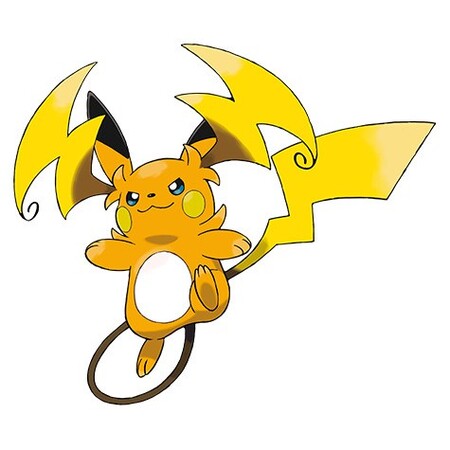
Raichu is an Electric-type Pokémon and one of the team’s two potential Mega Evolutions. It holds Raichunite Y, uses Lightning Rod before Mega Evolving, and has a Timid Nature. Its EV investment focuses primarily on HP, Defense, and Speed, allowing it to maintain impressive Speed while gaining additional survivability.
What makes this particular Raichu interesting is its lack of Special Attack investment. Rather than maximizing offensive damage, the build takes advantage of Mega Raichu Y’s naturally high Special Attack and invests in its defenses. This allows Raichu to survive certain attacks while still threatening opposing Pokémon with powerful super-effective damage.
Its moves are Zap Cannon, Focus Blast, Fake Out, and Protect. Zap Cannon is Raichu’s primary Electric-type attack and can deal significant damage to Pokémon that do not resist it. The move also guarantees paralysis when it connects, although its imperfect accuracy means there is always some risk involved.
Focus Blast provides valuable Fighting-type coverage, allowing Raichu to threaten Pokémon that resist Electric-type attacks. Like Zap Cannon, however, Focus Blast is not perfectly accurate, so players need to consider the potential consequences of missing an important attack.
Fake Out is one of the most valuable moves on the set. Rather than simply attacking every turn, Raichu can prevent an opposing Pokémon from moving and create an opportunity for its teammate. This is especially useful when paired with Gholdengo, which can take advantage of the free turn to use Nasty Plot.
Protect rounds out the moveset and provides another way to keep Raichu safe when opponents attempt to target it. Because Mega Raichu Y is still relatively fragile despite its defensive investment, knowing when to Protect or switch can be extremely important.
Raichu works particularly well alongside Volcarona, which can redirect attacks with Rage Powder while Raichu continues applying offensive pressure. However, Ground-type Pokémon and faster opponents can create problems, especially when Raichu cannot safely use its Electric-type attacks.
Mega Garchomp Z
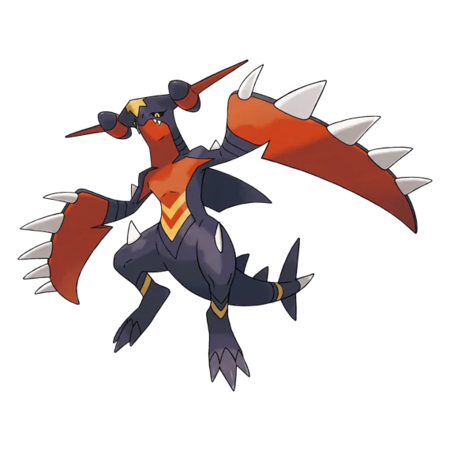
Garchomp is a Dragon/Ground-type Pokémon before Mega Evolving and serves as the team’s second potential Mega Evolution. It holds Garchompite Z, uses Rough Skin in its regular form, and has a Modest Nature. Its EV investment focuses heavily on Special Attack and Speed, with a small amount invested in Defense.
Unlike the traditional physical-attacking Garchomp that many players are accustomed to seeing, this version focuses entirely on special attacks. Mega Garchomp Z loses its Ground typing upon Mega Evolution, becoming a pure Dragon-type Pokémon with Levitate. While losing Ground-type STAB might initially seem disappointing, its impressive Speed and offensive coverage help compensate for that change.
Its moves are Dragon Pulse, Earth Power, Power Gem, and Protect. Dragon Pulse is particularly important because it provides reliable Dragon-type damage without lowering Garchomp’s Special Attack. Draco Meteor would offer greater immediate damage, but the Special Attack reduction can force Garchomp to switch out or become considerably less threatening afterward.
Dragon Pulse allows Garchomp to remain on the battlefield and continue attacking, making it particularly effective against opposing Dragon-type Pokémon such as Mega Salamence and other Garchomp.
Earth Power provides valuable Ground-type coverage against Pokémon weak to Ground attacks. Although Mega Garchomp Z no longer receives STAB on Earth Power, the attack can still deal respectable damage. If Garchomp remains in its regular form, however, Earth Power benefits from STAB and becomes considerably more threatening.
Power Gem gives Garchomp another important coverage option, especially against Pokémon such as Charizard and Volcarona. Protect rounds out the moveset and helps Garchomp avoid dangerous attacks while its teammate provides support.
One of the biggest concerns when using Garchomp is facing opposing Mega Garchomp Z. Because both Pokémon can threaten each other with Dragon Pulse, Speed becomes extremely important. Opposing Timid Mega Garchomp Z builds can potentially move before this Modest version, creating a dangerous situation.
However, when Garchomp is positioned correctly, it can become one of the team’s most reliable offensive threats. Its ability to threaten several different Pokémon without constantly needing to switch makes it an excellent option for applying sustained pressure.
Volcarona
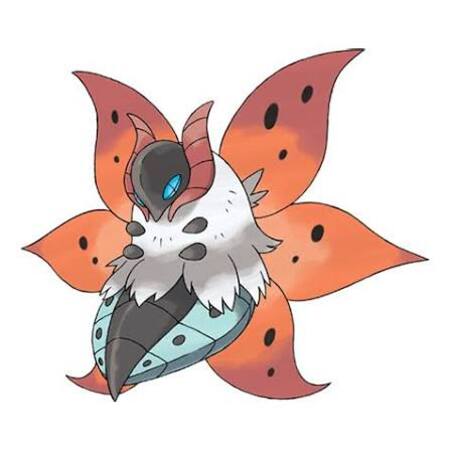
Volcarona is a Bug/Fire-type Pokémon and arguably one of the most important support options on the entire team. It holds Rocky Helmet, uses Flame Body, and has a Timid Nature. Its EV investment emphasizes Defense and Speed while adding some HP, allowing it to survive physical attacks and support teammates before many opposing Pokémon can move.
Unlike more traditional offensive Volcarona builds, this version focuses heavily on keeping its teammates safe and disrupting opposing strategies. That makes it an excellent partner for the team’s powerful special attackers.
Its moves are Overheat, Struggle Bug, Rage Powder, and Tailwind. Rage Powder is one of the most important moves because it redirects eligible single-target attacks toward Volcarona. This can create opportunities for Mega Raichu Y or Garchomp to attack while also helping Gholdengo find a safe turn to use Nasty Plot.
Tailwind is another valuable addition, doubling the Speed of your side of the battlefield for several turns. Although Mega Raichu Y and Mega Garchomp Z are already incredibly fast, additional Speed control can help them deal with opposing Pokémon that might otherwise move first. Gholdengo and the team’s support Pokémon can also benefit from Tailwind.
Struggle Bug provides another form of disruption by damaging both opposing Pokémon and lowering their Special Attack. This can be especially useful against teams relying heavily on special attackers, allowing Volcarona and its teammates to survive longer.
Overheat gives Volcarona a powerful offensive option against Pokémon such as Rillaboom and Kingambit. Although Overheat lowers Volcarona’s Special Attack after use, the immediate damage can be extremely valuable when facing an opponent that needs to be removed quickly.
Rocky Helmet adds another layer of utility by punishing opposing Pokémon that make contact. This can help break Focus Sashes or gradually weaken opponents while Volcarona continues supporting its teammates.
Volcarona does have some notable weaknesses, particularly against Rock-type attacks such as Rock Slide. It also lacks Protect, meaning opponents can sometimes target it aggressively. However, when positioned correctly, Volcarona can completely change the pace of a battle without necessarily securing many knockouts itself.

Gholdengo
Gholdengo is a Steel/Ghost-type Pokémon and easily one of my favorite members of this team. It holds Life Orb, uses Good as Gold, and has a Modest Nature. Its EV investment is distributed across HP, Special Attack, Special Defense, and Speed, allowing it to take certain special attacks while maintaining enough Speed to threaten opposing Pokémon.
Unlike the defensive Gholdengo build from our previous Anti-Meta Madness team, this version focuses on setting up and dealing as much damage as possible. Instead of using Substitute and Leftovers to extend battles, Gholdengo takes advantage of Nasty Plot and Life Orb to become an incredibly dangerous offensive threat.
Its moves are Protect, Shadow Ball, Nasty Plot, and Make It Rain. Nasty Plot is the centerpiece of the strategy, raising Gholdengo’s Special Attack by two stages. Once Gholdengo receives that boost, Make It Rain can begin dealing tremendous damage to both opposing Pokémon.
Make It Rain does lower Gholdengo’s Special Attack after each use, but Nasty Plot helps compensate for that drawback. Combined with Life Orb, the attack can quickly overwhelm opponents that are unable to remove Gholdengo before it begins attacking.
Shadow Ball provides another powerful STAB option and is particularly useful when Steel-type damage is not ideal. Protect allows Gholdengo to avoid dangerous attacks while its teammate attempts to remove an opposing threat or improve its position.
Good as Gold also provides valuable protection against many opposing status moves, making it more difficult for opponents to disrupt Gholdengo through traditional methods.
The biggest advantage of this set is how well the rest of the team supports it. Incineroar and Rillaboom can use Fake Out to create opportunities for Nasty Plot, while Volcarona can redirect attacks with Rage Powder. Incineroar’s Intimidate and Parting Shot also help reduce incoming damage, making it easier for Gholdengo to remain on the battlefield.
Of course, Gholdengo still needs to be careful against Fire-type Pokémon, powerful Dark-type attacks, and opponents such as Kingambit. However, if Gholdengo manages to set up Nasty Plot without taking too much damage, it can quickly become one of the most dangerous Pokémon on the field.
Rillaboom
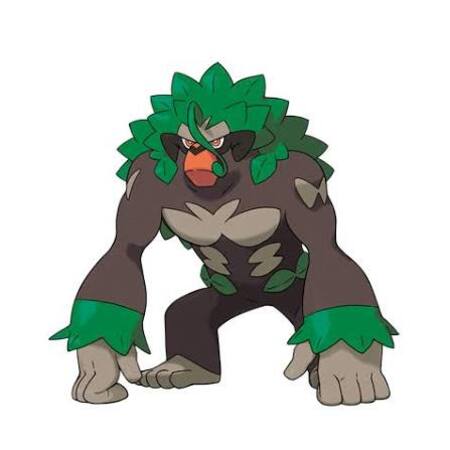
Rillaboom is a Grass-type Pokémon and one of the team’s most reliable sources of immediate physical damage and support. It holds Miracle Seed, uses Grassy Surge, and has an Adamant Nature. Its EV investment focuses heavily on HP and Attack, with smaller investments in its defensive stats and Speed.
Grassy Surge automatically establishes Grassy Terrain when Rillaboom enters the battlefield. This strengthens Grass-type attacks while providing passive recovery to grounded Pokémon. The terrain also reduces the damage of certain Ground-type spread attacks, which can help protect teammates such as Incineroar.
Its moves are Grassy Glide, Wood Hammer, Fake Out, and U-turn. Grassy Glide is particularly useful because it gains priority while Grassy Terrain is active, allowing Rillaboom to finish weakened opponents before they have an opportunity to attack.
Wood Hammer is Rillaboom’s strongest offensive option and can deal tremendous damage to Pokémon that do not resist Grass-type attacks. With Miracle Seed further increasing its damage, Wood Hammer can threaten even relatively bulky opponents. However, the recoil damage means players need to consider how often they can safely use it.
Fake Out provides another way to disrupt opposing Pokémon and create opportunities for teammates. This is particularly useful when Gholdengo wants to set up Nasty Plot or Garchomp needs an opportunity to attack without taking immediate damage.
U-turn rounds out the moveset and allows Rillaboom to deal damage before switching into another teammate. This can create opportunities to bring Incineroar onto the battlefield for Intimidate or position another attacker against a favorable matchup.
Interestingly, this Rillaboom does not use Protect or High Horsepower. Instead, the build focuses on immediate offensive pressure, Fake Out support, and maintaining momentum through switching.
Rillaboom can struggle against Pokémon that resist Grass-type attacks, particularly Fire-, Flying-, and Steel-types. Intimidate can also reduce its damage output. However, its combination of terrain control, priority attacks, and support makes it an incredibly valuable member of the team.
Incineroar
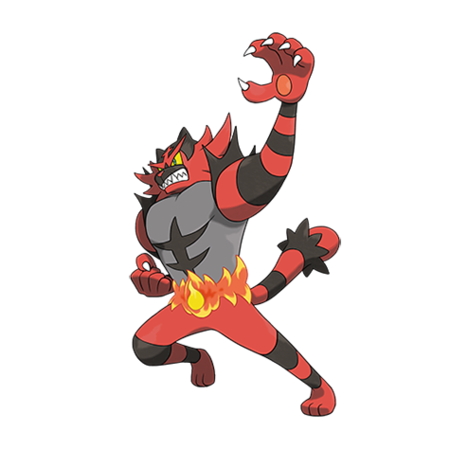
Incineroar is a Fire/Dark-type Pokémon and another familiar face in competitive doubles. It holds a Sitrus Berry, uses Intimidate, and has an Impish Nature. Its EV investment emphasizes HP, Defense, and Special Defense, allowing it to absorb attacks while repeatedly supporting its teammates.
The biggest advantage of Incineroar is how much it can accomplish simply by entering the battlefield. Intimidate immediately lowers the Attack of opposing Pokémon, making physical attackers considerably less threatening. This can be especially valuable when protecting Gholdengo or the team’s Mega Evolutions.
Its moves are Parting Shot, Fake Out, Flare Blitz, and Darkest Lariat. Fake Out is one of its most important moves, allowing Incineroar to prevent an opposing Pokémon from attacking while its teammate takes advantage of the opportunity.
Parting Shot provides another valuable form of disruption by lowering an opponent’s Attack and Special Attack before allowing Incineroar to switch out. This creates opportunities to bring another Pokémon onto the battlefield while reducing the damage that the opponent can deal.
Flare Blitz serves as Incineroar’s primary Fire-type attack and provides powerful damage against Pokémon weak to Fire. However, the recoil means Incineroar needs to be careful about sacrificing too much health when its support capabilities are still needed.
Darkest Lariat provides Dark-type coverage and ignores changes to the target’s Defense stat when calculating damage. This can be particularly useful against Pokémon such as Archaludon, which can increase its Defense through Stamina.
Sitrus Berry provides additional survivability, helping Incineroar remain useful throughout longer battles. Its combination of Intimidate, Parting Shot, and Fake Out makes it particularly effective at slowing down opposing physical attackers.
Incineroar also works extremely well alongside Rillaboom. Both Pokémon can use Fake Out, while Parting Shot and U-turn allow them to switch between teammates and maintain favorable positions.
However, priority-blocking abilities, Psychic Terrain, and opposing Fake Out users can interfere with this strategy. Knowing when to switch Incineroar out and when to keep it on the battlefield is an important part of using the team effectively.
How to Use the Team
One of the most reliable starting points is Incineroar and Gholdengo. Incineroar can immediately threaten Fake Out while Gholdengo uses Nasty Plot to increase its Special Attack. Once Gholdengo receives that boost, Make It Rain can begin putting tremendous pressure on both opposing Pokémon. Incineroar can then use Parting Shot to weaken an opponent and bring another teammate onto the battlefield.
Rillaboom works particularly well in the back with this combination. Its own Fake Out can create another opportunity for Gholdengo to attack, while Grassy Terrain provides additional recovery. Garchomp is another excellent option because it can enter later in the battle and begin securing knockouts after Gholdengo has weakened the opposing team.
Mega Garchomp Z and Volcarona provide another strong opening combination. Volcarona can use Tailwind to give Garchomp an advantage against faster opponents, while Struggle Bug helps reduce incoming special damage. Rage Powder can also redirect eligible attacks away from Garchomp, allowing it to continue applying pressure with Dragon Pulse, Earth Power, or Power Gem.
This combination can be particularly effective against slower teams attempting to establish Trick Room. Volcarona can weaken opposing special attackers with Struggle Bug, while Garchomp threatens consistent damage. However, players still need to consider opposing Dragon-type Pokémon, especially faster Mega Garchomp Z builds.
Mega Raichu Y and Volcarona offer a different offensive approach. Raichu can immediately threaten opponents with Zap Cannon or Focus Blast, while Volcarona uses Rage Powder to redirect attacks away from it. Tailwind provides another option when additional Speed control is needed, and Overheat can threaten Pokémon that resist Raichu’s attacks.
More Insight on the Team
Another useful combination involves Rillaboom and Garchomp. Rillaboom can use Fake Out to disrupt an opponent while Garchomp immediately attacks with Dragon Pulse or another coverage move. Incineroar and Volcarona make excellent choices in the back, providing additional Fake Out support, Intimidate, and Tailwind.
There are also situations where bringing both Raichu and Garchomp makes sense. Against certain Rain teams or opponents featuring Mega Charizard Y, Mega Raichu Y can provide valuable offensive pressure while regular Garchomp continues threatening opponents with Dragon Pulse, Earth Power, and Power Gem. You do not always need to Mega Evolve Garchomp for it to contribute meaningfully.
The important thing is recognizing that this team does not have one combination you need to bring into every battle. Sometimes the best approach is immediately attacking with Mega Garchomp Z. Other times, Gholdengo can take advantage of Fake Out support to set up Nasty Plot. There are also situations where Volcarona’s Tailwind and Rage Powder become more valuable than bringing another offensive Pokémon.
With three different Fake Out users and multiple ways to switch between teammates, maintaining favorable positioning is extremely important. Sometimes switching Rillaboom or Incineroar out instead of attacking can create a better opportunity on the following turn.
That flexibility is one of the team’s greatest strengths. However, it also means players need to pay close attention to the opposing six Pokémon before deciding which four to bring.
Team Weaknesses
Despite Eric Rios finishing undefeated at the Frankfurt Regional Championships, this team is not without weaknesses. One of the biggest concerns is opposing Pokémon that can outspeed its primary attackers and immediately threaten significant damage.
Sneasler is one example, particularly when using Psychic Seed or Grassy Seed to increase its Speed through Unburden. Rock Slide can threaten Volcarona, while its other coverage moves can put considerable pressure on the team. Choice Scarf Garchomp is another dangerous opponent because it can outspeed Pokémon that would normally move first and potentially secure important knockouts.
Opposing Mega Garchomp Z can also create difficult situations. This team’s Garchomp uses a Modest Nature to maximize its damage, but Timid Mega Garchomp Z builds can gain a Speed advantage. Because Dragon Pulse threatens opposing Dragon-type Pokémon, losing that Speed advantage can become extremely costly.
Fairy-type Pokémon are another concern, particularly for Garchomp. Gholdengo provides an important answer with its Steel-type attacks, so preserving it can become essential when facing teams with powerful Fairy-type threats.
More to Watch Out For
Mega Raichu Y can struggle against Ground-type Pokémon and opponents that can safely switch into its Electric-type attacks. Sand teams featuring Excadrill are particularly concerning because Excadrill can take advantage of the weather to outspeed Raichu and threaten significant damage.
Setup Pokémon can also become dangerous if given too much freedom. Kingambit using Swords Dance can threaten the team with powerful Sucker Punch attacks, while Kommo-o using Clangorous Soul can become extremely difficult to outspeed. Volcarona’s Overheat can help against Kingambit, while Garchomp and Gholdengo provide important offensive options against other setup threats.
There are also individual limitations to consider. Volcarona dislikes Rock-type attacks and does not have Protect. Rillaboom can struggle against Pokémon that resist Grass-type damage, while Incineroar’s Fake Out can be disrupted by priority-blocking abilities such as Farigiraf’s Armor Tail or Psychic Terrain.
The biggest challenge, however, may simply be choosing the correct four Pokémon. This team has so many different strategies available that it can be tempting to bring the same combination into every battle. Unfortunately, that can leave you struggling against opponents that require a completely different approach.
That is especially important when deciding between Mega Raichu Y and Mega Garchomp Z. Both are powerful attackers, but they offer different coverage and have different weaknesses. Understanding which one provides the better matchup can make a significant difference.
Wrap-Up
After going 9 – 1 with this team (4-1 on video), I came away impressed with just how many different strategies it offers. Eric Rios’ undefeated 17–0 performance at the Frankfurt Regional Championships certainly speaks to the team’s potential. But actually using it helped me appreciate how well the different Pokémon work together.
My favorite part of using this team was undoubtedly Gholdengo. There was something incredibly satisfying about finding an opportunity to set up Nasty Plot and then unleashing a powerful Make It Rain to knock out opposing Pokémon. With Life Orb further increasing its damage, Gholdengo could quickly become a serious threat if my opponent gave me enough room to set up.
What makes that strategy even better is how much support the rest of the team provides. Incineroar and Rillaboom can use Fake Out to create opportunities for Nasty Plot. Also, Volcarona can redirect attacks with Rage Powder. Even when Gholdengo was not the best option, Mega Raichu Y and Mega Garchomp Z provided completely different ways to apply offensive pressure.
That flexibility is probably what impressed me most about the team overall. You can play aggressively with your Mega Evolutions, take advantage of Gholdengo’s setup potential, or use Volcarona, Rillaboom, and Incineroar to control the pace of a battle. There is no single strategy you are forced to rely on. That fact makes the team both powerful and interesting to learn.
Finishing with a 9 –1 record (4 – 1 on video) was certainly enjoyable. I can understand why Eric Rios found so much success with this composition. While learning which four Pokémon to bring into each matchup can take some practice, the team provides plenty of tools to overcome different situations.
Once again, huge credit goes to Eric Rios for creating and piloting this team to an undefeated Regional Championship victory. Also to Aaron “Cybertron” Zheng for showcasing the team and providing such a detailed breakdown of how to use it. I initially wanted to try the team because of its impressive tournament performance and unusual combination of Mega Evolutions, but after getting some battles under my belt, the team’s versatility, in addition to Gholdengo and its devastating Make It Rain, ended up being what I enjoyed most.
