
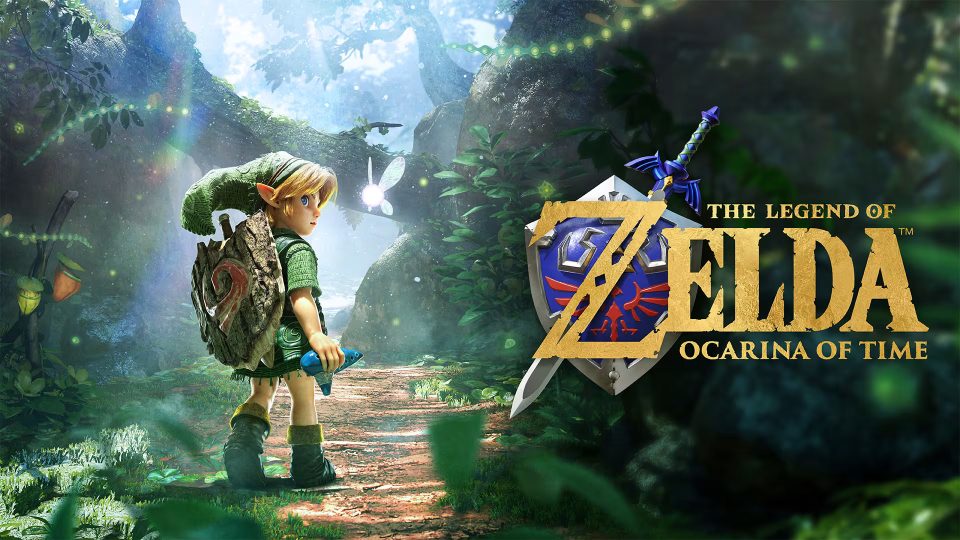
It’s amazing to see how The Legend of Zelda series has evolved over the past 40 years. The series has always broken new ground with each Nintendo console generation, starting with a huge world to explore on the NES and SNES. But how do you evolve that into the third dimension?
Ocarina of Time answers that exciting and terrifying question with an ingenious targeting system, a well-thought-out control scheme, and by adapting A Link to the Past’s level design into engaging 3D spaces to explore. Future Zelda games took this formula and further refined it with new elements and mechanics.
And while many enjoyed braving the wilds and kingdoms, many fans longed for a return to what made traditional Zelda so enjoyable. Here comes a ground-up remake, not unlike Star Fox (2026), honoring the original N64 classic with updated visuals and other quality-of-life additions.
After playing the Ocarina of Time Remake, I have a lot to say about what could be the gold standard for modern-day remakes.
Painting in Motion – Visuals
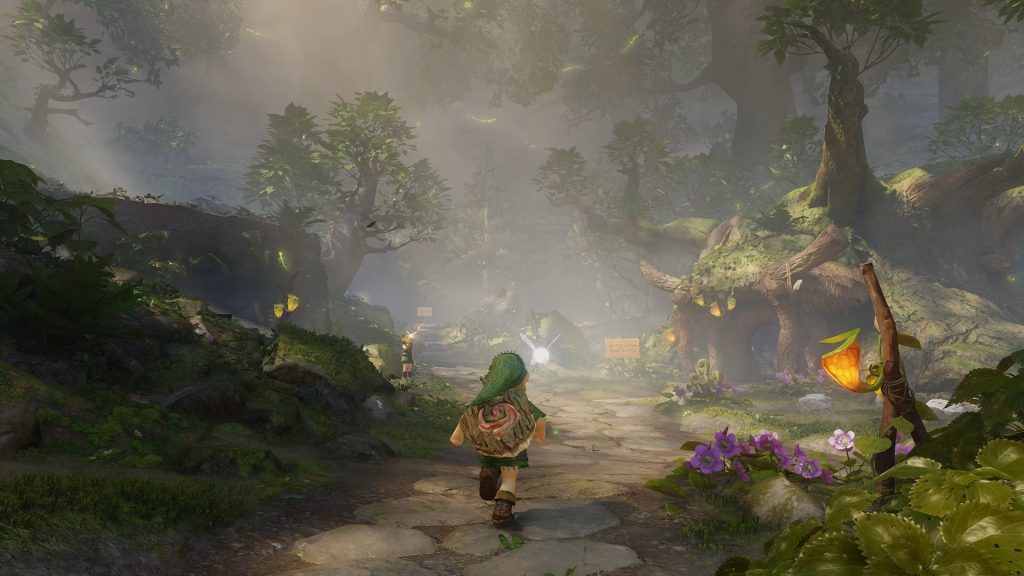
The Legend of Zelda: Ocarina of Time (2026) is one of the best-looking Nintendo games. Even early in my adventure, I can confidently say this is a tour de force for what the Nintendo Switch 2 can do, more so than Donkey Kong Bananza and Star Fox (2026), and those were impressive-looking productions.
Attention to Detail
Everything feels immaculately crafted, and little details I usually ignore in games get my full attention here. One example was Link’s slingshot. When he’s not actively aiming, he holds the seed with one hand and the slingshot with the other. But the string holds it together and sways as he moves around.
This is just one of the many small animation and visual details you will come across throughout the adventure, and I can’t wait to see them all.
Link’s Expressions and Body Language
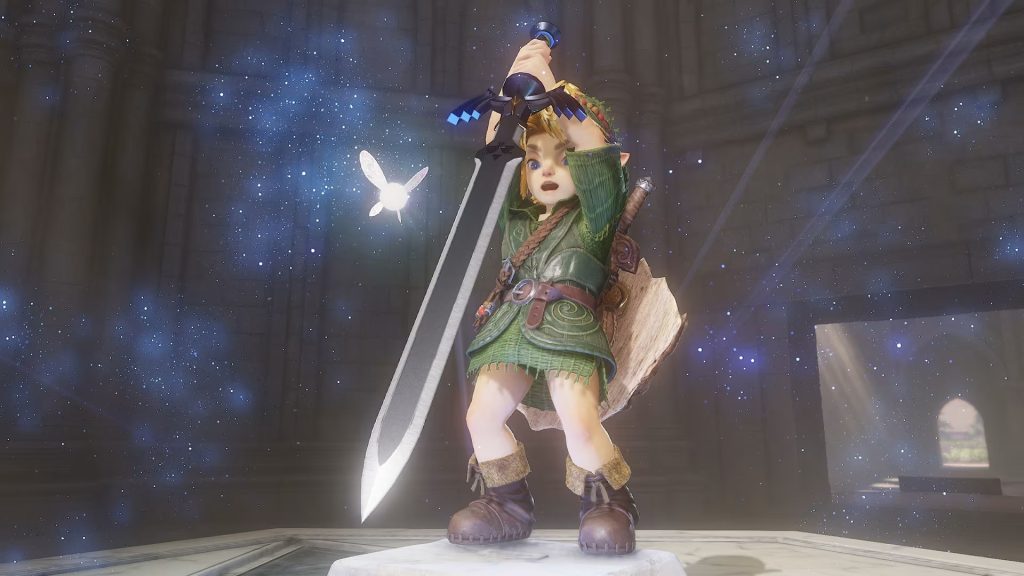
One of my favorite aspects of the Zelda series, since The Wind Waker, is Link’s eyes being a window to his soul. He doesn’t speak, but his expressions and animations do. Narrative beats that I didn’t feel much emotion for in the original N64 title hit so much harder in this remake.
When the Great Deku Tree dies, for example, you can see how shell-shocked and heartbroken Link is, just from his shaky eyes. This extends to his goodbye with Saira; his hesitant body language and unwillingness to even look her in the eyes say everything about how he feels about his decision to leave the forest for his great quest.
A Realized Hyrule
I’m still very early in my adventure, but exploring locations like the Kokiri Forest, Hyrule Castle Town, and Kakariko Village left me speechless.
Sure, the level layouts are similar to the original N64 adventure, but everything feels so much more alive. From the stunning fog and particle effects that convey Kokiri Forest’s magical vibes to the densely populated Castle Town full of buildings you can freely walk into and explore, it’s always a delight to see how Nintendo updated timeless areas.
Song of the Storms – Music
More so than the visuals, however, is the power of Zelda’s iconic music. And no other soundtrack in the series is as iconic as Ocarina of Time’s. Taking the original N64 melodies, they are completely redone, not unlike Star Fox (2026).
I got emotional when I entered Hyrule Field, with the bombastic orchestra making the world feel even larger. Other tracks, like the Kokiri Forest and Goron City, are standouts too. I can’t wait to hear how some of my favorite tracks, like Song of Storms, are redone.
What’s Old Is New Again – Classic 3D Zelda Formula Finally Returns
Alongside the stunning presentation, something that I missed from the Zelda series since Breath of the Wild finally returns: the traditional 3D Zelda formula.
Every major area has a town or village to explore with NPC’s to interact with, and each key landmark has a dungeon to explore. When entering a dungeon, the goal is to defeat the boss and get a key story item to progress. It sounds simple, but along the way, you solve puzzles with your equipment and gain tools in the dungeon itself to continue your quest.
This tried-and-true approach still holds up beautifully generations later, with my trip through the Great Deku Tree reminding me of my fondest memories of exploring the Frozen Mansion from Twilight Princess or the daunting monolith that was Stone Tower Temple from Majora’s Mask.
There’s still so much for me to explore with Ocarina of Time, well, timeless dungeons. With how well-done the initial area was, I can’t wait to see how Nintendo and the Zelda team revisited the foundational work that eventually led to the Wild-era games.
Learning from Wild Legends – Controls & Quality of Life
Speaking of the Wild-era games, some welcomed control changes are brought into the traditional 3D Zelda formula. One new ability is a jump, instead of auto-jumping when going near a ledge. This simple change might take a moment to get used to if you played past traditional 3D Zeldas, but the ability to freely jump whenever you want makes exploration that much more enjoyable.
Paired with Link now being able to run by holding down A (with no stamina meter), movement overall feels snappy and more responsive.
Alongside updates to overall movement controls, there is now only one item button (ZR), and you can quickly swap between your items by holding R. Key items, like boots and your Ocarina, are mapped to the D-Pad/Directional buttons, which makes the overall UI feel less cluttered compared to the original N64 title, ensuring you enjoy the stunning presentation more.
A Tale as Old as Time – Closing Thoughts on The Legend of Zelda: Ocarina of Time
I’m still very early in my adventure, but I’m happy to say Nintendo understood the mission statement. The Legend of Zelda: Ocarina of Time is a foundational video game for not just the company, but for a generation of gamers. Many people played this as their very first video game.
I can’t wait to play more of this timeless classic, and stay tuned for our full review here at Lords of Gaming in the coming weeks. It’s wonderful to see the style of 3D Zelda I grew up with, back in its full glory.
