
What is Constance?
Exploring grounded themes of self-doubt and the challenges of being an artist, Constance uses the Metroidvania canvas to express strong emotions. Considering that this genre housed legendary experiences like Hollow Knight and Ori & the Will of the Wisps, invoking strong themes helps immensely when standing amongst the crowd.
Is this painterly venture a piece worth hanging on your wall? Or is it a messy blot? Even though the colors don’t always match, this painting is one worth experiencing.
Publisher/Developer: btf, ByteRockers’ Games, Blue Backpack
Platforms: Nintendo Switch, PlayStation 5, Xbox Series X/S, PC (Steam)
Release Date: November 24th, 2025 (PC), May 1st, 2026 (Consoles)
Price: $19.99
Reviewed On: Nintendo Switch 2 via Switch 1 BC
Lost in Thought – Premise/Story
- Waking up in an unfamiliar land, Constance picks up the brush and goes on a quest to collect four tears to return home.
- The game’s simple narrative explores her ‘inner mind’, with several aspects of the world and characters themed around her real-life struggles.
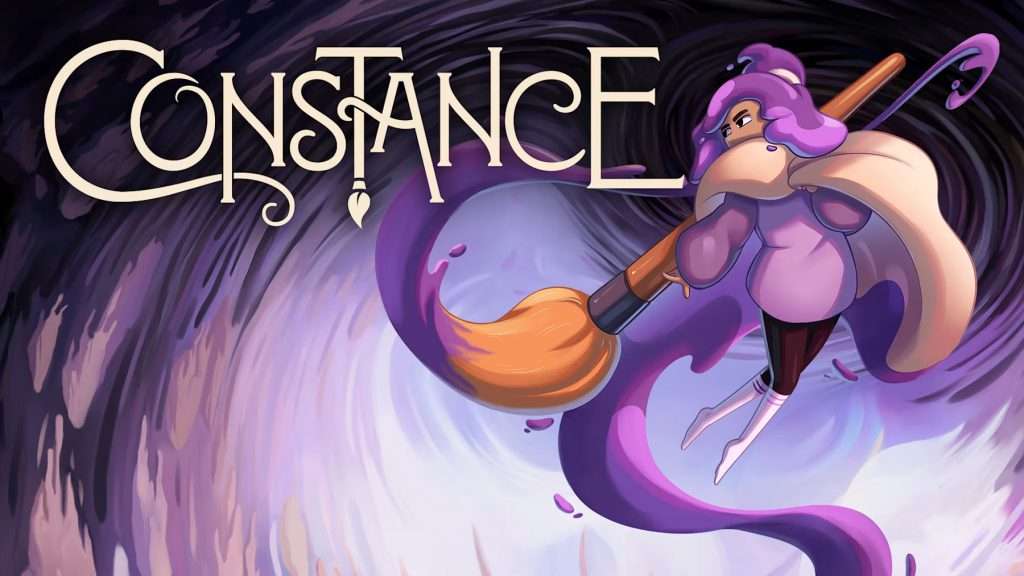
Waking up in a strange land, Constance is given a huge paintbrush to defend herself and a single goal: going back home. Her journey back isn’t an easy one, though, as she must fight through robots and other creatures using paint-themed abilities.
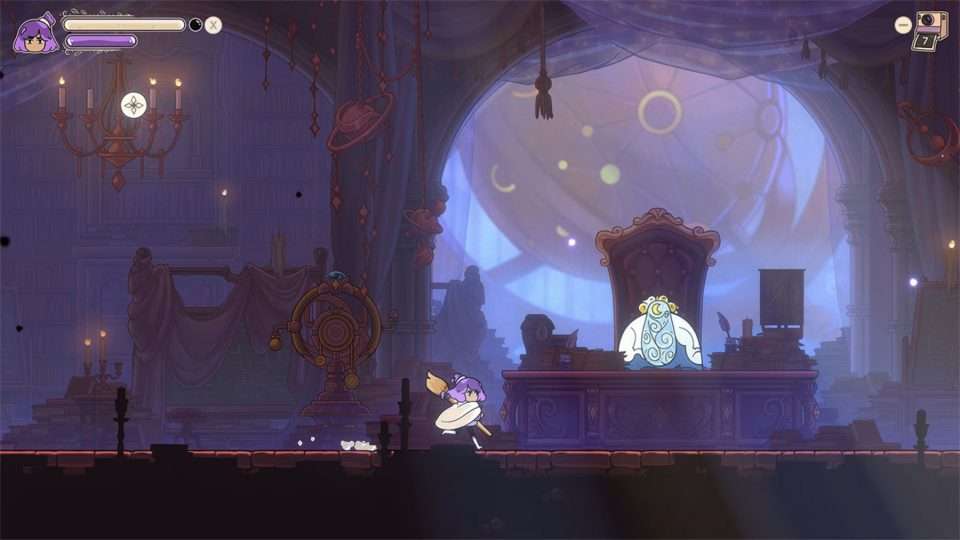
The narrative is deceptively simple on the surface, as I didn’t make much of it during the adventure. I enjoyed the charming cast of characters Constance engaged with, alongside the beautiful landscapes she blotted across. But like any good work of art, there’s a deeper meaning upon closer inspection.
Every aspect of Consistance is funneled through her inner struggles. It can be through visual storytelling, with bosses looking like literal body parts (like a brain). And the gameplay changes up at points; after collecting a purple tear, players can see for themselves the real-life struggles Consistance went through.
Alongside seeing these windows into her mental state, she also meets cute NPC characters who offer advice and more across the journey. From a small shop vendor who offers more of his wares as you find his family across the world, to a friendly astronomer who is lost in his own work, they help make the world of Constance feel alive.
By the end of the adventure, I felt immense relief knowing that Constance can overcome her struggles. And as a creative myself, the idea of mental blocks and stress directly impacting one’s ability to make what they love is something we can all empathize with.
Art of the Stroke – Gameplay and Level Design
- Familiar platforming mechanics are used in fun ways. The shining examples are the Paint Dash and Pogo Dive, with the former woven into every aspect of the platforming.
- Level design features several gimmicks, such as gravity trails, that keep players on their toes during the adventure.
Starting with the ability to run, jump, and swing her paintbrush weapon, Constance has a modest move set. This is more than enough to get around the game’s early areas, but as she explores later areas, like any good Metroidvania, she learns new moves that play into both the game’s exploration and combat encounters.
Abilities like her Paint Dash are used for several actions. Sure, moving faster and air-dashing is useful. But the dash makes Constance impervious to spiked pillars and can even be used on walls, sliding up and down them. This is how she performs wall jumps, feeling mechanically unlike any other platformer I’ve played prior.
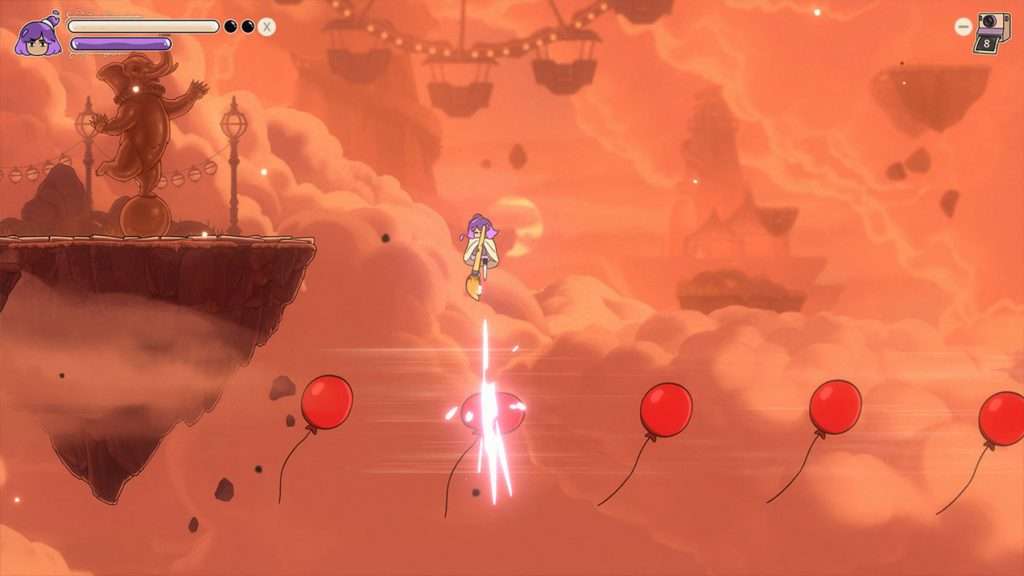
That being said, the game also features more traditional moves, such as a Pogo Jump and a Homing Slash. These work in conjunction with the Paint Dash, helping create fun, engaging platforming sequences that test player skill.
Alongside her fun slate of abilities, levels feature mechanics like gravity trails that pull Constance along in a specific direction or bouncy balloons that keep momentum going. This further adds to Constance’s enjoyable platforming gameplay.
Clear Canvas – Progression
- The game is composed of unique biomes, each with secrets to discover and one of four tears to find. Traditional upgrades are present too, such as health upgrades and more.
- Sketches are ability modifers that players can discover through exploration, making your special abilities more effective in combat.
- Lightstones are used to upgrade Sketches, like traditional currency can be used at vendors in the main hub area.
Completing her quest involves exploring several unique biomes, filled with secrets to discover and one tear to find. Collecting all four tears is the main objective of Constance, but that’s not all players can do in the game’s large map. To make herself stronger, Constance can collect heart and paint expansions, increasing each respective meter.
Completing hidden platforming challenges can unlock sketches, which can be equipped at Shrines (save points that refill your health). These add modifiers to special moves, making them stronger. My favorite examples include having your Paint Stab restore health upon landing hits, and my Paint Dash damaging enemies when I enter ‘No Ink’ mode (where Constance is pitch black once her paint meter is empty).
They can be upgraded using Lightstones, making them even more effective. And it’s important to upgrade them for the game’s various painterly brawls.
Violent Colors – General Combat
- While simple on the surface, combat in Constance is tight and responsive. Basic attacks have impact and special abilities like the Paint Stab are a joy to use.
- Enemy encounters challenge you to use the Paint Dash and other skills to get through each battle.
Platforming and collecting everything in sight isn’t the only thing you do in Constance. The game features a combat system that uses all of your abilities. Simple encounters may only require a well-timed dash to avoid attacks and quickly perform a three-hit combo with your brush. But later encounters task players to play aggressively.
Examples of this mainly reside in the Academy Biome, with teleporting mage-like characters staying out of reach until you find them at the bottom of the map. Along the path, they create balls of light that blow up, damaging you. The balls of light only go away once you defeat the enemies.
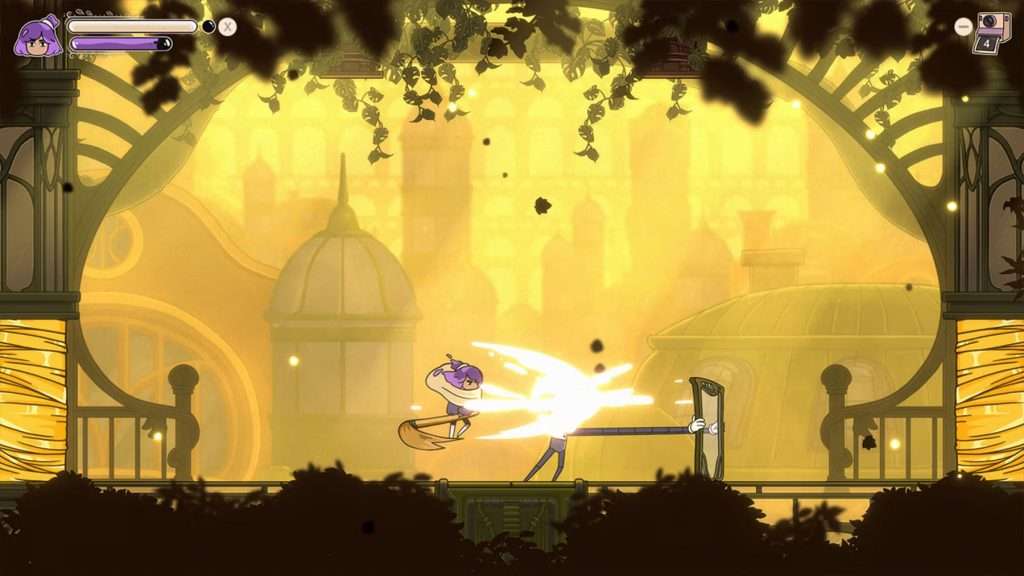
The variety of enemy types makes general combat engaging and exploring the game’s world fun. But across the adventure, Constance will encounter major bosses to take down.
Boss Encounters
- The bosses in Constance are great challenges to overcome, with multiple phases. They test player reaction time and mastery of the game’s mechanics.
- While largely fair, late-game encounters deal major damage and can make some battles unfair.
Every major biome has several bosses to fight. All of them are quite varied, too. One early highlight includes a slime knight that floods the arena, pushing you to use your Paint Dash to get up across pillars and then lay the smackdown after the slime goes away.
One thing I really loved about the boss encounters is that every battle had more than one phase. You can slowly pick up on the patterns and soon enough, avoiding attacks and using your skills at the right moment can turn the tide in your favor. To my surprise, playing on the offensive actively felt encouraged, specifically because I had the Paint Stab ‘Health Healing’ sketch equipped.
This was highlighted when fighting one of the Carnival Bosses, as I used a combination of aggressive attacking in-between dodging and paying close attention to incoming projectiles. The balance of attacking playing cards and other projectiles, or dodging them to preserve my health, was a fair challenge to overcome.
However, as the battles went on, the damage bosses dealt was far more brutal than expected. Hits take away a large chunk of health, and even with health reserves and some of the sketches you can equip, these fights resulted in frequent deaths.
The final Carnival Boss really tested my patience at points, as no matter how skillfully I paid attention to their patterns, I still got hit more than I would’ve liked.
I would’ve been more annoyed at this level of challenge, as I was genuinely getting frustrated at points. However, the game features ways to tackle this.
Picking Up the Pencil – Difficulty Options
- To combat more demanding gameplay sections, players can use accessibility options to decrease damage dealt to you, alongside other abilities. These disable achievements/trophies on other platforms, but that doesn’t matter on Nintendo Switch/Switch 2.
The game’s accessibility settings directly address the boss damage issues I mentioned, thanks to the option to have them damage less when they land attacks. In addition, you can also have the option to disable damage from spikes. The trade-off for these options enabled is turning off trophies/achievements. That has no impact on the Switch, but something to be mindful of on PlayStation 5 and Series X|S.
But for those eager to have a tougher challenge, you can power-on through after death, reviving in the same area but at the cost of enemies doing more damage. Defeated enemies will even drop hearts, so in some ways, players skilled enough can brute force through all the game’s combat encounters with ease.
Accessibility Options
Alongside difficulty-related settings, a few welcomed accessibility options are present, too. Being able to make the UI bigger/smaller, for example, is a nice feature when playing on the Switch 2’s larger display.
But it wouldn’t be a good Metroidvania adventure if it didn’t have a good map system. Key features are the Prince of Persia: The Lost Crown-inspired picture system (where you take snapshots with your camera to return to places later with new abilities) and a detailed map with icons highlighting what’s what.
Both prevented me from getting lost in the game’s large world.
A Work of Art – Presentation
Fitting the game’s artistic theme, the world of Constance is brought to life with stunning painterly backdrops. Splashing across an academy for the sciences with star-like imagery, hidden depths filled with discarded objects, and a carnival hovering above pink-colored skies; every major location stands out from one another.
And the characters are beautifully animated, with the start of the show being Constance herself. Her movements have effective use of squash-and-stretch, with her clothing and paint-like hair moving with every step. Abilities like the Paint Dash are almost addicting to look at, with how fluid the paint-blob effects look every time she uses the ability.
This attention to detail extends to the game’s boss encounters as well, with every attack visually striking. My favorites were the carnival battles, as they used playing cards and facial expressions to great effect. Another favorite was the game’s final encounter, playing around with themes of mental strife in powerful symbolic ways.
Low-Fi Tunes – Music/Sound Design
Matching the game’s stunning visuals is an equally effective soundscape. Sound effects across the board are satisfying to hear, with little details like the ‘wood hitting a wall’ sound effect when using your brush attacks on some objects, or the ‘splash’ sound when dashing, standing out.
The game’s musical score is powerful, as well. Using a mixture of instruments (chimes, bells, violins, etc.), it audibly conveys how Constance feels in a given scene or moment. It can be magically mysterious through haunting bells and chimes, then the next uses aggressive violins and a catchy melody to embody her ‘lets go!’ spirit when in combat.
For me, the audio conveyed the game’s emotional themes just as well as the game’s powerful visual presentation.
Performance on Nintendo Switch & Switch 2
On Nintendo Switch, the game runs at default in ‘Performance Mode’ (targeting 60 FPS at a lower resolution). But you can opt for ‘Quality’ (30 FPS at full 720p/1080p) and ‘Balanced’ (targeting 60 FPS with dynamic resolution). When playing on Switch 2, you can leverage ‘Max’ mode, running at Quality Mode settings with a locked 60 FPS.
Running the game in Handheld Boost Mode, utilizing both ‘Balanced’ and ‘Max’ settings, it ran great.
Closing Thoughts on Constance
Art can be messy and complicated, testing creatives in ways other professions do not. But the tale of Constance is one of perseverance in the face of strife and moving ahead despite future challenges. The narrative hits hard for those wanting to make art, and through challenging boss encounters, engaging combat, and fun platforming, it succeeds in expressing those powerful themes. This is one painting worth buying in a sea of amazing Metroidvanias on the market.
Constance Review
Pros
Stunning visuals, with expressive animation and painterly backdrops.
Tight controls for both combat and platforming.
The in-game map is easy to read, and various accessibility options can help if the combat challenge is too demanding.
Narrative tugs on the heartstrings if you are a creative.
Runs like a dream across both Switch and Switch 2.
Cons
Late-game boss encounters deal a lot of damage, making them quite challenging.
This game was reviewed using a copy purchased by the reviewer.
