
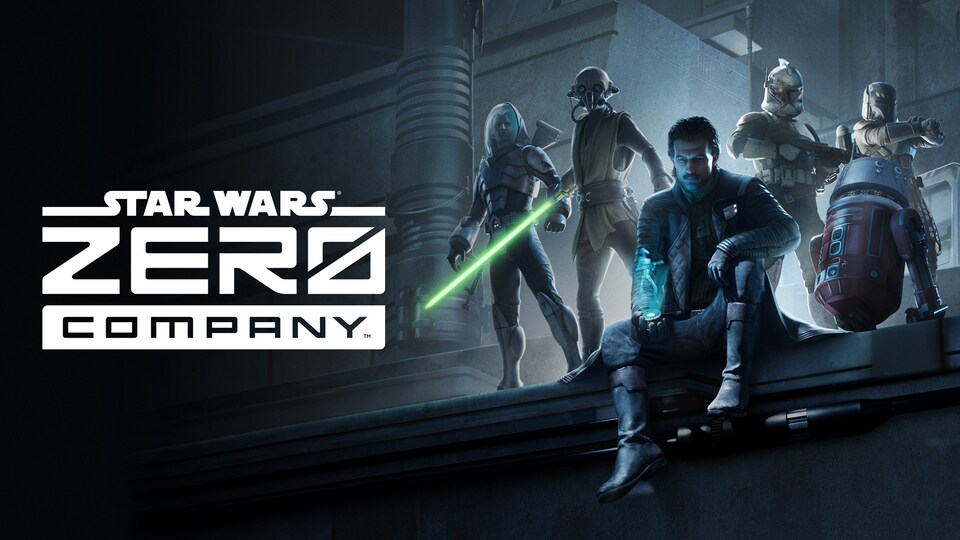
What is Star Wars: Zero Company?
Star Wars: Zero Company is essentially Star Wars meets XCOM, and that is something I never knew I needed until now. Bit Reactor is a studio built largely from former Firaxis developers, including CEO and Creative Director Greg Foertsch, who served as art director on the modern XCOM games. That pedigree seeps through every aspect of the game, and it shows.
After roughly 12 hours with it, Star Wars: Zero Company has sold me on two fronts at once. It works as an excellent Star Wars narrative experience with characters I am already attached to, but it works equally as well as a deep tactical experience that scratches an itch nothing has properly reached since XCOM 2. These are early impressions, but the foundation here is already exceeding my expectations.
Developer: Bit Reactor/Respawn Entertainment/Lucasfilm Games
Publisher: Electronic Arts
Platform: Xbox Series X|S, PlayStation 5, PC
MSRP: $49.99 (Standard), $59.99 (Deluxe)
Release Date: August 27, 2026
Reviewed On: Xbox Series X
Presentation (Visuals) — A Good but Not Great Visual Experience
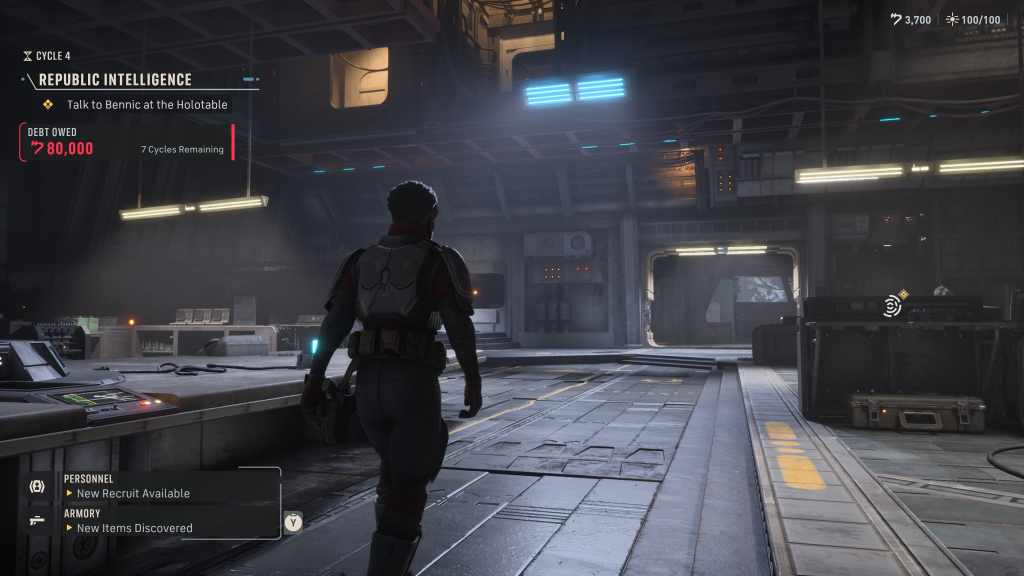
- Strong art style and fidelity, though short of EA’s Jedi series.
- Performance mode holds a smooth framerate throughout.
- Quality mode adds fidelity at a noticeable 30fps.
- Artifacting, slow texture load-ins, and blocky shadows on Xbox Series X.
The overall fidelity and art style of Star Wars: Zero Company are handled well, even if it is not on par with EA’s recent Jedi series. It looks good in both of its modes, and which one you pick comes down to what you value. Performance mode holds a smooth framerate that may not be entirely necessary for the deliberate pace of a tactics game, while Quality mode delivers higher fidelity at a noticeably choppy 30fps.
There are hitches, though. On Xbox Series X, I ran into artifacting, slow texture load-ins, and blocky shadows scattered across early cutscenes and combat sequences. None of it is distracting enough to pull me away, but it is there often enough to notice. We were notified that a patch will be available at launch that will hopefully remedy these issues. It is the one area where the presentation feels a step behind where it should be.
Presentation (Customization & Sound) — A Galaxy of Customization
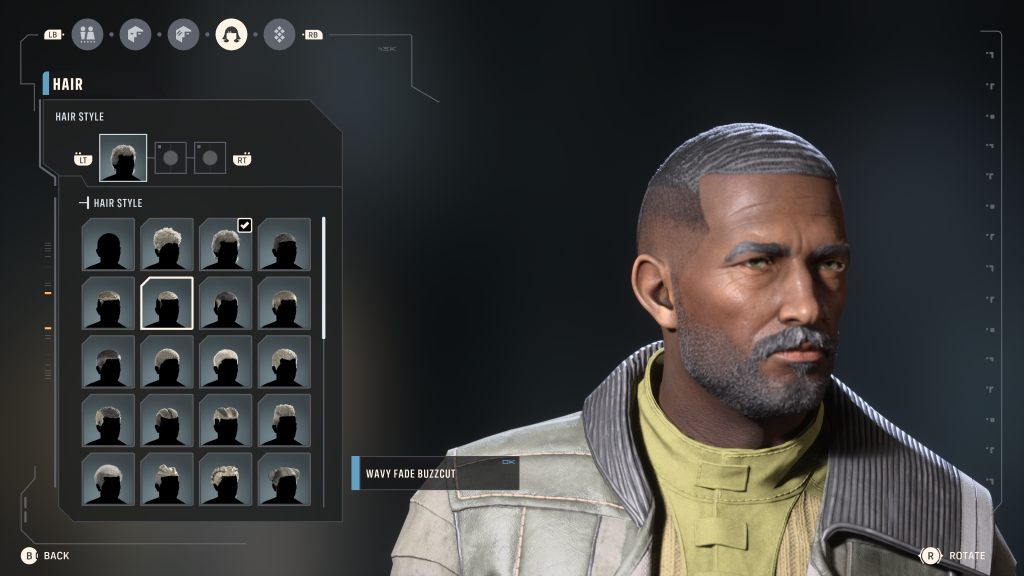
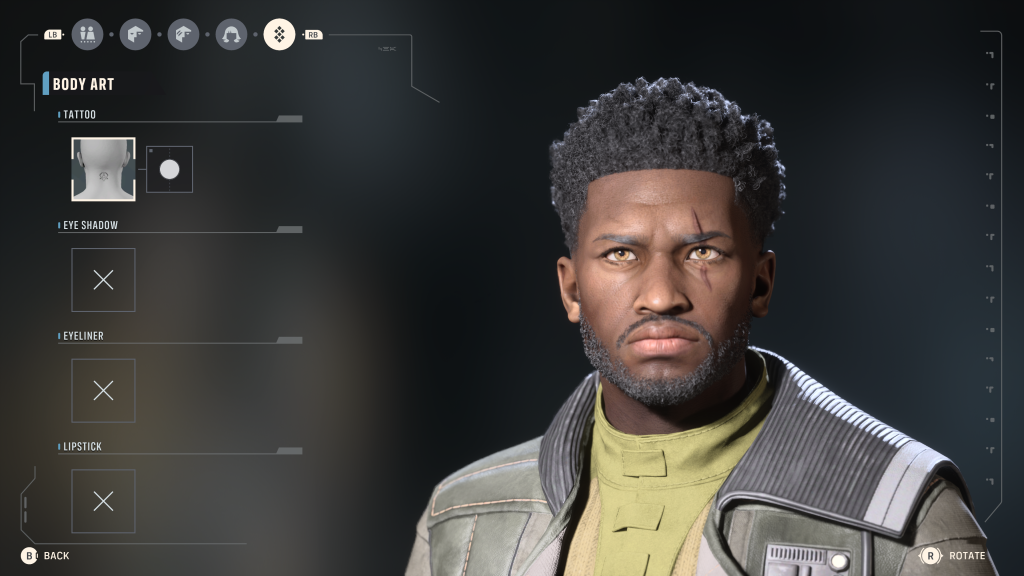
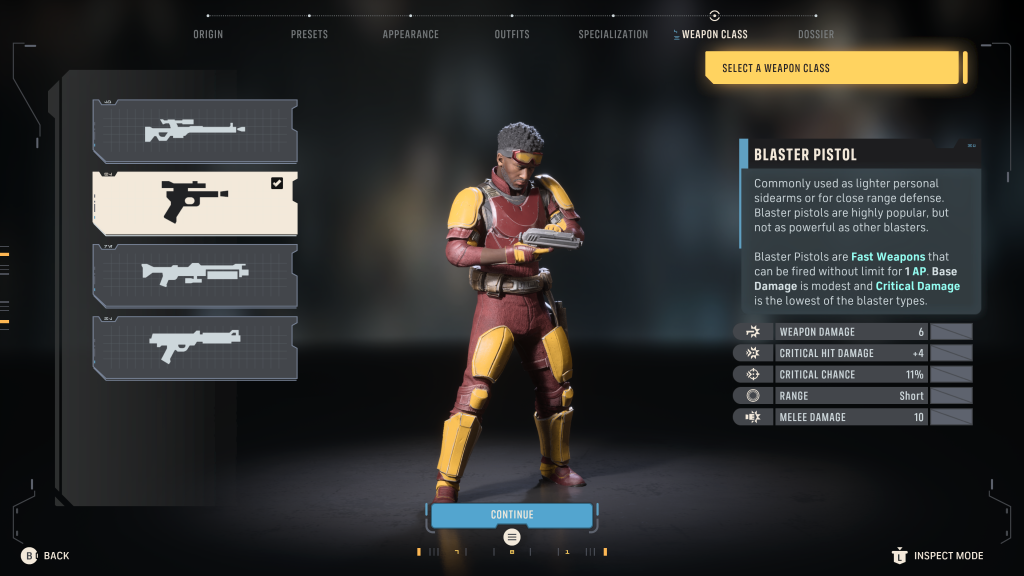
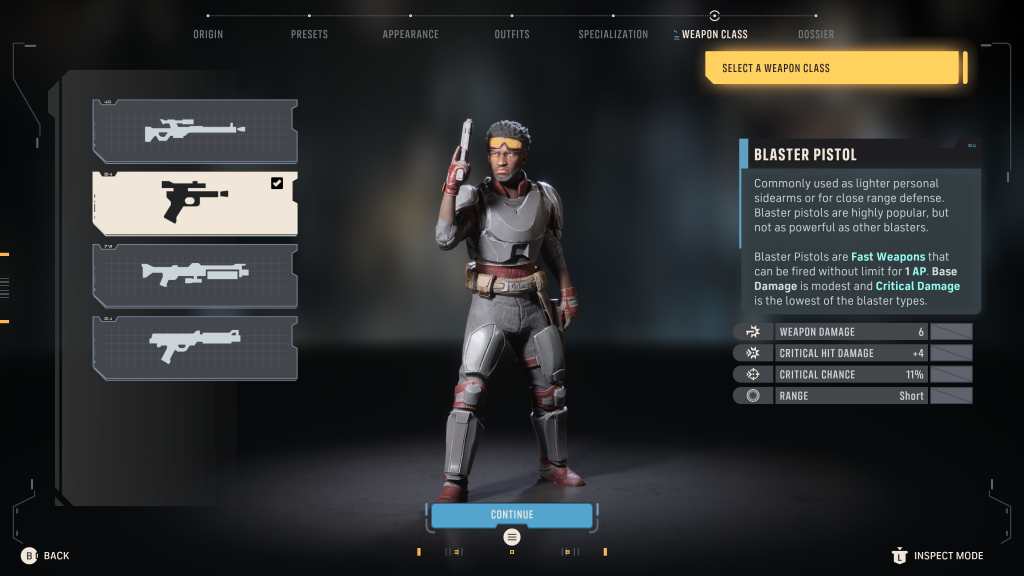
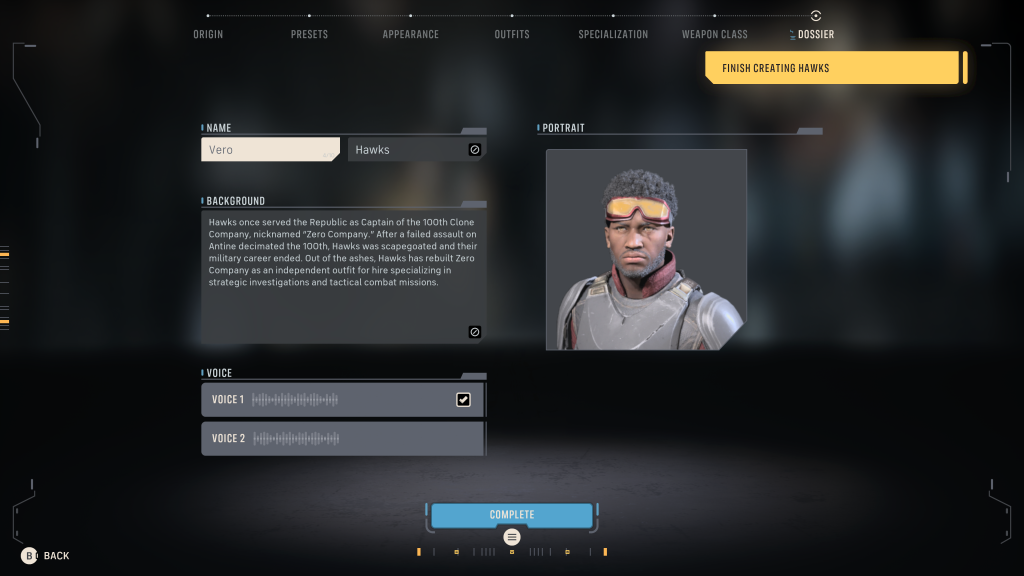
- Deep character creator with options for nearly any build.
- Afro-centric hair options are a standout for the genre.
- Extensive clothing and color choices, expanded in the Deluxe Edition.
- Gordy Haab’s score and iconic blaster effects nail the Star Wars feel.
The character creator is where the presentation really shines. There are plenty of options for any type of character you want to make, and the afro-centric options are excellent. The hair in particular is far better than what I am used to seeing in this kind of game. Clothing options are extensive with lots of coloring choices, especially in the Deluxe Edition, and even the weapons are customizable to give each operator extra flair on the battlefield.
The sound design and soundtrack hit the precise notes you expect from a Star Wars experience. Blasters carry their iconic, instantly recognizable effects, and Gordy Haab’s score feels like it came straight from John Williams himself. It is not going to blow your mind, but it is a solid Star Wars experience both visually and sonically.
Narrative (Story) — Going Off the Grid
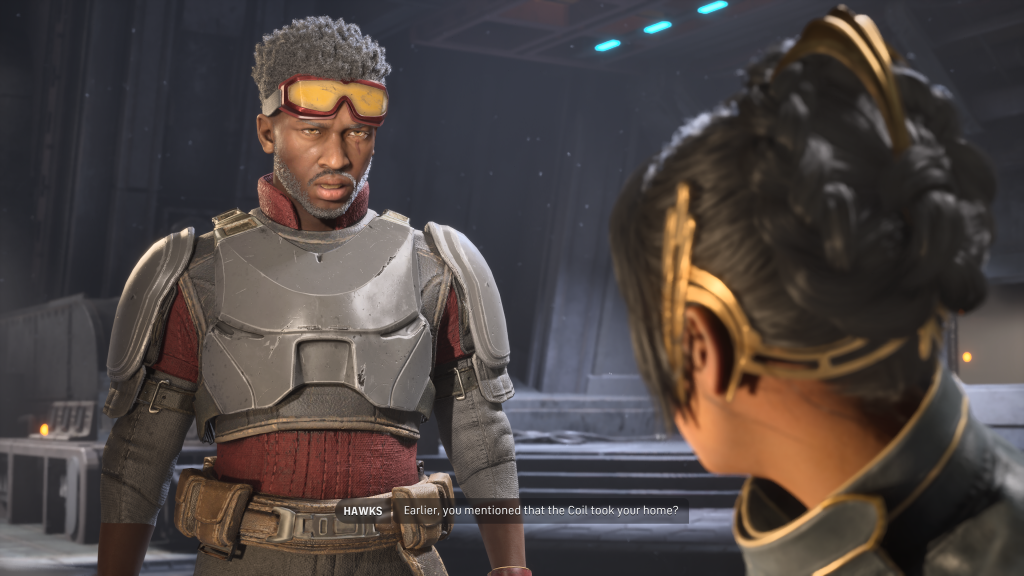
- You play as Hawks, a customizable ex-Republic Captain.
- Hawks took the fall for a mission that wiped out his squad.
- Zero Company operates off the books out of the Ring of Kafrene.
- A Republic spy and an exiled noblewoman target the Infinite Coil.
The narrative of Star Wars: Zero Company is surprisingly engaging so far. XCOM was never much about telling a great story, but this game makes it a focus. You play as your customizable protagonist Hawks, an ex-Republic Captain who took the fall for a mission that wiped out his entire squad. Disgraced, he left the Army of the Republic and quietly started an off-books special operations unit called Zero Company, run out of the Ring of Kafrene.
While facing money troubles, Lt. Bennic Halloren, a Republic spy, and Jae Mordant, a displaced noblewoman of House Mordant, approach Hawks about helping to hunt a Separatist cult called the Infinite Coil (for the right price, of course). Mordant wants revenge on the cult that took everything from her, and the Republic is stretched too thin to spare anyone official. That’s where Zero Company comes in. Setting this in the twilight of the Clone Wars and putting you in the boots of the people that war forgot gives Zero Company a perspective most Star Wars games never bother reaching for.
Narrative (Characters) — A Squad Worth Falling For
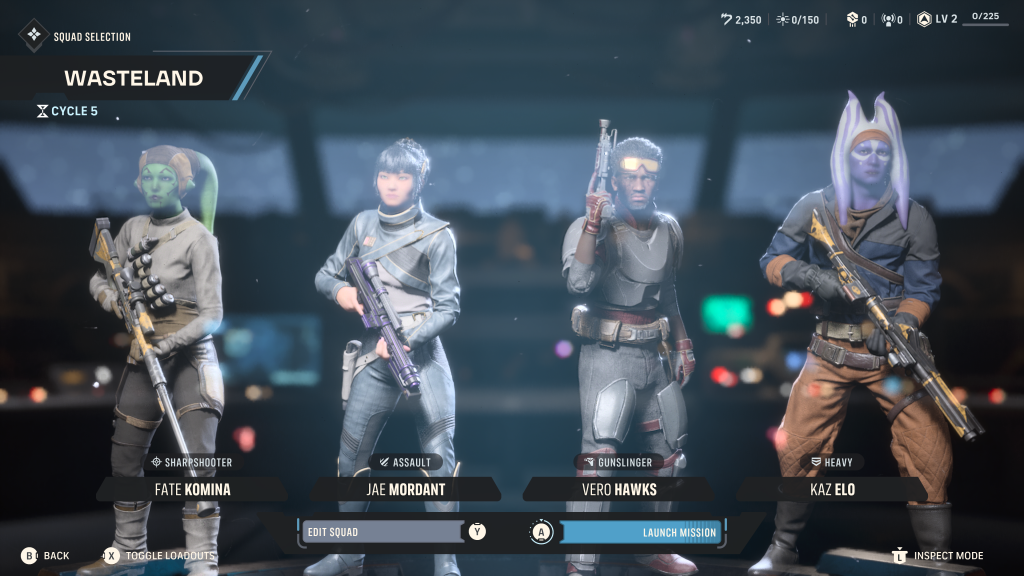
- Hawks is charismatic, pragmatic, and loyal to his crew.
- Founding members include Trick, Kabb, and Neesh.
- Recruits get real dialogue instead of silent bench duty.
- Banter lands like it came out of a Star Wars movie.
Hawks is a charismatic, pragmatic leader with an outlawish vibe. Since leaving the Republic Army, he has few qualms about working with anyone who has credits, but he cares about his crew and wants the best for them. His founding members include Trick, a clone trooper who served with Hawks in the 100th Clone Company, Kabb, a cybernetically enhanced Felshi who speaks in weird rhymes, and Neesh, who runs the infrastructure of Zero Company and its base.
The recruits you pick up along the way are not relegated to silent side characters either. They interact with you and each other through surprisingly great dialogue, and every character I have met has real personality. The banter is straight out of a Star Wars movie. It is campy in the right way, full of great character moments, and I am already starting to fall in love with the members of Zero Company.
Gameplay (Combat) — A Familiar yet Evolved Formula
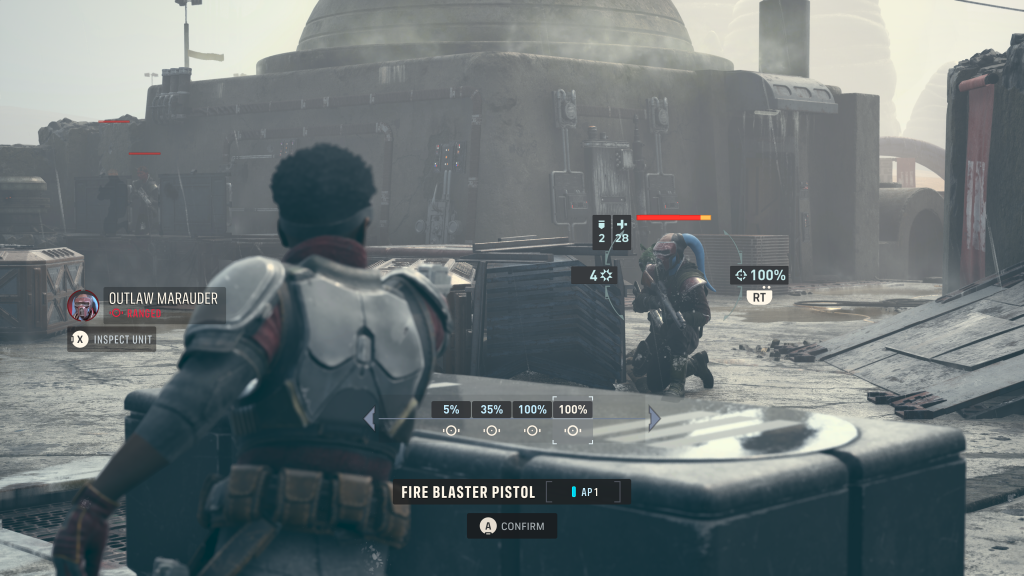
- The first true XCOM successor since XCOM 2.
- Overwatch and full and half cover return as expected but with some twists.
- Move-and-dash is replaced by a three-point AP system.
- Most attacks cost 1 AP outside of Longarm weapons.
It has been way too long since we had a new XCOM game. The Mario + Rabbids series, Gears Tactics, and Marvel’s Midnight Suns were fun stopgaps after XCOM 2, but none of them fully filled the void. Star Wars: Zero Company feels like a true spiritual successor to XCOM while simultaneously being a great Star Wars game in its own right.
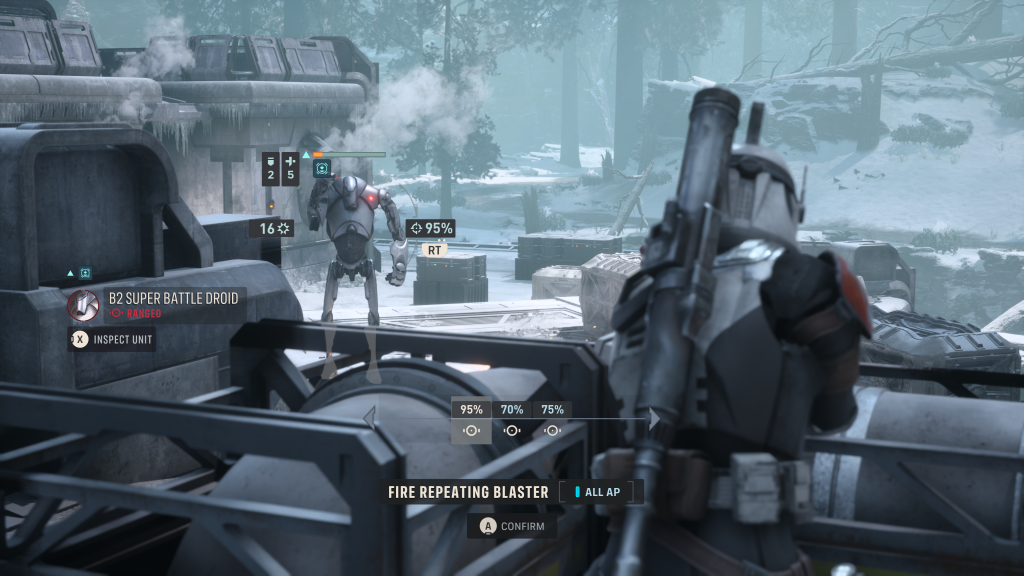
The fundamentals are familiar, with overwatch and full and half cover doing what you expect. The changes are where it gets interesting. Movement is no longer split into the move-and-dash formula that has been a genre staple for years. Instead, movement and actions both draw from your AP, and every character I have used so far starts with three per turn. You can move a set distance per AP, or burn all three to cross the map.
Most attacks cost 1 AP outside of Longarm weapons, which opens up a lot of ways to spend a turn. Move with 2 AP and attack with the third, or move, attack, and drop into overwatch with what is left, for example. Overwatch also received an overhaul, needing the player to manually place a field of vision that loses accuracy the further it’s stretched out. Enemies need to cross this path to trigger the ability. Destructible cover also allows your misses to make some progress, leaving enemies vulnerable for the next shot. With all the changes combined, it truly shakes up the strategy and feels fresh while still maintaining the familiar energy that makes the genre great.
Gameplay (Combat Systems) — Bonds, Back-up, and Beskar Mode
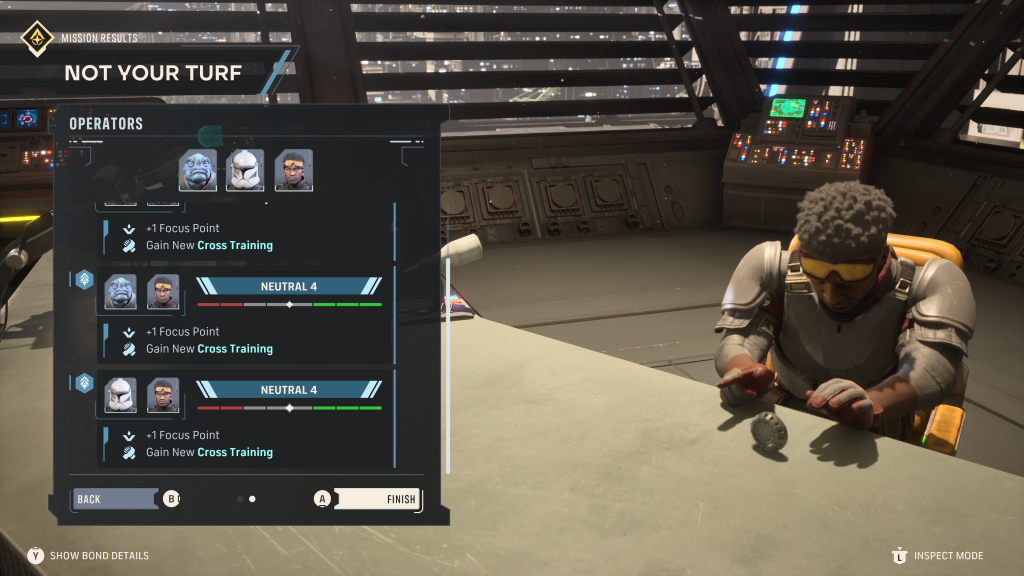
- Class skills grant buffs or free attacks, some without spending AP.
- The back-up mechanic lets nearby operators double-team an enemy.
- Certain skills require advantage built by landing hits and buffing.
- Permadeath is default, and Beskar Mode makes it permanent.
Each operator has distinct class skills, some of which cost no AP at all but are limited per round or per battle. Skills grant buffs to critical chance, damage, accuracy, and more, or let you use an ability such as firing off a free attack at 100% accuracy. Some also require advantage, which builds up by landing attacks or buffing your operators, adding a resource to manage on top of your action economy.
My favorite twist is the back-up mechanic, which lets you double-team an enemy with a nearby friendly operator. You get an extra free attack and build the bond between those two characters at the same time, which pays off well outside of combat.
Permadeath is the default, so one wrong move can cut your favorite operator’s run short. Restarting a mission or loading a save will cheese the system, unless you’re bold enough to pick Beskar Mode, the game’s Ironman equivalent, which allows only one save and makes permadeath truly permanent. Multiple difficulty options are available, and Normal has felt just right so far.
Gameplay (Base Operations) — Day-to-day Operations
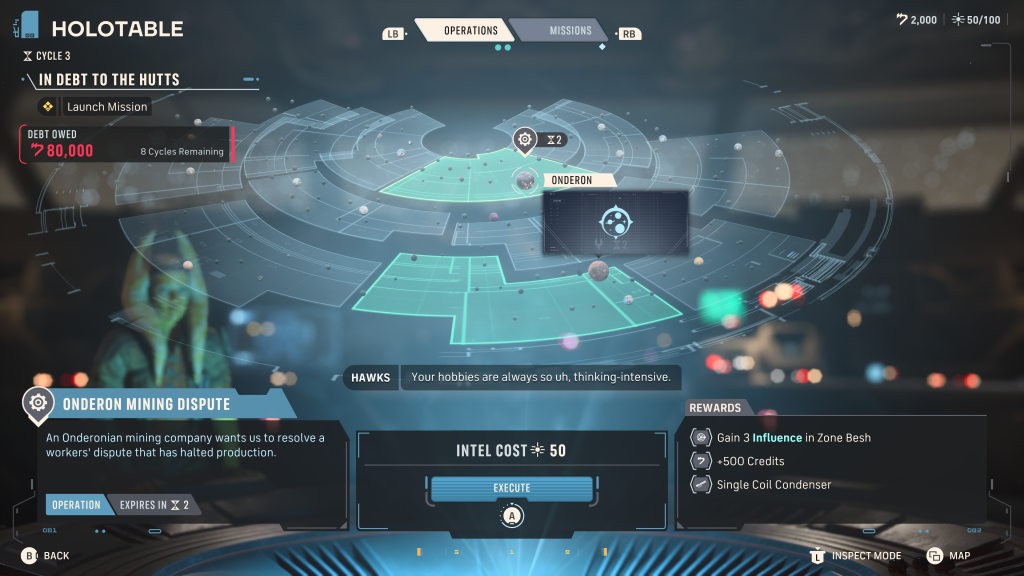
- The Caisson serves as your ship and base of operations.
- Explore the base as Hawks in third person and talk to the crew.
- Focus points earned in missions feed a straightforward skill tree.
- Cross-training turns operator bonds into permanent buffs.
Between battles, you manage a base of operations stationed on your ship, the Caisson. This is where you handle personnel, recruit new operators, buy and customize weapons and utilities, heal the injured, and choose your next mission. You roam the base as Hawks in third-person, and your crew always has something new and interesting to say when you stop to talk.
Operators spend Focus points earned in missions to upgrade abilities through a straightforward skill tree. Bonding during missions and operations unlocks cross-training, which offers three options for a permanent buff shared between the two operators. That makes working your squad together and leaning on back-up an essential part of long-term progression. Equipment matters just as much, with plenty of mods to enhance weapons and operator performance, and more mod slots unlocking as you advance.
Operations — Making the Difficult Choices
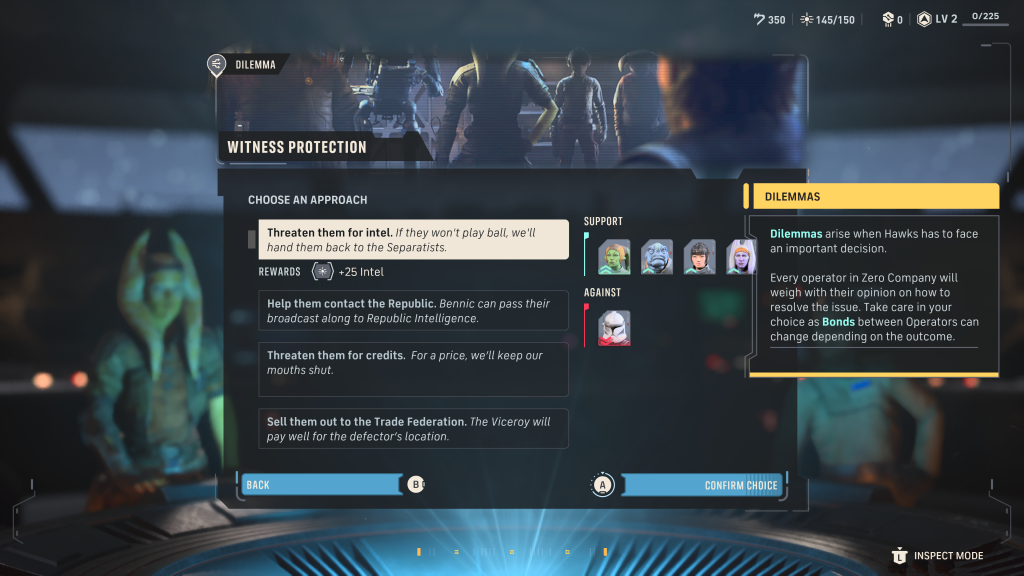
- Operations are choice-driven missions with no combat encounters.
- Most are time-sensitive and play out differently each run.
- Choices affect 10+ regions, operator bonds, and mission rewards.
- Critical operations are narrative-driven with lasting consequences.
Operations are choice-driven missions with no combat encounters attached. You pick from a few available options, usually time-sensitive, and they play out differently each time. Some have you making choices that benefit or harm one of the 10+ regions you can build a relationship with. Dilemmas have a chance of building your bond with certain operators while damaging it with others.
Some send operators out on their own, where your choices determine whether they come back with items and bonuses or come back injured, or worse. Then there are critical operations, which are narrative-driven and can ripple outward in a lot of directions. One major operation had me choose between destroying one of two Infinite Coil facilities, each granting cult members a distinct buff, forcing me to decide which advantage would be least problematic down the line. Operations bring a lot to the base management gameplay and flesh out the overall experience drastically.
Closing Thoughts — A Great Start That Instantly Hooks You
Twelve hours in, Star Wars: Zero Company has done something I did not expect to this degree. It respects what made XCOM special while making smart changes of its own, and it wraps all of it in a Star Wars story that actually earns your attention. The AP system opens up strategy in a way I never knew the genre needed, the back-up mechanic ties combat and character progression together beautifully, and the crew of Zero Company already feels like a group I want to protect. The technical rough edges on Xbox Series X are real but minor. If the back half holds this standard, Bit Reactor will have delivered both the XCOM successor tactics fans have waited for and one of the best Star Wars games of the last decade.
A review code was provided by XBOX and EA for the purpose of this review-in-progress.
