
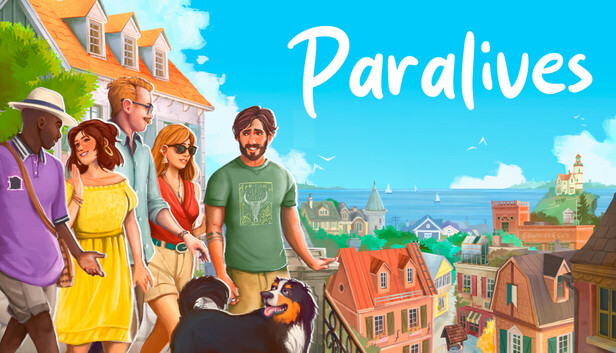
What is Paralives?
The life sim genre has been monopolized by a single franchise for over 25 years. Recently we saw a slate of up-and-coming competitors that were finally supposed to break The Sims‘ stranglehold on the genre. Life By You was canceled before it ever had a chance. Inzoi, for all its Unreal Engine 5 spectacle, launched a little too barebones for a lot of players. But the one bright spot still standing was an indie darling called Paralives.
After seven years of development, Paralives has arrived on Steam Early Access. To be upfront: it is not dethroning a game backed by 12 years of content updates and over 25 years of Maxis’ polish and expertise like many people hoped. But dismissing it on those grounds misses the point entirely. Paralives isn’t meant to beat what The Sims 4 is today. It’s building a foundation—and after over 10 hours of playtime, that foundation looks more promising than anything this genre has put forward in years.
Developer: Alex Massé and Team
Publisher: Paralives Studio
Platform: PC (Steam)
MSRP: $39.99
Release Date: May 25, 2026 (Early Access)
Reviewed On: PC
Presentation & Soundtrack — All in on Aesthetic
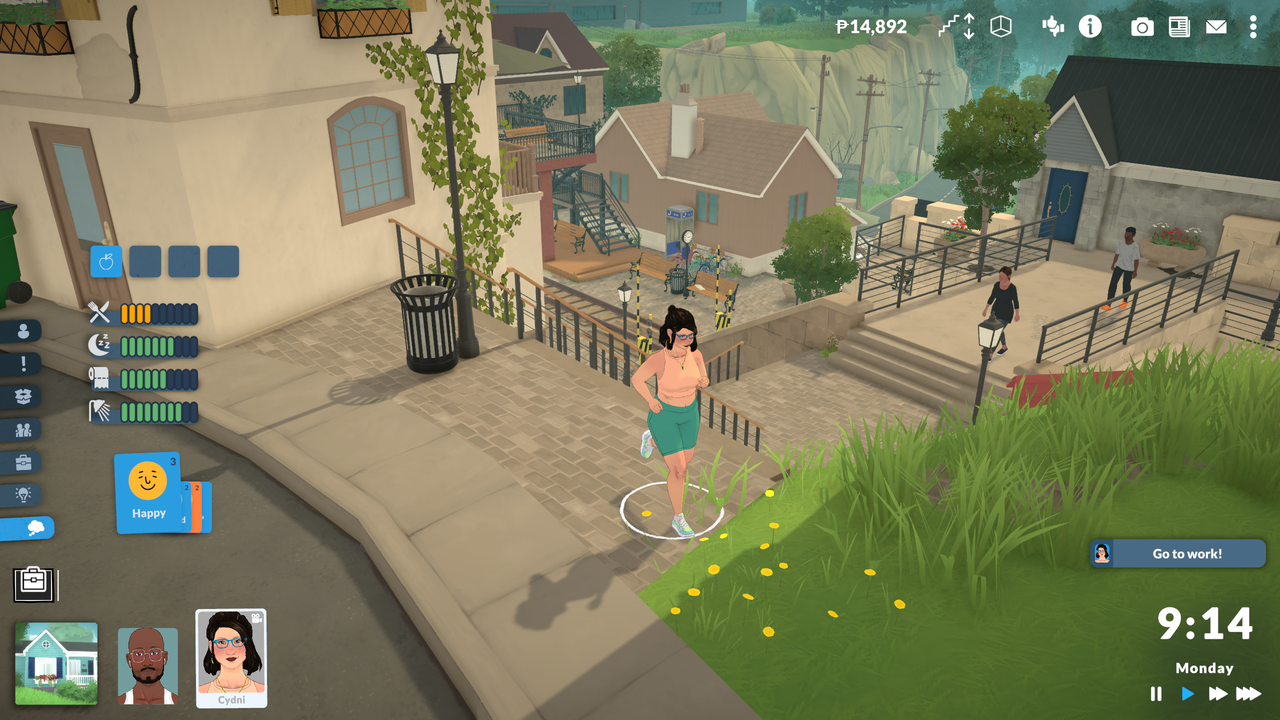
- Paralives adopts a stylized visual direction that is the deliberate opposite of Inzoi‘s hyperrealism
- The art style gives the world a warmth and personality that makes every screenshot feel distinct
- The soundtrack is chill and relaxed—evoking The Sims immediately—and sells the cozy atmosphere completely
- Animations carry genuine character without the occasional over-the-top excess found in The Sims 4
- Paras clip into each other and get stuck often enough to be noticeable—an Early Access issue, but a present one
If there is one thing Paralives gets undeniably right out of the gate, it’s atmosphere. Where Inzoi bet big on photorealism, Paralives Studio swung hard in the opposite direction, and it pays off. The stylized art direction gives the game a charm that makes it feel immediately distinct from everything else in the genre. Screenshots have personality. The world looks like somewhere worth spending time. The soundtrack reinforces all of it—chill, relaxed, and sounding like it was lifted directly from The Sims‘ DNA. It sells the cozy atmosphere completely.
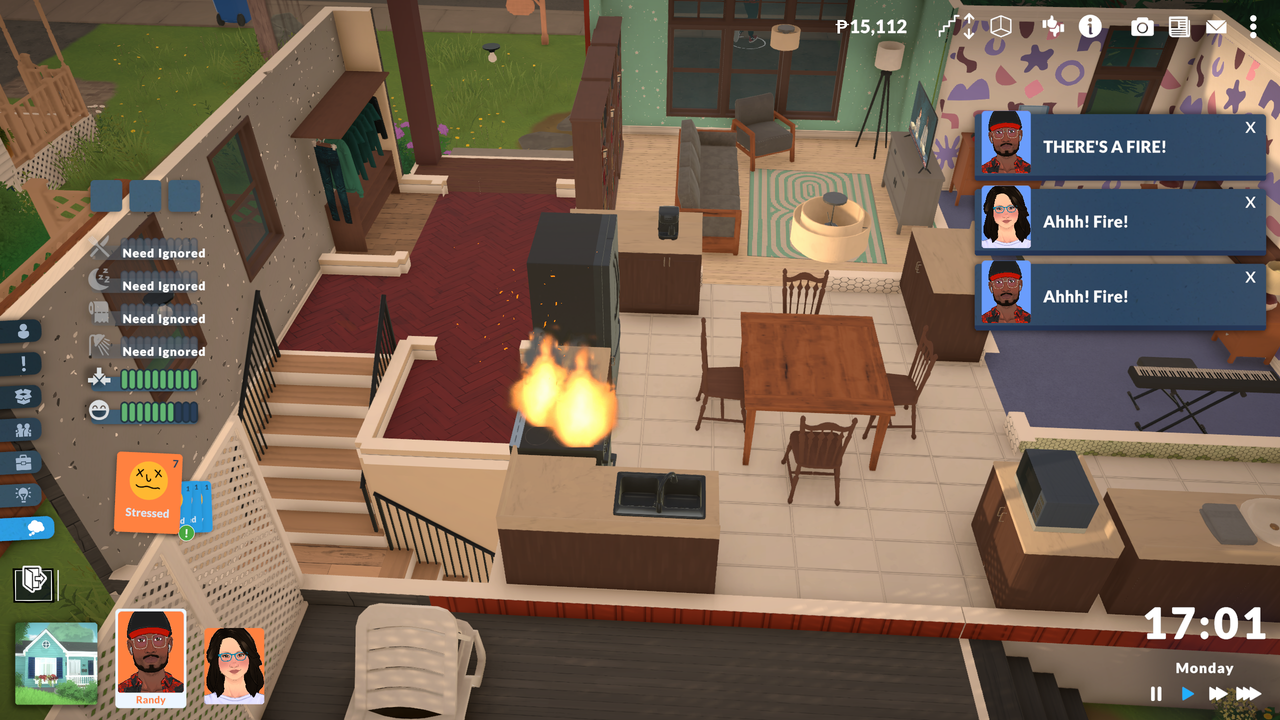
The animations reinforce that charm. Paras act with naturalism and deliberate expressiveness. It’s very down-to-earth and grounded without feeling stiff, animated without veering into the over-the-top territory that The Sims 4 occasionally falls into. The caveat here is clipping and pathfinding. Paras get stuck or phase into each other often enough to pull you out of the experience. It’s Early Access and I’m sure it will be polished over time, but it’s there.
Open World — The Optimal Environment for Life Sims
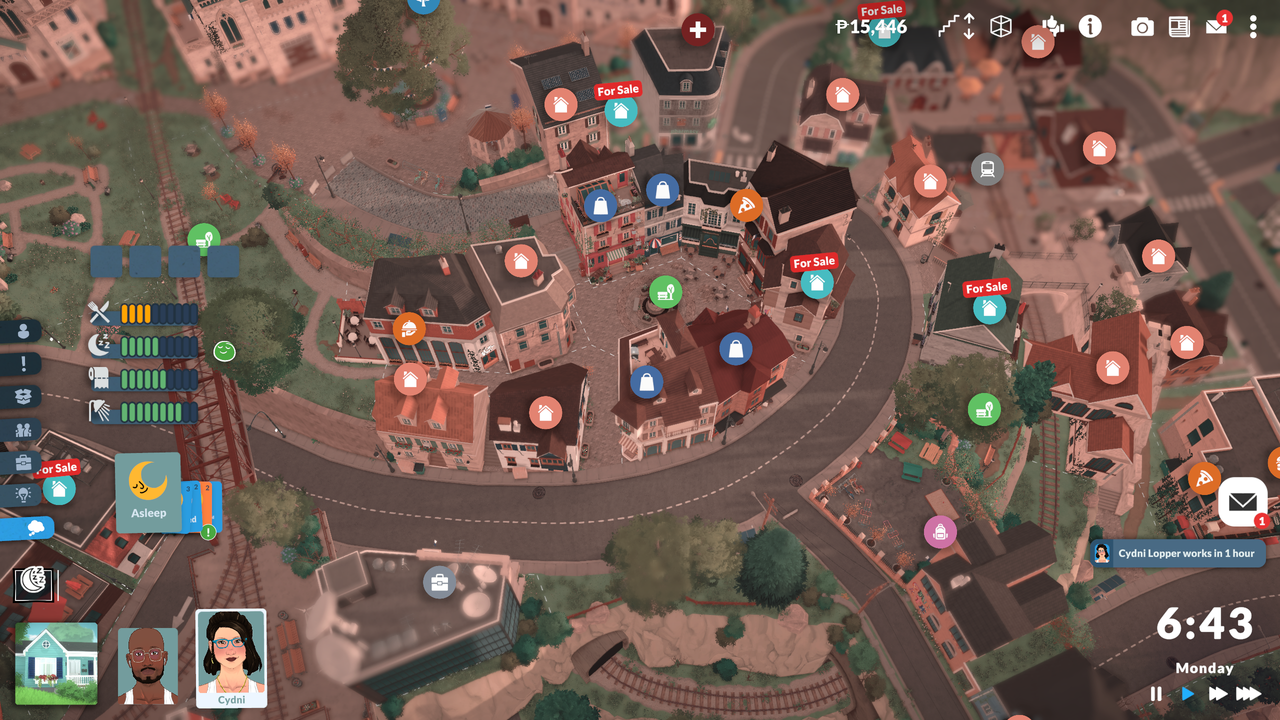
- The open world city features Paras living autonomously—running to work, stopping to meet others, going about their days without loading screens
- Seeing the world feel alive in real time echoes what made The Sims 3 so beloved
- The Sims 4 famously abandoned the open world in favor of loading-screen-gated neighborhoods, a loss fans have never fully forgiven
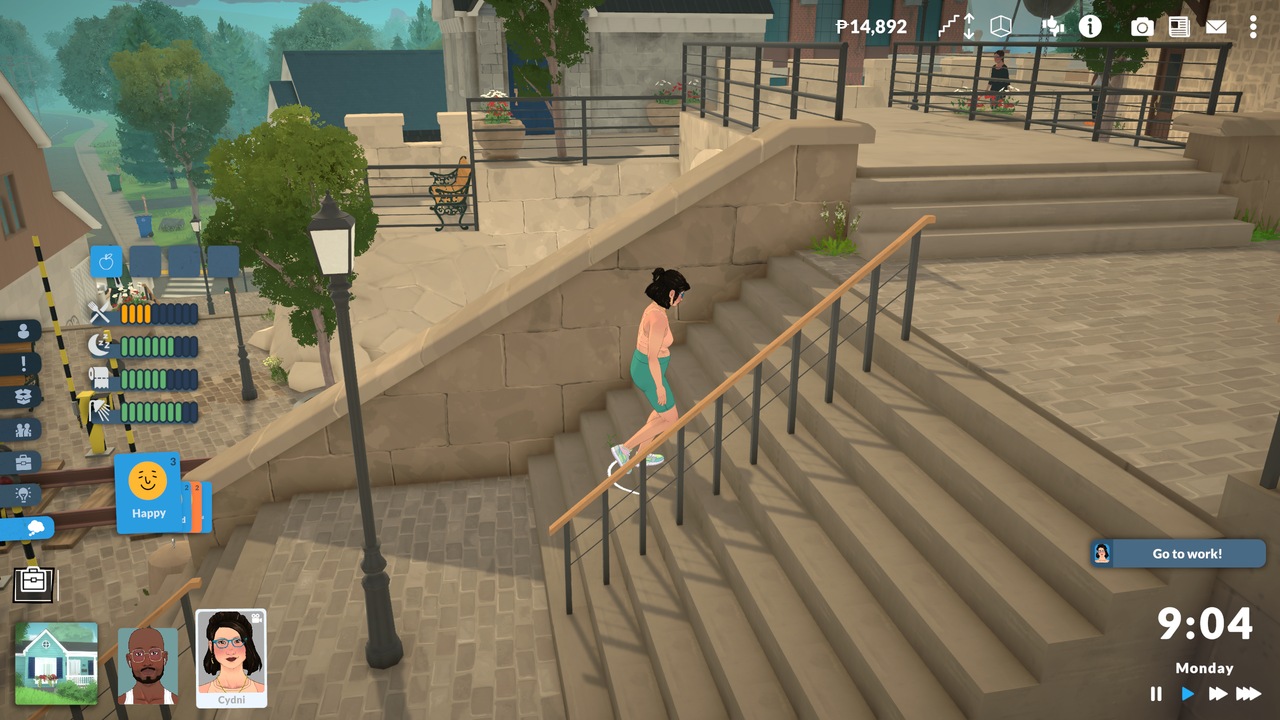
This is something I wasn’t expecting to hit me as hard as it did. Watching Paras move through the city—running to work, stopping to meet someone new, going about their days with apparent autonomy. It brought back a feeling I haven’t had since The Sims 3. The Sims 4 made the controversial choice to ditch the open world in favor of loading-screen-separated neighborhoods, and despite 12 years of updates, that remains one of the franchise’s most lamented design retreats.
Paralives utilizes the open world town greatly. It doesn’t feel like a stage set you toggle between, it feels like a living breathing town. The world has ambient life. For longtime life sim fans, this alone will carry significant weight, and it’s a quality-of-life advantage over The Sims 4 that no expansion pack has been able to patch in so far.
Onboarding — All Aboard!
- Paralives opens with a cinematic train journey into the open world city, easing players into the genre without friction
- Players can choose pre-built Para households or build their own from scratch during onboarding
- The storyteller system functions simultaneously as difficulty settings and an ongoing in-game guide
- Storytellers issue active goals throughout the game—starting with town exploration, then progressing to career milestones as your Para’s journey develops
Paralives makes a strong first impression with how it brings you in. Rather than front-loading you with setup screens, the game opens on a cinematic train ride into town—a small but effective choice that signals a commitment to atmosphere over friction. New players to the genre especially will appreciate how naturally the tutorial unfolds.
The storyteller system is where Paralives shows its unique qualities. Your chosen storyteller becomes a contextual guide present throughout the game, first, tailoring your simulation experience for you. Mortality, life stage pacing, pregnancy odds, starting funds—it’s all here, framed through a character that actively stays relevant.
Beyond configuration, storytellers issue goals as you play: early ones ease you into the world by pointing you toward town exploration, while later goals align with your career path, giving your Para’s journey an ongoing narrative thread. Each night, the storyteller also presents a selection of buffs to choose from—typically active for 24 hours—that can enhance your mood, boost career performance or stats, or hand you a free item like a computer. It’s a small daily ritual that keeps the storyteller feeling present and useful.
Create A Para — Color Me Impressed
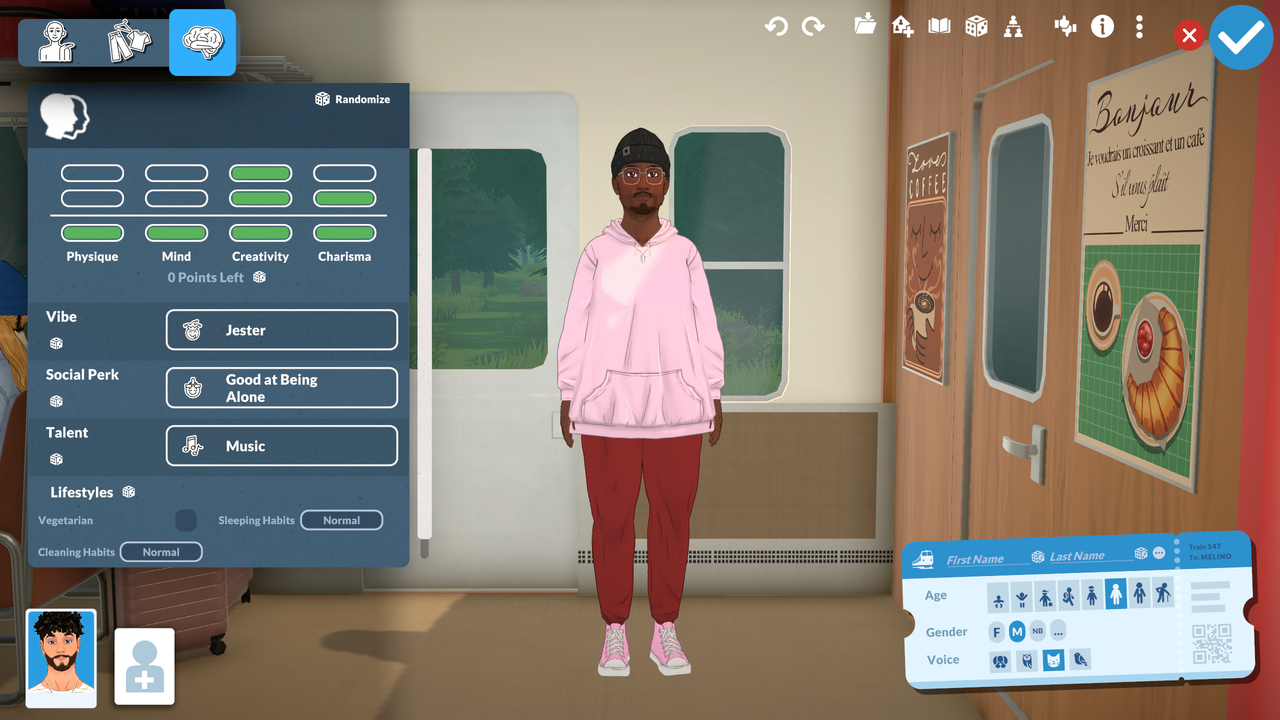
- A full color wheel applies to every clothing item and enables outfit layering—like adding an open button-up over a t-shirt
- Inclusive options include pronouns, pregnancy/impregnation settings, breastfeeding, and a polyamorous jealousy toggle
- Players allocate stat points across Physique, Mind, Creativity, and Charisma, then select a Vibe, social perk, talent, and lifestyle choices
- The volume of available items is currently limited—the most glaring weakness in an otherwise impressive creation suite
Create A Para is a near-peer to The Sims 4‘s Create-A-Sim, and in some areas it already surpasses it. The color wheel is the centerpiece. Being able to dial in exact colors for every clothing item, then layer pieces on top of each other, gives Create A Para an expressive range The Sims 4 simply can’t match.
The workaround to EA’s direct face and body customization patent is clever and it works. It’s a little more cluttered than Create-A-Sim, but the payoff is full intuitive mouse control over every major feature. Tweak and twerk your Para into exactly the look you’re going for. Beyond appearance, the depth of personality customization is great with stat allocation for your Para’s Physique, Mind, Creativity and Charisma, five Vibe options to choose from (Overjoyed, Gloomy, Energetic, Serious, and Jester), social perks, talent trees across Music, Fitness, Food, Art, Tech, and Jack-of-All-Trades, plus lifestyle choices like sleeping habits and vegetarianism.
The inclusive character options deserve a specific callout. Pronouns, pregnancy settings, breastfeeding, and a polyamorous jealousy toggle configured from the start—that’s a level of thoughtfulness that feels meaningful rather than performative.
The limitation is volume. The tools are excellent, but the wardrobe is lean. Right now the toolkit sometimes outpaces the available material. That will change, but it’s the reality today.
Build Mode — A Whole Lotta Options
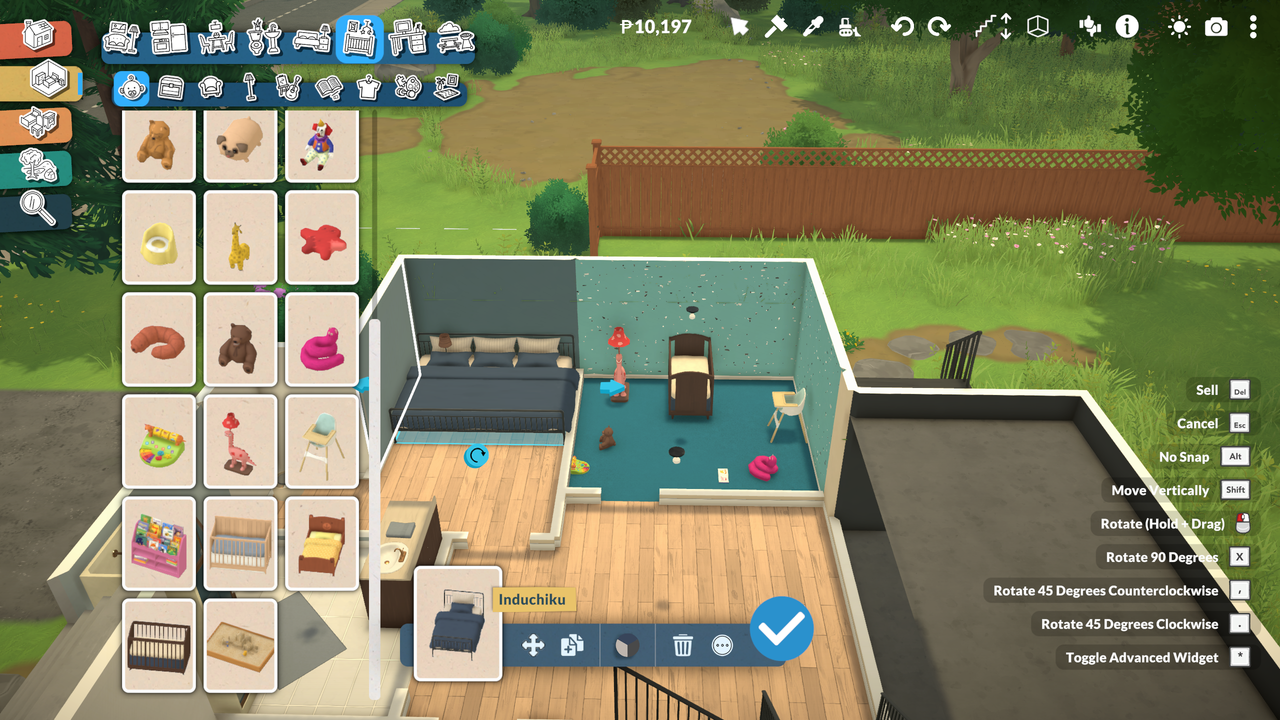
- Most furniture types—couches, beds, rugs, windows, etc—can be freely resized to fit your exact vision
- The color wheel extends fully into décor, giving players control over color for virtually every item in a room
- Build tools are intuitive with a low barrier to entry
- Resizing mechanics eliminate the frustration of hunting for pieces that match both your style and the space you have
Build mode is where Paralives makes its clearest mark. The ability to resize any piece of furniture is genuinely transformative. In The Sims 4, every item ships in a single developer-determined size and you work around it or you don’t use it. In Paralives, if a couch has the right style but wrong scale, you drag it to fit. If a window needs to be longer, you make it longer. Your vision shapes the space rather than the other way around.
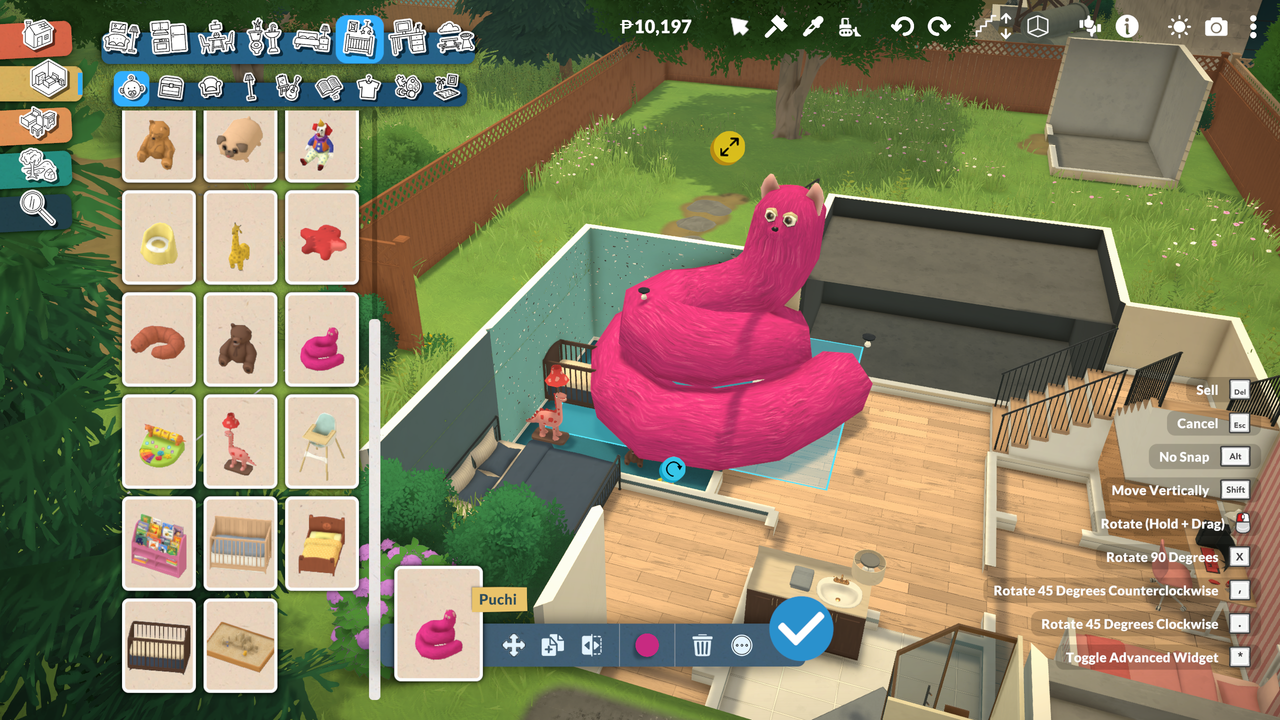
The color wheel carries over into décor fully, and the combination of resizing and recoloring means build mode stops being a treasure hunt and becomes a creative act. It’s the feature that kept me in longer than I planned. For players who love the building side of life sims, this is where Paralives most clearly earns its place.
Simulation (Needs & Emotions) — Intuned with your Feelings
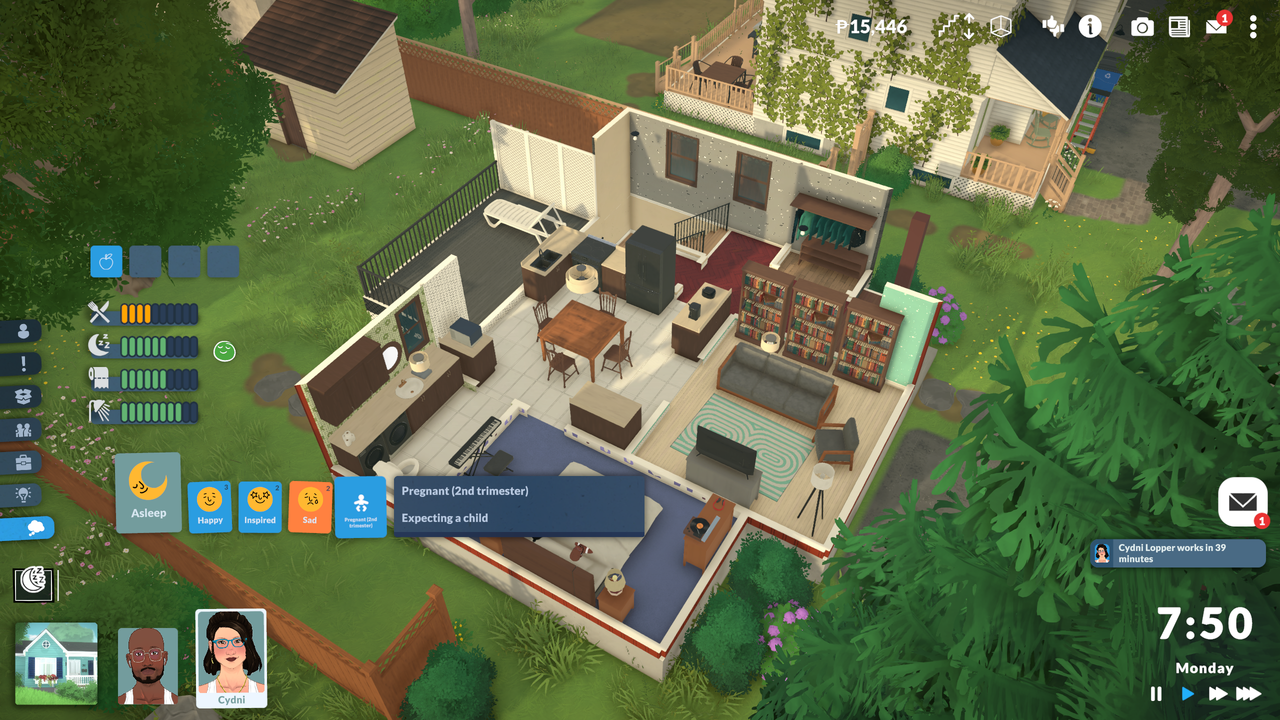
- Standard needs include Hunger, Sleep, Hygiene, Bladder, and Fun, with additional Vibe-specific needs unlocked by your social perk choice
- Choosing Good at Being Alone adds a Me Time meter that demands your Para get genuine solo downtime
- Emotions are Vibe-driven and generate optional reactions—completing them improves your Para’s personality level
- A Gloomy Para will feel sad often, triggering reactions like eating a snack or watching TV for two hours straight
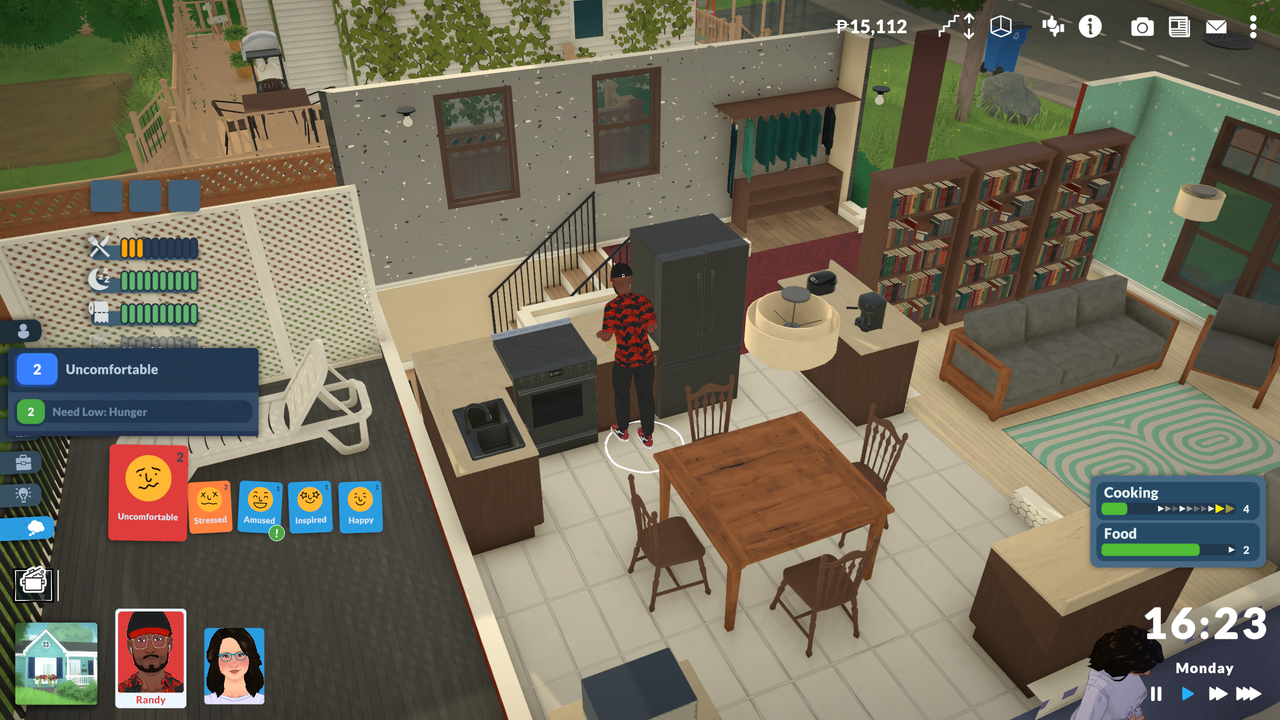
The needs system follows the familiar life sim blueprint, but Paralives adds a layer that makes it feel personal. Your Vibe and social perk choices unlock additional, character-specific needs. Take the Good at Being Alone social perk and your Para develops a Me Time requirement—a meter that only fills when you’re completely alone. Certain moods may allow you to ignore certain needs for a period as well. It makes needs feel like an expression of who your Para is rather than just a standard maintenance loop.
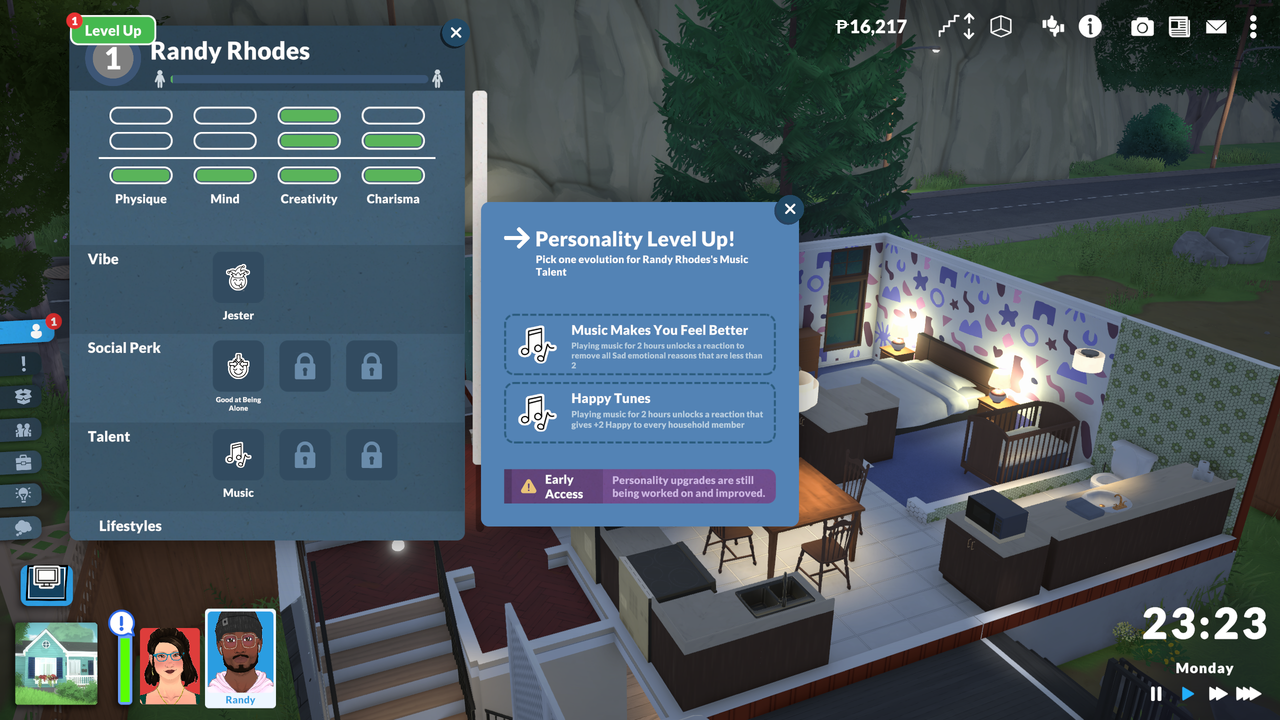
The emotion system builds on that. Emotions are Vibe-driven and generate reactions your Para can act on, with successful completion improving their personality level over time. A Gloomy Para will encounter sadness as a recurring companion, and when that emotion hits, they might get the nudge to eat a snack or binge TV for a couple of hours. These reactions feel organic as they intentionally flesh out the Para’s Vibe and emotions.
Simulation (Careers & Quests) — Career-Driven
- Career advancement is driven by your Para’s mood and skill level, with performance determining how quickly you progress
- As you level up, you’re offered career perks—equip up to three—with benefits that extend beyond the job, like passively building a skill while on the clock
- Request boards and Paras around town offer quests, from spreading the word about the community center to helping neighbors with tasks
- Group conversations let you keep pulling more Paras into the chat, and the system handles it seamlessly
Career progression has more texture than the surface suggests. Your mood and skill level determine performance, which drives advancement. As your career levels up, perk offers roll in, and you can equip up to three simultaneously. A musician might grab a perk that slowly builds piano skill while on the job. As you progress further, schedule flexibility opens up, letting you tailor your work life to better fit your Para’s rhythm.
Outside the office, the quest layer adds genuine life to the world. Request boards and Paras around town hand out goals—helping a neighbor find something or bringing up the community center in a group conversation to spread the word, for example. That last mechanic is worth highlighting on its own: group conversations are available at launch, and they work well. You can keep adding Paras to a chat, and the system handles it naturally, making social interaction also feel communal rather than strictly one-on-one.
Simulation (Relationships & QOL) — Still Finding Its Heartbeat
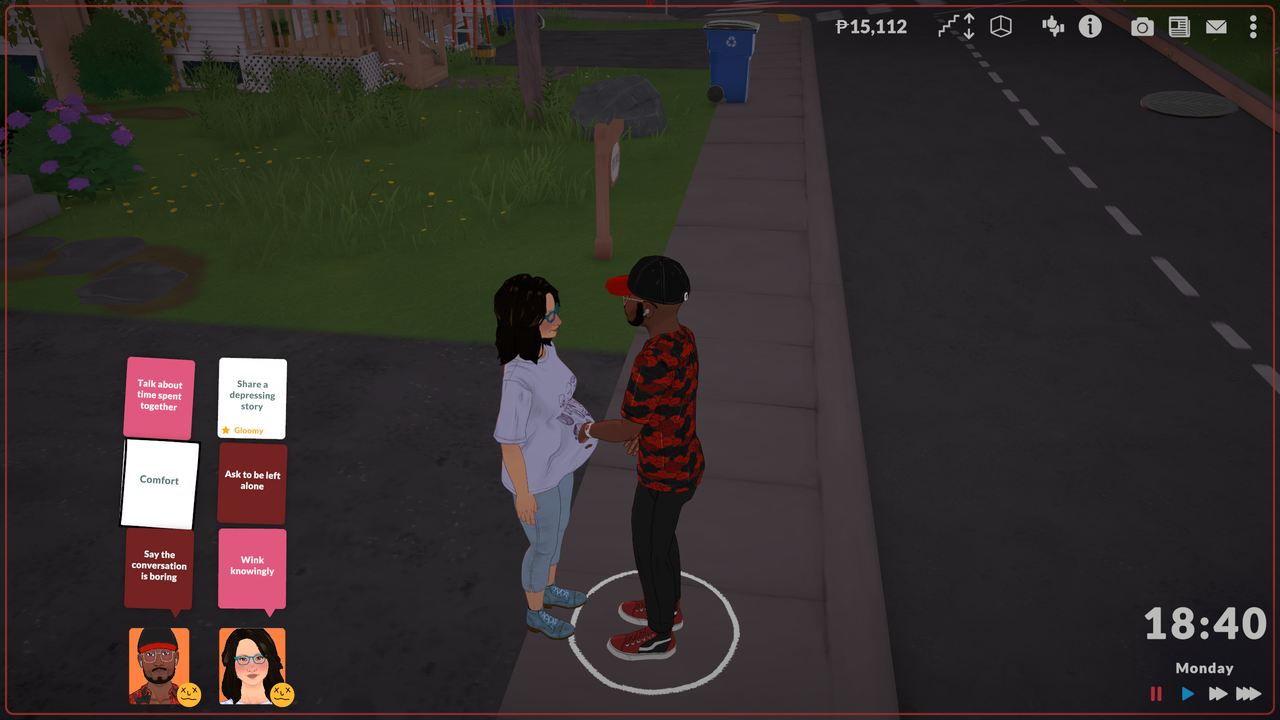
- Conversations use a slow-filling meter that gates topic changes—flirting, joking, getting to know someone, or advancing the relationship—to prevent spamming to increase relationships
- Flirting success rates start low with strangers and improve organically as the relationship develops
- Paras don’t converse during shared activities like eating or watching TV—a noticeable step back from The Sims 4‘s behavioral naturalism
- Paras also stand to perform tasks they could reasonably do while seated or lying down, disrupting immersion
Paralives’ relationship system is, in concept, better-designed than The Sims 4‘s. You can’t spam interactions to fast-track a connection. Conversations have a meter that fills gradually once started, and only when it’s full can you switch topics, whether that’s flirting, telling a joke, getting to know them, or pushing the relationship forward if that option is unlocked. It paces social progression in a way that feels earned rather than exploitable. Flirting specifically starts with slim odds against strangers, and receptiveness only improves as the connection builds naturally. It feels closer to how people actually connect, and the restraint is refreshing.
But the simulation’s naturalism still falls short of what The Sims 4 has spent four iterations perfecting. Paras don’t talk to each other while eating together or watching TV. They’ll stand up to do things they could handle seated. These feel like small things until you’re in a life sim, and then they become the entire texture of the experience. It’s not a knock exclusive to Paralives—Maxis spent years earning that level of behavioral polish. But the gap is real, and it’s very noticeable.
Simulation (Autonomy) — Do I Have to Do Everything?
- Paras are slow to act independently after completing a command, often standing idle before deciding what to do next
- Left to their own devices, Paras don’t always make intelligent choices—autonomy is present but unreliable
- Major life events like childbirth currently lack scripted reactions for either parent, resulting in some unintentionally jarring moments
- These are Early Access growing pains, but they’re visible enough to pull you out of the experience
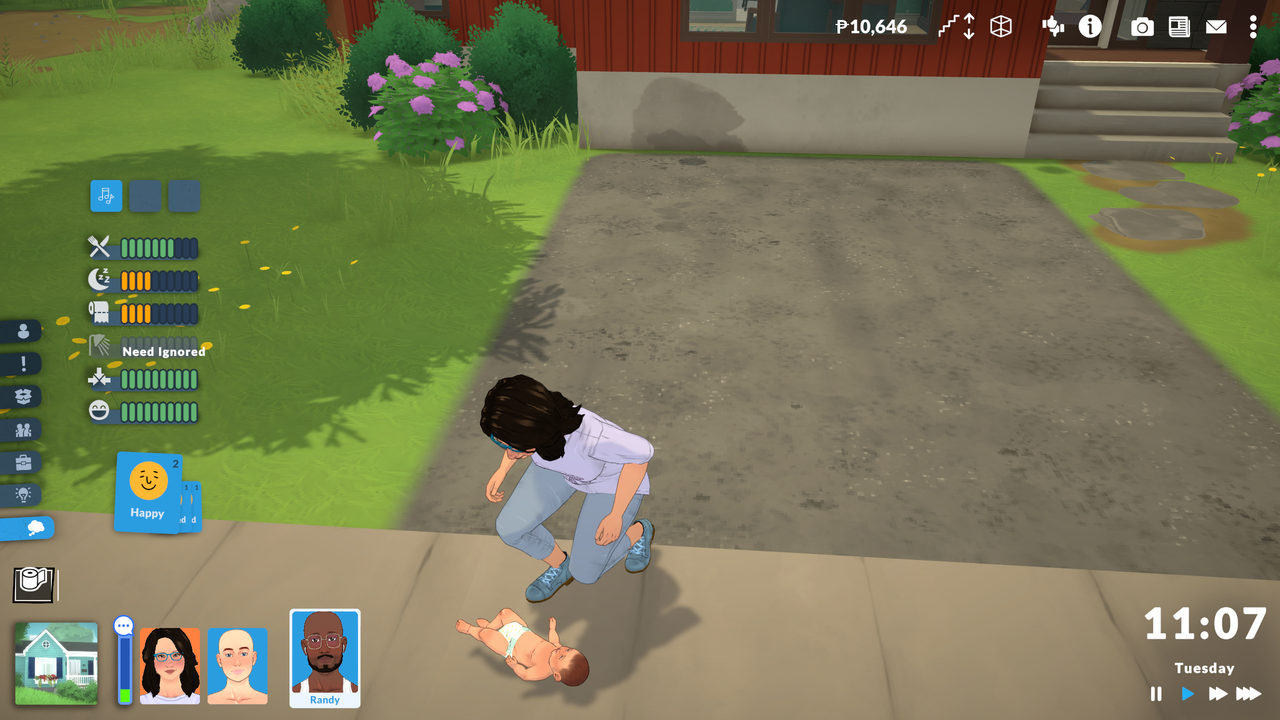
Autonomy is one of the rougher edges in Paralives right now. Paras are sluggish to take initiative after finishing a command. They’ll stand in place for a beat too long before deciding what to do next, breaking the immersion. And when they do act on their own, the decision-making isn’t always the smartest. For example, after my Para had a baby, she simply set it down on the ground and went about her day like nothing had changed.
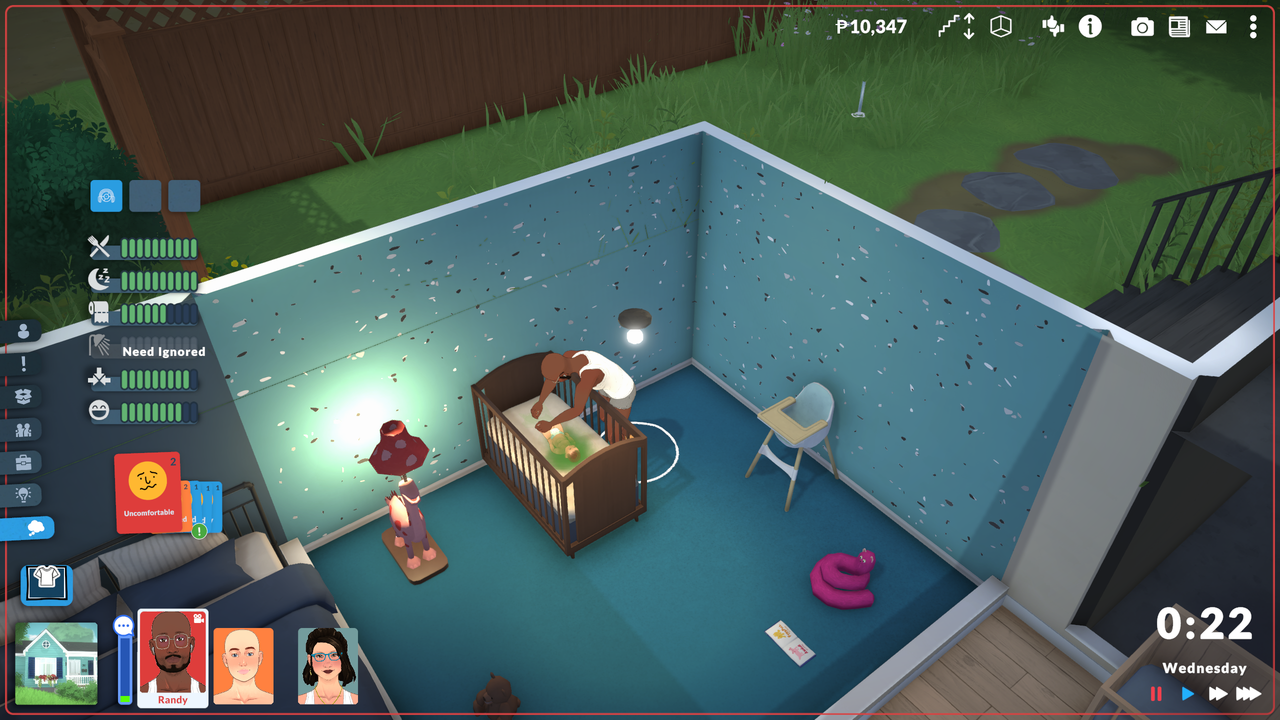
The birth itself is a story on its own. When my Para went into labor, she stood started to panic but wouldn’t move. The father didn’t react at all. I assumed a hospital visit was involved, so I dug through every option I could find: looked for an option to call an ambulance or midwife, looked for the health center on the map. Nothing. So I let it play out. She gave birth standing up. The baby spawned on the ground beneath her. The portrait for the baby’s icon was also a bald adult… I couldn’t help but feel a little peeved.
I’m confident this isn’t Paralives Studio’s final vision for one of life’s most significant events, but it’s what the game is today, and it’s the kind of rough edge that reminds you this is Early Access.
Early Access & The Road Ahead — Built Different
- All updates during Early Access are free—no paid expansions, no content packs, no DLC
- The post-launch roadmap includes cars, bikes, boats, houseboats, seasonal calendars, family trees, NPC story progression, gardening, fishing, and town creation tools
- Steam Workshop and full mod support are available at launch
- Missing features compared to The Sims 4‘s 12-year library include pets, playable work and school, swimming pools, weather, and seasons
This is where the Paralives conversation intersects most directly with everything that’s been troubling about The Sims franchise lately. As I covered in January, EA and Maxis’s roadmap has been “both thrilling and troubling in equal measure”—and the troubling side has only grown louder since. The Sims 4‘s full DLC library now costs nearly $1,500 to own in full, with most of that money going toward mechanics stripped from prior entries and resold.
Paralives is the counter-argument in playable form. Every update during Early Access is free. The roadmap is substantial and community feedback will shape what comes next. Mod support is live on day one. Right now, Paralives‘ early access feels like the base game—which it effectively is. But the commitment to avoid nickel-and-diming its players while they add expected features is a meaningful differentiator, and it means more in 2026 than ever before.
Final Thoughts
Paralives is not the Sims killer—not yet at least. And maybe not in the way some expect it to be. But after 2025 brought about an uncertain future for EA’s franchise, it’s filling an important gap in the life sim genre. The color wheel, furniture resizing, an open world that recalls The Sims 3 at its best, a simulation with real personality depth, and a genuinely consumer-friendly Early Access model make it a compelling foundation even in its current state. The behavioral naturalism and autonomy still need work, and the content library needs time to grow. But the bones are there and they’re great. Paralives has lived up to expectations for the most part after 10 hours, and I can’t wait to see how much the experience grows over the years.
