

What is Pragmata?
Originally announced at the PlayStation 5 reveal, Pragmata has been in development for years. But as Capcom revealed more about the third-person action/adventure game, many were eager to give it a chance, more so after the immense success of the company’s Resident Evil releases and the continued growth of Monster Hunter.
As my most anticipated game of 2026, especially after getting my hands on it at NYCC 2025, I couldn’t wait to play Pragmata. Is this exciting third-person adventure game worth your time? Or is it in need of some tuning up? After finishing the adventure, I was blown away by what is by far one of the greatest games Capcom has ever produced.
Publisher/Developer: Capcom
Platforms: PlayStation 5, Xbox Series X/S, Nintendo Switch 2, PC
Release Date: April 17th, 2026
Price: $59.99
Reviewed On: PlayStation 5
To the Moon – Premise
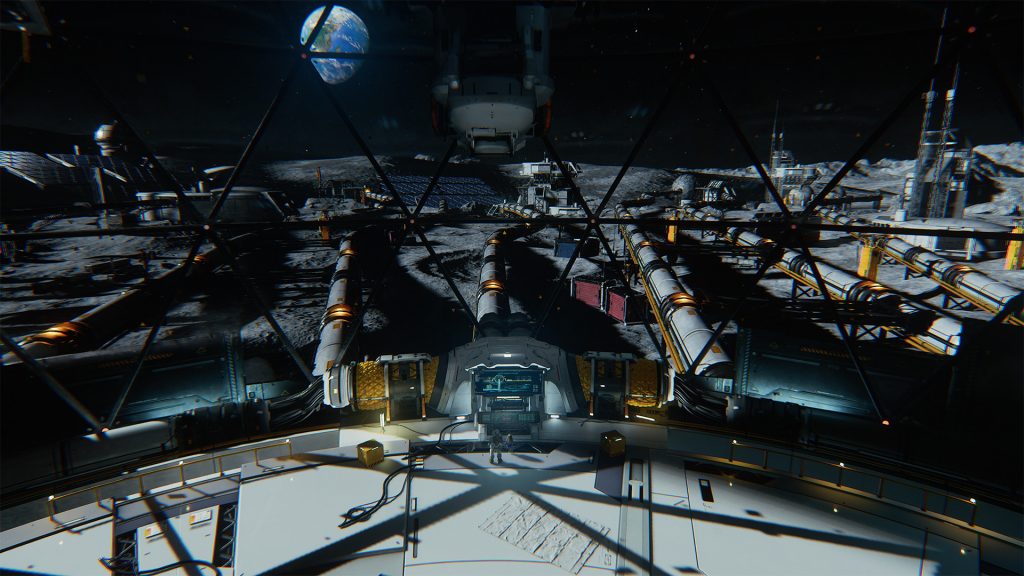
- Taking place on the Moon base, called the Cradel, Hugh teams up with the Pragmata robot Diana to return home.
- Various text logs and holographic video logs shed light on the lore and backdrop of Pragmata’s setting, not unlike games like Metroid Prime or Dead Space.
Going to the moon to help with repairs, Hugh and his crew are taken aback by a lunar quake. Waking up with all his allies dead, he encounters a Pragmata, whom he names Diana. The duo works together to find a way back home to Earth, along the way learning about what befell the lunar base’s various sectors and the true origins of Diana and many other mysteries.
The actual story has enough hooks to keep you engaged through its combination of real-time cut-scenes, various journal logs, and holographic scenes to learn more. I really enjoyed some of them, reminding me of games like Dead Space or Metroid Prime, rewarding players if they put in the legwork to learn more about the situation at hand.
One example of this is learning the origins of the EDM’s, with people making holographic recreations of things they loved from Earth to make life on the Moon base more homey. Overall, I enjoyed the overall narrative, but the end-game reveals were a huge surprise.
The Mystery of the Pragmata’s
The mystery and reason for creating the Pragmata robots gradually unfold over the course of the adventure. As you reach the game’s final hours, the answers given shocked me.
In many ways, the why the Pragmata were created and how their creator viewed them evoked a strong emotional reaction, more so after growing to really love Diana as a character.
Dad Space – Relationship of Diana and Hugh
- Featuring a strong father/daughter dynamic, Hugh and Diana are lovable characters who genuinely care for one another.
- Several moments tug at the heartstrings, more so if you are a parent or work with children.
Speaking of the blue-donning robot, the narrative core of Pragmata is the relationship between Hugh and Diana. Initially being somewhat annoyed with the robot child, Hugh quickly warms up to Diana and genuinely takes her under his wing. This bleeds into every aspect of the experience, ranging from charming dialogue moments about Diana’s curiosity about Earth, Hugh sharing a bit about his past with her, and the duo reacting to the chaos around them.
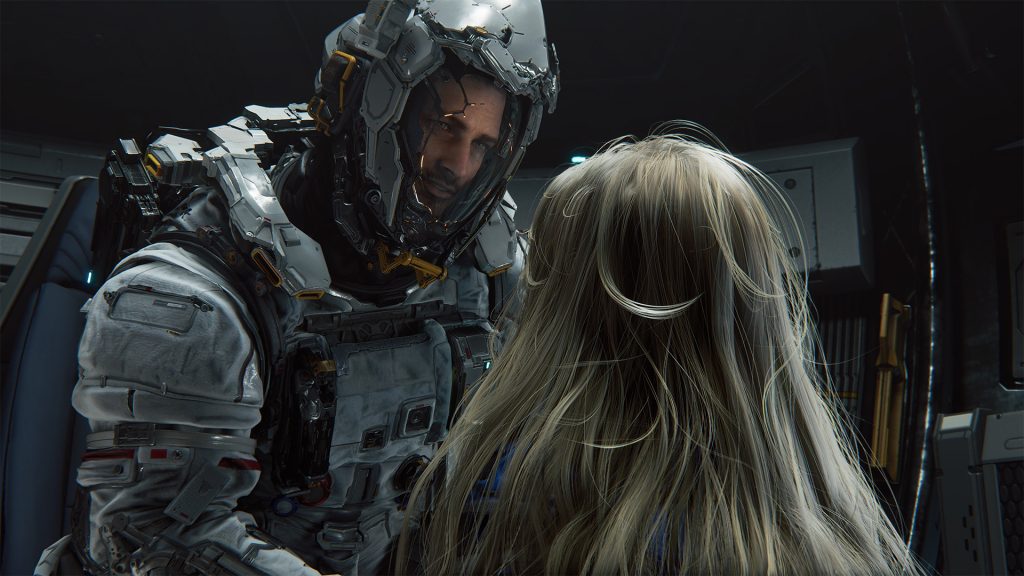
In many ways, it takes the best elements from the light-hearted moments from The Last of Us dynamic between Joel and Ellie, and combines a real parental love for a child. That you will do anything to help them learn, grow, and keep them safe. Speaking from personal experience working with kids as a teacher’s assistant, my heart melted the most during the downtime moments at the Shelter Base.
Specifically, these include the scenes where Diana can interact with various EDM’s (holographic objects), acting as a real child would. Playing with a water gun, trying to look cool, running up the slide the wrong way, being lost watching a TV, and more. After major moments, Diana gives Hugh a crayon drawing she made, looking like something a kid would proudly give someone they care about.
Hugh’s strong, defined character only adds to the effectiveness of this relationship. He’s grounded and earnest in everything he does. So when he says something to Diana, you know he means it and that has meaning. More so in the game’s final area, when major truths about Diana are revealed. Overall, I loved the story, and its conclusion left me emotionally cathartic.
The Unknown Signal & Lunatic Difficulty – Post Game Content
- Extensive post-game content awaits players upon completion of the main campaign, comprised of a post-game challenge called ‘The Unknown Sector’ and a harder difficulty to undertake.
But the adventure isn’t over when the credits roll, as a new sector gets unlocked. Dubbed ‘The Unknown Sector’, Hugh and Diana are tasked with new challenges to go through. While I didn’t finish this content for the review process, one of my fellow writers, Alex Patsy, did! He described the mode as something that ‘expands on endgame content’ and allows players to utilize upgrades and unlocked gear from the main campaign to tackle the greater challenge.
Fully completing all of the modes’ missions grants Hugh and Diana a special item to equip, unlocking a bonus scene when the credits roll. That’s not everything, however. Upon completing the game on either Easy or Normal, the Lunatic difficulty is unlocked.
This allows players to experience modified combat encounters and greater challenges for Hugh and Diana to overcome. With extensive post-game content, the replay value of Pragmata matches that of recent Resident Evil titles to great effect.
Mega Blasting – Combat Gameplay
- The combat mechanics revolve around a mixture of light puzzle-solving (hacking) and Resident Evil-inspired third-person shooting.
- Movement options for Hugh, such as dashing and jumping, add movement options not present in other Capcom third-person adventures.
- Hacking has several layers of depth: various yellow node types that debuff bots/buff Hugh, mods to change blue nodes to have additional effects, and more are added to the experience.
The mega core of Pragmata is the game’s unique combat system. It appears simple on the surface, with Resident Evil-style over-the-shoulder aiming. Pressing the Left Trigger makes Hugh aim his various weapons more accurately, while other moves like dashing (R1) and jumping (X) are critical in avoiding attacks.
Coming from the recent Resident Evil games, it was refreshing to have more movement options in a Capcom third-person shooter. While it took some adjustment to think about jumping and dodging, I fell in love with the smooth movement options.
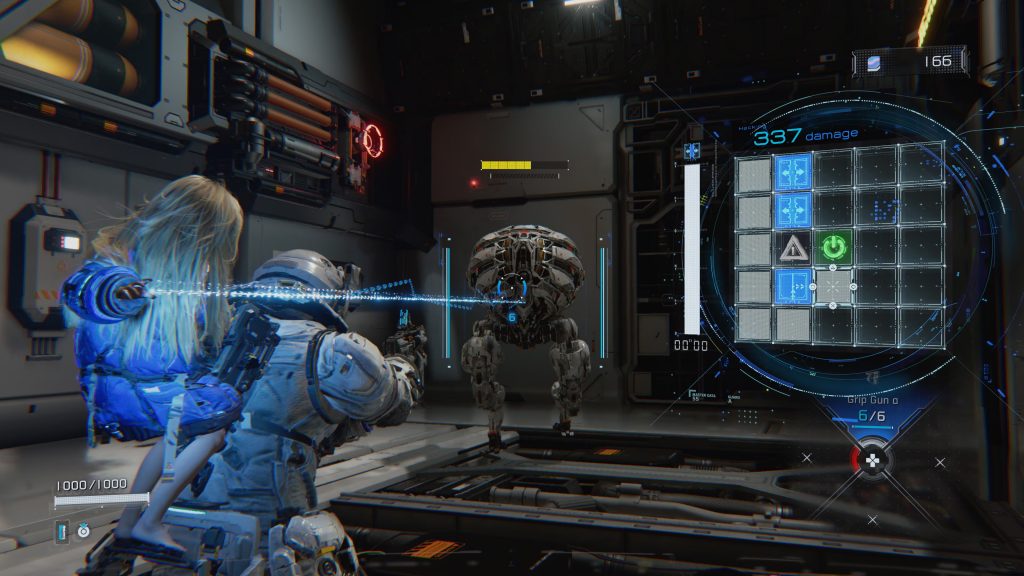
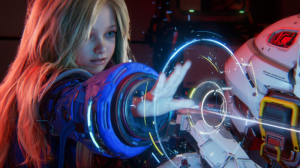
But what makes it special is how Diana’s hacking skills are woven into the mix. When Hugh is aiming, the hack panel appears on the right-hand side of the screen. Moving in the hacking grid with face buttons, players make a path to the green icon to expose weak points. This causes weapons to damage bots, specifically when aiming at their now-exposed weak points.
Mechanics become deeper with the introduction of yellow nodes, equipped at your shelter or found as you run through levels. Passing these on the grid triggers additional modifiers. These include overheating (bringing a meater down to trigger a finisher move) and even gaining some health back. These, unlike the blue nodes, are limited. So, knowing when to use them is key in battle.
What makes this combat system so magical is how it perfectly combines puzzle-solving, quality third-person shooting, and environmental awareness. One combat encounter highlights this perfectly. Surrounded by powerful bots and using the yellow multi-hack node, dashing at the perfect moment to trigger a slow-down ability, then finally landing a blow with the shotgun to deal damage, was awesome.
A Boss Highlight in Pragmata
Concluding each major sector is a massive bot for Hugh and Diana to fight. Each one pushes mastery of the game’s core combat mechanics, with my personal highlights being the Sector Two boss fight.
Upon reaching the final areas in the 3D-Printed recreation of Times Square, this massive bot towers over the cityscape. Hugh and Diana scramble their way to higher platforms, but those platforms quickly get shattered. Careful dodging, while skillfully using their arsenal of defensive (green and blue) and offensive (red) weapons were key to victory.
And the finishing blow, done through an intense hacking challenge, was immensely satisfying to pull off. The rest of the game’s boss encounters function like this, with the final bosses particularly standing out.
Tougher Enemy Encounters
Bosses aren’t the only tense encounters, as some enemies do ask a lot of the player.
One in particular is a massive worm-like bot that tunnels underground when exploring the moon’s surface. Sure, there are options to keep the worm at bay, like tricking them into attacking mines scattered about. It can become overwhelming initially fighting them, more so when other weaker bots are attacking you.
The hardest encounters typically reside in more confined areas, where boosting and jumping become less viable tools for dodging. And when additional elements, like damage-draining areas, are introduced in late-game areas, the challenge can be intense.
However, thanks to the varied moveset and tools at your disposal, many of the game’s combat encounters are a joy. I never felt frustrated during the ten-plus-hour adventure.
Gravity Hopping – Exploration/Platforming Gameplay
By far the biggest surprise playing through Pragmata was the game’s quality exploration and platforming. Exploring each sector with Hugh’s jumping and boosting skills kept me engaged throughout the adventure. Specifically, the weight of Hugh’s jumps and air boosts felt great to use thanks to the game’s very forgiving mantling.
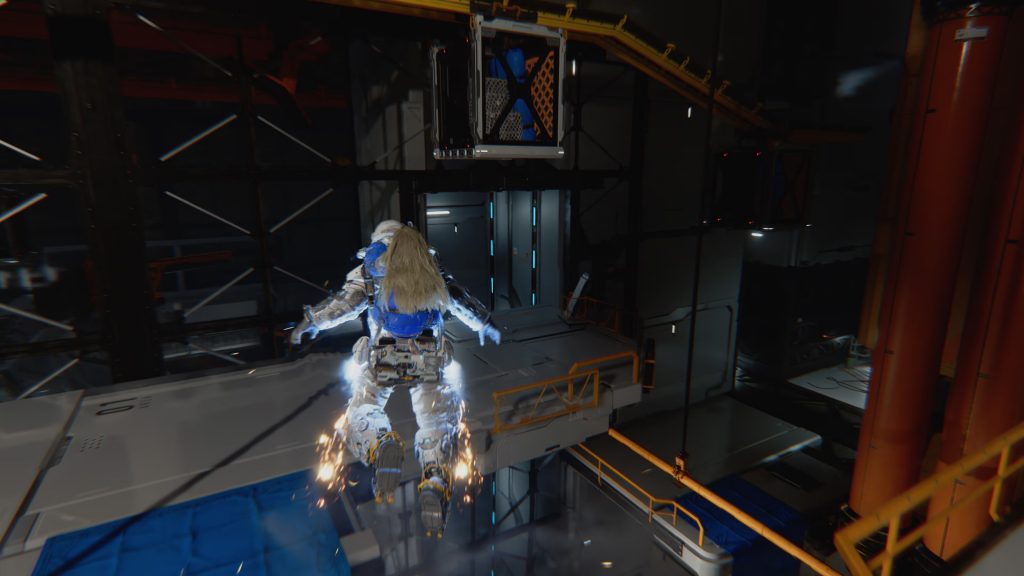
Exploration opens up further in the game. As Diana unlocks new abilities, you are encouraged to revisit past sectors to get additional upgrades, gear, and more.
A standout late-game ability is destroying corrupted filaments, allowing access to new locations, encouraging replaying finished sectors for additional gear, EDM’s, and other collectables.
Zero G Adventures – Progression
- The game comprises various sectors, each focused on a unique biome, each filled to the brim with collectibles and gear to find.
- The upgrade cycle is empowering and feeds into the game’s combat and exploration systems.
- Red Gate Challenges offer challenging combat encounters that offer additional rewards and require a Red Key to access them.
- The Shelter (your home base) evolves, having bingo boards to complete, and where you can access upgrade menus for Hugh/Diana and their weapons/gear.
Hugh and Diana explore various sectors across the massive Cradel Moonbase, each one in a unique biome, ranging from a replica of New York’s Times Square and the moon’s surface with gravity in full effect.
Each area has plenty of awesome weapons to find, Lim, a currency to collect for upgrading your gear, and more. All of that feeds into a rewarding upgrade cycle, where the duo can upgrade weapons using Lim collected or major upgrades (unlocked by collecting upgrade components) for Hugh’s suit, main weapon, and Diana’s hacking.
Standout upgrades for me were all the movement-based ones for Hugh. They allow him to dash around and hover in the air longer (which can be critical for the larger bots and their weak points), alongside making the finisher move appear more common, which can stun nearby bots if they are in the crossfire.
But unlocking everything in the game’s large linear levels involves finding and completing Red Gate areas. These offer harder combat encounters and require red unlock keys to access them. These challenging battle arenas test your hacking and shooting skills, offering nice rewards and unlocking even more stuff to engage with.
This is directly linked to Cabin, your AI buddy who accepts tokens to open up a bingo board. This offers a mixture of known unlockables (like costumes) and surprises. Getting bingo, triple bingo, and unlocking everything on the board unlocks even better rewards. But he’s not just in charge of some fun unlockables; he also grants access to special challenge rooms.
Challenge Rooms
These Challenge Rooms test Hugh and Diana’s abilities to their fullest, in short-minute missions. They can range from platforming challenges, hacking quickly, and surviving a tense combat encounter with specific weapons. With over thirty to complete, they offer Lim, upgrade components, and Pure Lunum (for higher-level upgrades).
I completed several of these challenges during the review process. They showcase the strong platforming and combat systems present throughout Pragmata. One challenge room had me rush to collect the shotgun to destroy bots while jumping and air-dashing around tight platforms.
Lunar Views – Presentation
- Striking-looking areas cement Pragmata as one of Capcom’s best-looking current-generation releases.
- Impressive animation work throughout the adventure, highlighted by Hugh’s heavy movements and dynamic aspects like Diana’s hair.
Powered by the ever-versatile RE Engine, Pragmata is another beautiful-looking Capcom adventure. Fully leveraging the lunar base setting, Hugh and Diana run through stunning locations filled with detail.
Desolate space stations filled with working and broken parts to run through, an overgrown lab filled with bio-engineered vines, and even a highly detailed recreation of Times Square, Pragmata’s environments keep things fresh across the entire journey.
Some cut-scenes have stunning moments too. One of the most powerful ones involved a lush holographic shoreline that Hugh and Diana discover, adding emotional depth to one of the game’s more powerful scenes.
But by far the most impressive part of the game’s presentation is the animation work. Every action, from either the dynamic duo of Hugh and Diana or the bots they fight, moves with weight and insane levels of detail. Hugh’s heavy stomps, the flowing stands of Diana’s hair, and the puppet-like movements of the bots bring the world of Pragmata to life.
Rock Solid – Performance on PlayStation 5/Pro
Playing through the adventure on the Base PlayStation 5, I was impressed by the game’s rock-solid 60 FPS (frames-per-second) in the game’s performance mode, which I preferred to play on. There’s also a Quality Mode option, hitting a native 1080p with additional visual features while retaining an uncapped frame rate. Most impressively, the game had no major bugs or glitches across my entire playthrough.
So while the experience on PlayStation 5 is fantastic, Alex played through the adventure on his PlayStation 5 Pro. Here are his impressions after finishing the game on that platform.
At launch, Pragmata delivered a highly polished experience, running at 4K 60 FPS while also offering a high frame rate mode for supported displays that pushed performance beyond 100 FPS. Both modes looked and performed excellently, with little to no noticeable frame drops throughout gameplay. Shortly after launch, Capcom released an update adding official support for PSSR 2.0, further enhancing the game’s visual fidelity and overall image quality. The result is an even sharper and more visually impressive presentation, solidifying Pragmata as one of the best optimized titles currently available on PS5 Pro.
Audio Design/Music of Pragmata
- Sound effects are fantastic, with audio related to Diana’s hacking and Hugh’s boosting being highlights.
- The overall soundtrack features a mixture of effective techno combat themes, emotional melodies that add to the story, and zen-like tracks chilling in the Shelter.
Matching the game’s strong presentation is a complementary audio design. Specifically, all the sound effects that play when Diana is hacking. The audible digitized clicking is addicting to hear, the sensation amplified by the final ‘zizz’ sound, cementing a great hack. That, combined with the heavy-sounding impact of Hugh’s weapons and general movement, adds extra weight to every aspect of Pragmata.
But by far the game’s biggest audio accomplishment is the effective soundtrack. While combat encounters have heart-pumping techno beats, calmer, zen-like tracks for relaxing in the Shelter convey taking a well-deserved breather.
The music can get emotional too, with a late-game track particularly standing out. It’s a powerful track that uses a mixture of techno beats and audio static to convey a sense of loss and desperation.
Accessibliy Options
- Options to tackle Motion Sickness and various captioning settings are available.
- Otherwise, though, accessibility options, such as remappable controls, are not present in Pragmata.
- Options to disable features, such as the DualSense’s haptic rumble, are present.
Regarding accessibility options, Pragmata features a limited set of options players can utilize. Alongside the game’s initial two difficulty options, after dying in combat, the option to lower the difficulty will show up. Trophies and Achievements aren’t linked to difficulty options for the initial playthrough, either.
Other options to help with motion sickness, closed captioning, and turning DualSense features on/off are present, as well. Sadly, additional accessibility features, such as changing the control scheme, are not available. The lack of gyro aiming is a disappointing omission, considering it’s a feature on the Switch 2 version of Pragmata.
Closing Thoughts on Pragmata
Video games are an art form and can tell powerful stories that touch the soul. But they are also interactive experiences that challenge players to engage with deep systems and mechanics. Impressively, Pragmata combines both of these approaches to game design masterfully. Hugh and Diana’s bot-blasting and gravity-hopping adventure combined the best elements from past and present Capcom. In many ways, Pragmata is one of the publisher’s greatest video games, showing that melding a heartfelt narrative and deep gameplay can create generation-defining experiences.
This game was reviewed using a copy provided by the publisher.
Pragmata (PlayStation 5) – Review
Fantastic gameplay mechanics and an emotional story cement this Capcom adventure as one of 2026’s best releases.
Pros
Strong emotional narrative
Deep and Dynamic Combat System
Strong Audio Design
Varied Musical Score
Strong replay value with a deep post-game
Stable 60 FPS across both PlayStation 5 platforms.
Leverages PS5 Pro
Cons
Late-Game Combat Encounters Can Be Somewhat Overwhelming
Limited Accessibility Options
