
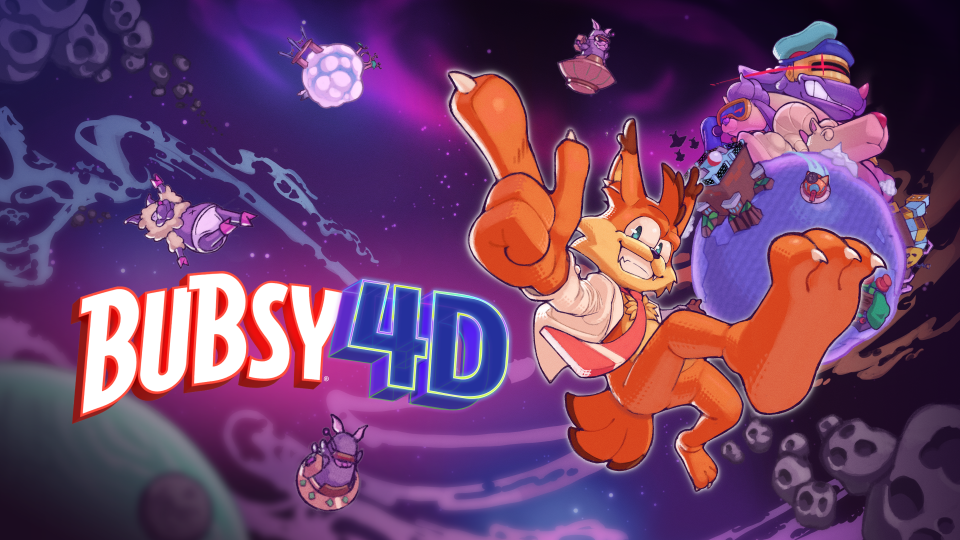
What is Bubsy 4D?
I’m still baffled that Bubsy 4D exists, even after playing through it. Fabraz has brought the infamous Bubsy the Bobcat back to life in a way that celebrates his questionable past while pushing him past his mediocre legacy with a 3D platforming gem that’s a night-and-day difference from his last catastrophe. It’s not as robust or fluid as Fabraz’s previous adventure, Demon Tides, but this expressive 3D platformer elevates Bubsy to new heights, placing him in the conversation for Mario’s biggest rival among the prominent 90s mascots. Bubsy 4D does still have some rough edges, but for his first outing in decades, it’s better than anyone could’ve hoped for.
Developer: Fabraz
Publisher: Atari
Platforms: Nintendo Switch, Nintendo Switch 2, PlayStation 4, PlayStation 5, Xbox One, Xbox Series X|S, Xbox PC (Play Anywhere), Steam
MSRP: $19.99
Release Date: May 22, 2026
Reviewed On: Nintendo Switch 1
Presentation (Visuals) — Saturday Morning Charm in a Patchwork Galaxy
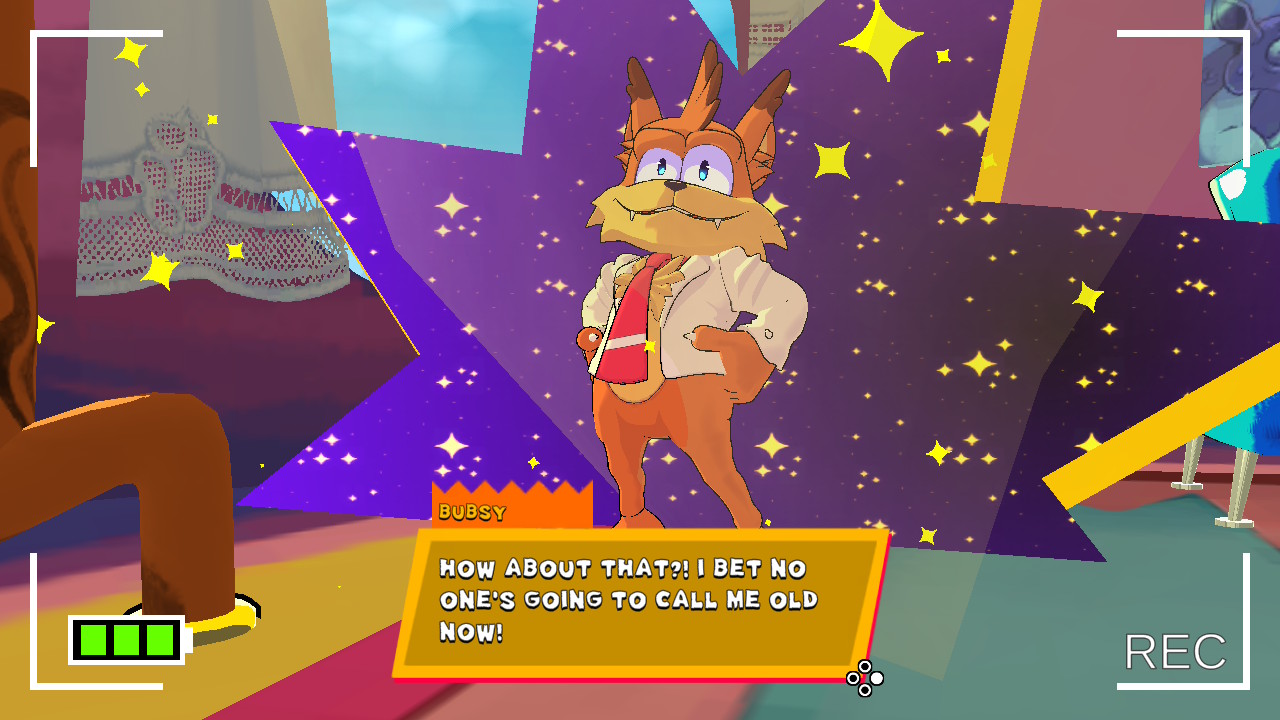
- Charming character redesigns with cartoon flair.
- Wooltopia, Craftus, and Metalurgia themed worlds.
- Later levels feel disjointed and empty.
- Animations and cutscenes lack polish.
The visual style of Bubsy 4D‘s space-faring adventure is hit or miss. The character designs are where Fabraz absolutely nails it. Bubsy’s new look is genuinely charming, as is the rest of the crew. Fabraz gave the redesigns a Saturday morning cartoon feel that pulls everything together. The Baabots and Woolies have some goofy aesthetics too, and the bosses sport some legitimately cool designs.
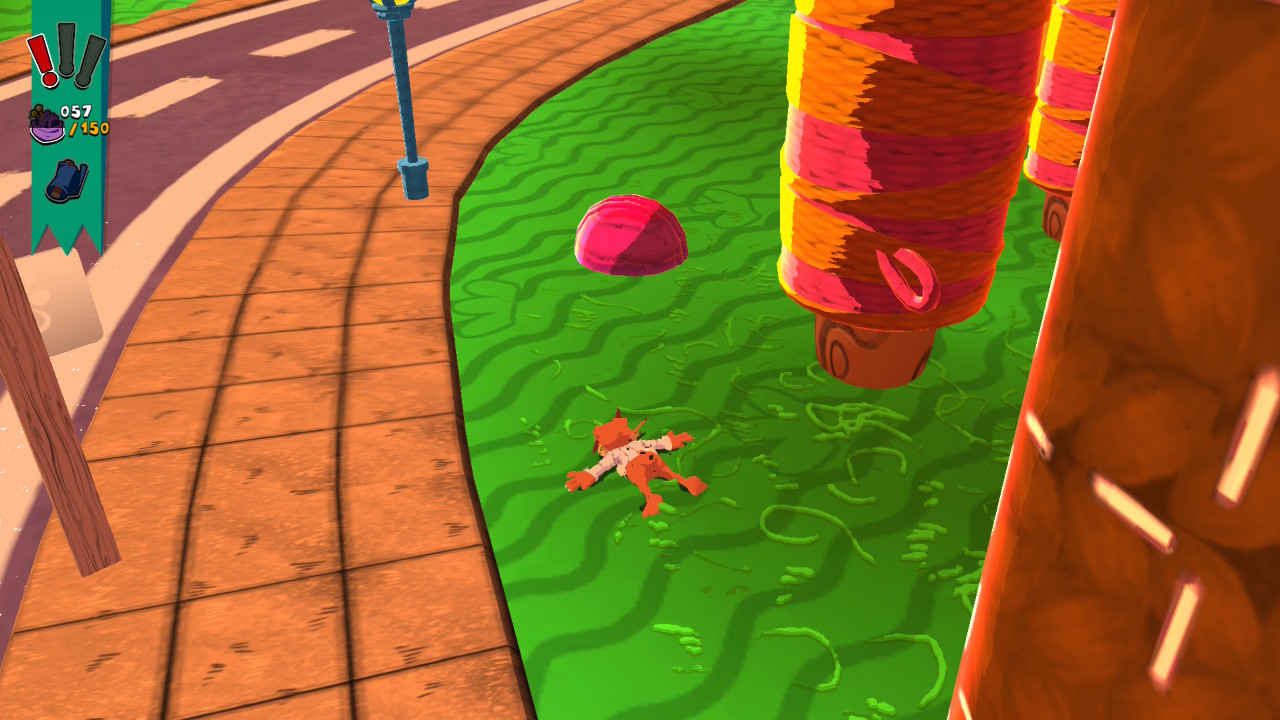
The worlds you visit are all themed around inorganic materials. Wooltopia is built entirely out of wool and fabrics. Craftus is cobbled together from arts-and-crafts supplies like cardboard and paper. Metalurgia is a junkyard of metal, used PC parts, and random trash. Wooltopia has the most complete and cohesive levels of the bunch, but later ones drift into feeling disjointed: floating platforms with no real anchor that harken back to PS1-era level design. Some worlds feel weirdly void as a result.
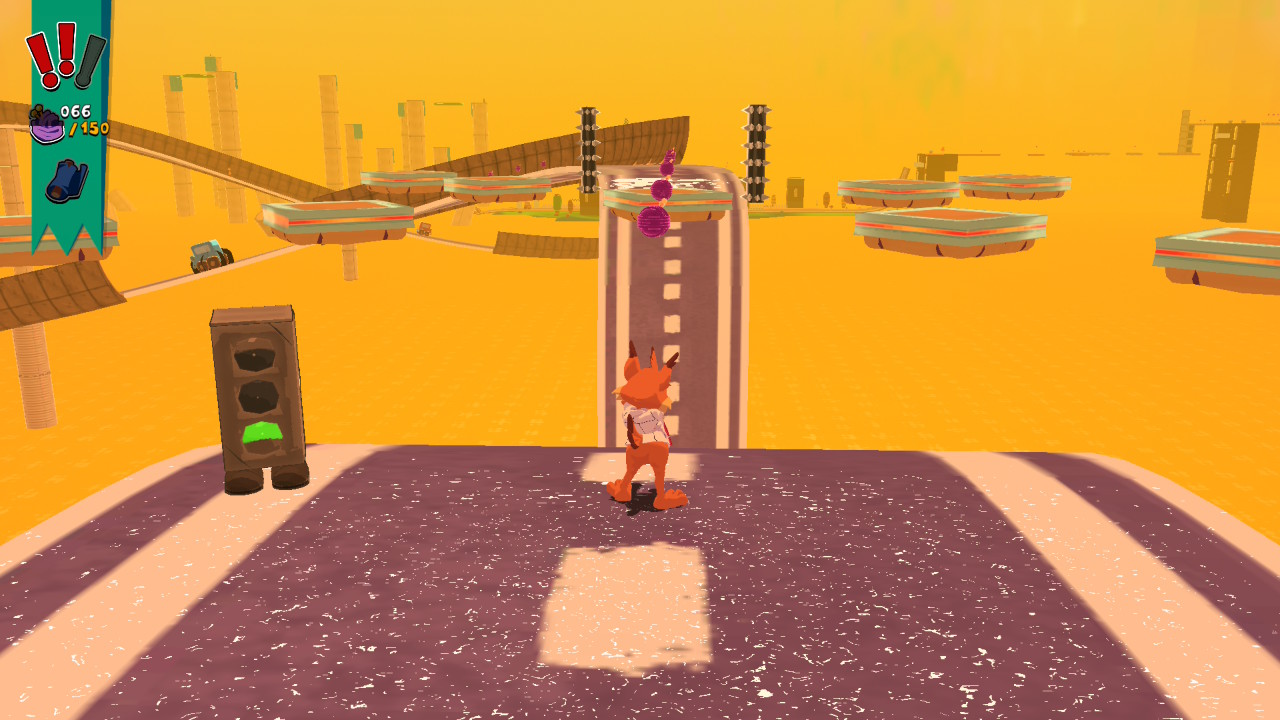
That doesn’t mean the levels aren’t fun to platform through. Fabraz still uses each world’s theme to create creative sections and hazards—like speeding through a freeway made of fleece, complete with reckless wool vehicles—but the cohesion isn’t always there. The animation work is another area where things slip. Bubsy’s moves don’t look very fluid and lack a visually appealing flow when chaining them together. The cutscenes fare even worse, especially in boss fights, where the cuts can sometimes come off as wonky and clumsily assembled.
Presentation (Performance & Soundtrack) — A Solid, but Mixed Bag of Bops
- 30fps on Nintendo Switch, but stable throughout.
- Nintendo Switch 2 comparison coming in a follow-up.
- The soundtrack is mostly solid, but uneven across levels.
- Battlestar Bubsy hub theme is a highlight.
On the performance side, 30fps on the Nintendo Switch isn’t ideal for a platformer that leans this heavily on speed and precision, but it’s stable throughout. I never ran into the kind of frame dips that would actively sabotage a speedrun attempt. I’ll have a deeper breakdown of how the Nintendo Switch 2 version compares in a follow-up article, but for now, the original Switch version is playable and consistent, even if it’s not the optimal way to experience what Fabraz is going for here.
While the performance may be subpar but consistent, the soundtrack does its job for the most part with a few standouts sprinkled throughout. There are some genuinely cool bops on certain stages, while others fade into the background and don’t leave much of an impression. The hub theme is one that I vibed to often while talking to the crew and picking the next level, and the boss themes are also a highlight.
Story & Characters — A Space Odd-yssey
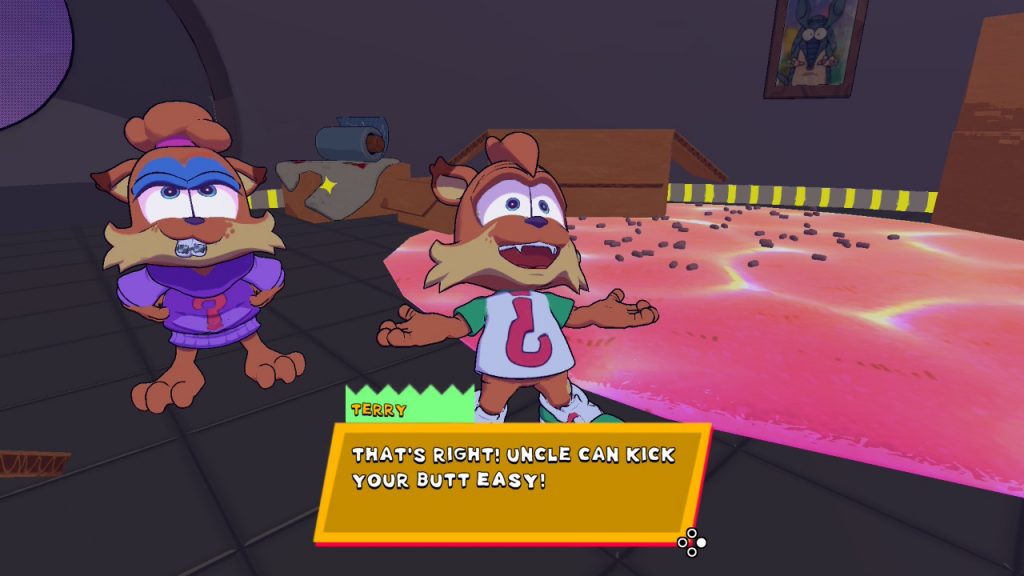
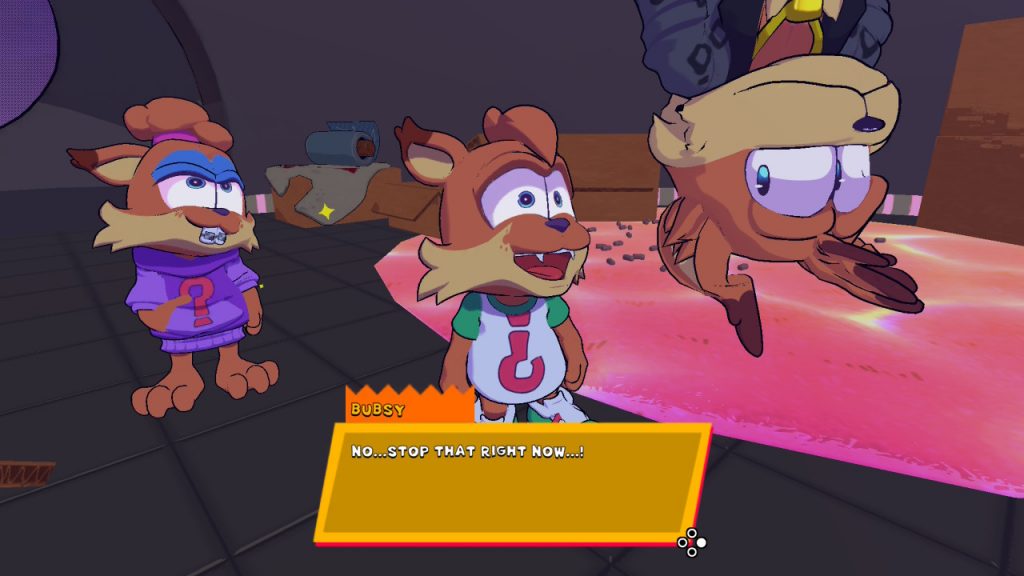
- Baabots emerge as a new mechanical threat to the galaxy.
- Bubsy and crew embark on a planet-hopping rescue mission.
- Saturday morning cartoon banter at every turn.
- Bubsy breaks the 4th wall constantly, including calling you out on the pause screen.
- Oblivia’s escalating Bubsy mispronunciations steal the show.
Bubsy 4D opens with the return of Bubsy’s arch nemeses, the Woolies. But instead of chasing the sacred Golden Fleece, they’re kidnapping sheep this time. Bubsy and the gang think nothing of it until a second ship arrives later carrying a new enemy: the Baabots. These cyborg menaces are experiments of the Woolies that turned on their creators, imprisoned them, and pivoted to stealing the Golden Fleece themselves. The Baabots want to rid the galaxy of inefficient organic material and replace it with inorganic alternatives, sending Bubsy on a planet-hopping adventure to stop them and reclaim the Fleece (entirely against his will).
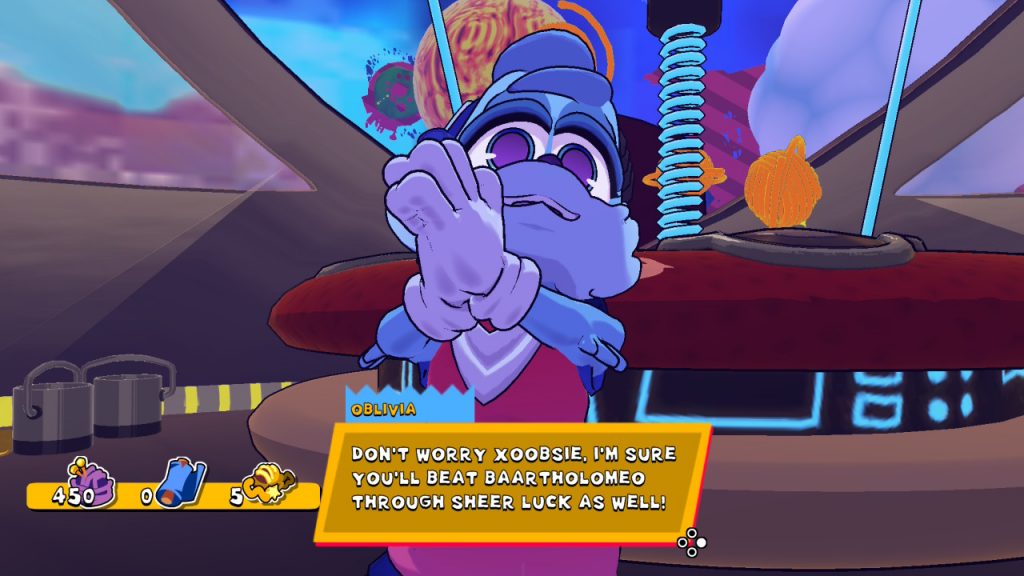
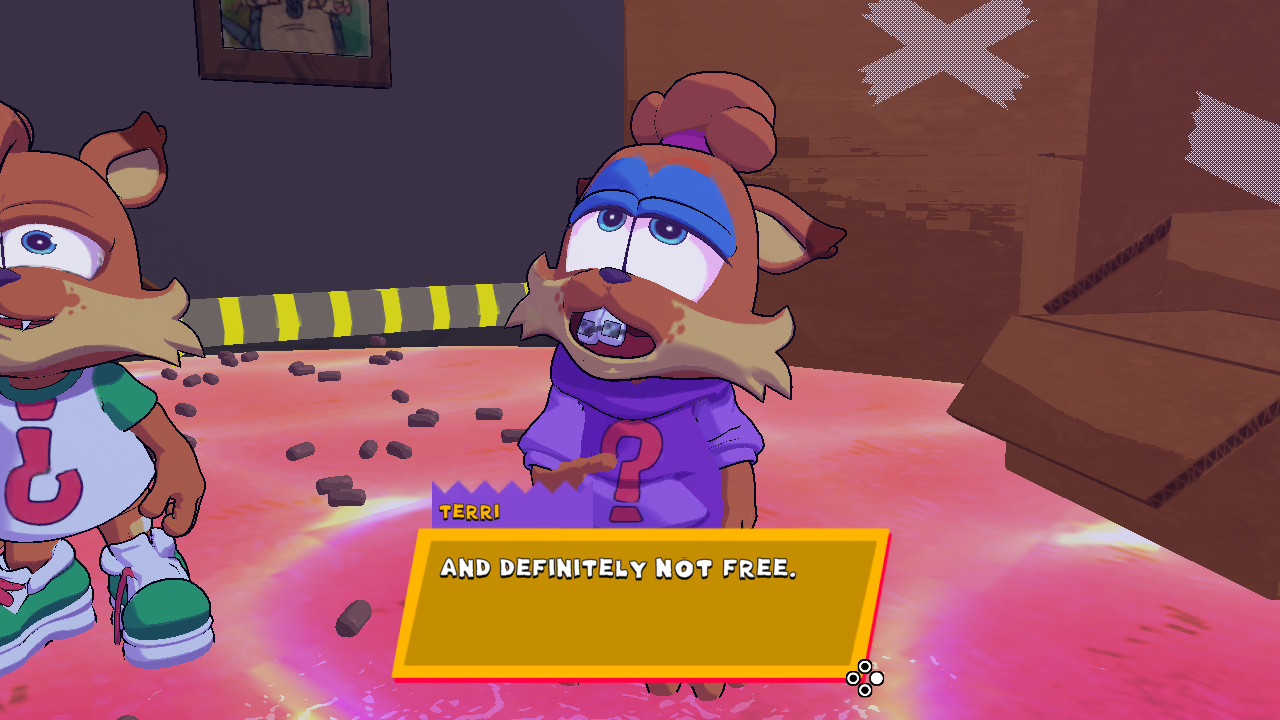
Bubsy’s crew really makes the adventure enjoyable. Virgil is a vole and the technical wizard of the bunch. Oblivia—originally from the cancelled Bubsy cartoon—is Virgil’s sharp-tongued Bobcat assistant. And The Twins, Terry and Terri, tagged along just to annoy their uncle Bubsy and resell him his own gear. Their dialogue with Bubsy lands like a great Saturday morning cartoon, although his friends seem to be pretty callous towards Bubsy without any hints of endearment to balance it. To be fair, his constant stream of cheesy one-liners and puns in every conversation may have earned it. Oblivia is the standout, and the running gag of her butchering Bubsy’s name with each encounter (Snubsy, Xoobsie) is a highlight.
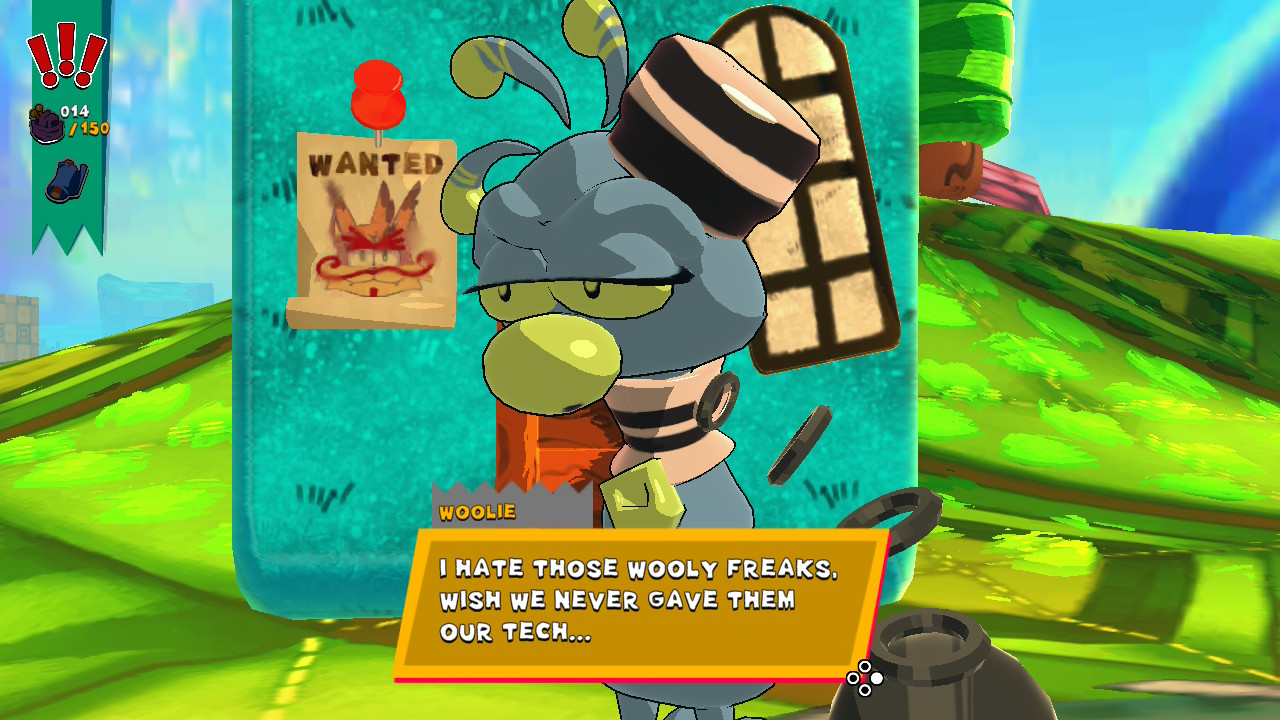
Bubsy also breaks the 4th wall constantly throughout the adventure, and it works well with his insufferable personality. The best implementation is on the pause screen, where Bubsy will address you directly, sometimes complaining that you’re stopping the action to get snacks (I felt attacked). It can get annoying when you’re constantly restarting speedrun attempts, but it lands because that’s what Bubsy is known for.
Gameplay (Level Design & Hub) — Tried and True
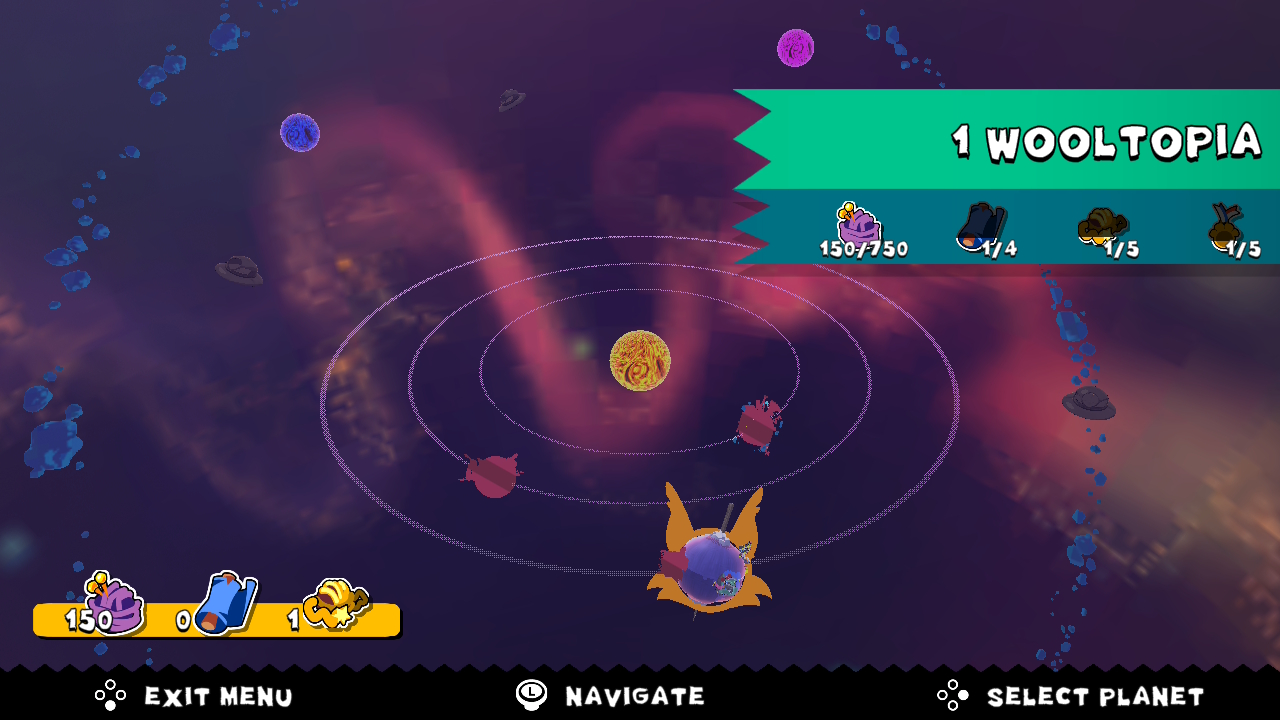
- Stage-based progression across three planets.
- Battlestar Bubsy acts as the central hub.
- Linear levels with hidden paths and switch puzzles.
- Scenic Pooper warps to unlocked litter box checkpoints.
Bubsy 4D runs on a tried and true stage-based progression. Battlestar Bubsy—the spaceship Bubsy and the crew hijack—acts as the hub, and you launch out into three planets, each containing five levels, including a boss fight on the final stage. The full run is shorter than I expected, but there’s a ton of replay value baked in, especially once the speedrunning hooks dig into you.
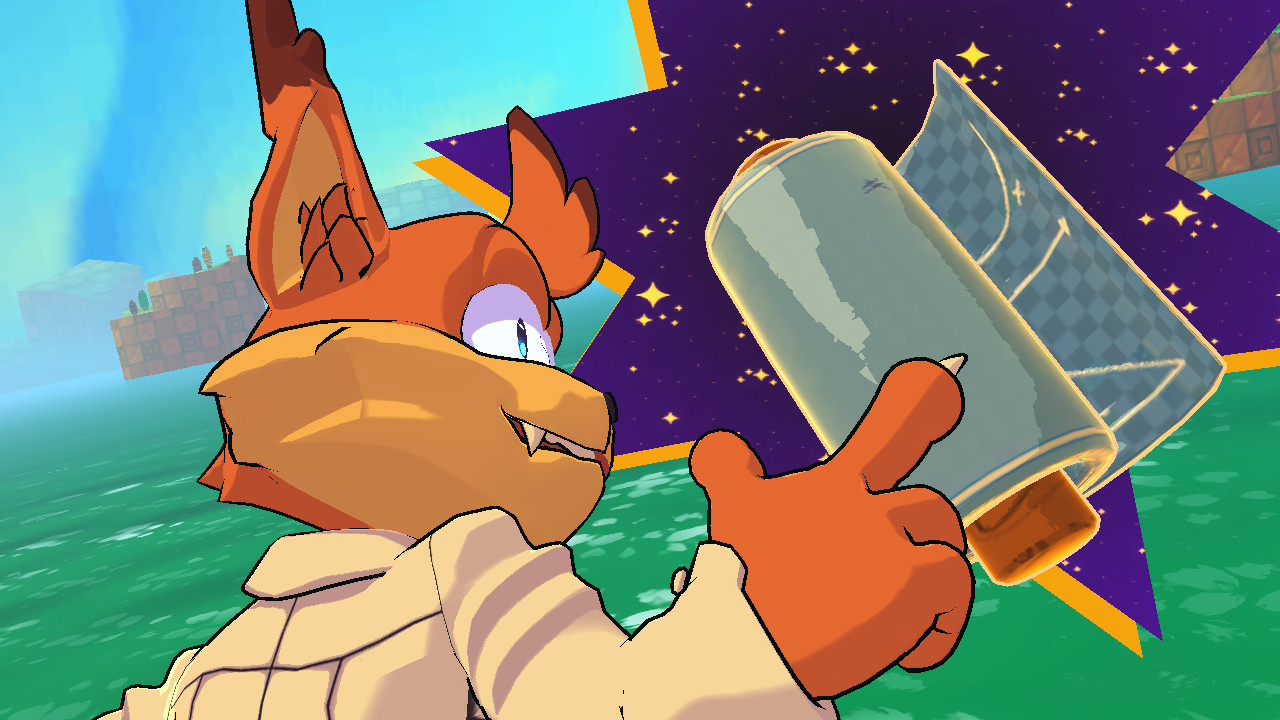
Levels are medium-sized and linear but full of branching sections that you’ll miss if you stick to the straight-and-narrow. Some stages outright bar progress—a missing bridge, for example—until you go exploring to find the switch that allows you to proceed. These are easily my favorite levels of the bunch, and exploration is genuinely fun.
Some levels make it impossible to backtrack once you progress past certain points, so you may have to replay the level a couple of times to collect everything. At least until you buy Scenic Pooper, a mechanic that allows Bubsy to warp back to any litter box checkpoint he’s already unlocked. It’s a smart purchase alongside Item Sniffer, which makes hunting yarn balls and blueprints much less random.
Gameplay (Customization) — Fresh Moves, Stale Fits
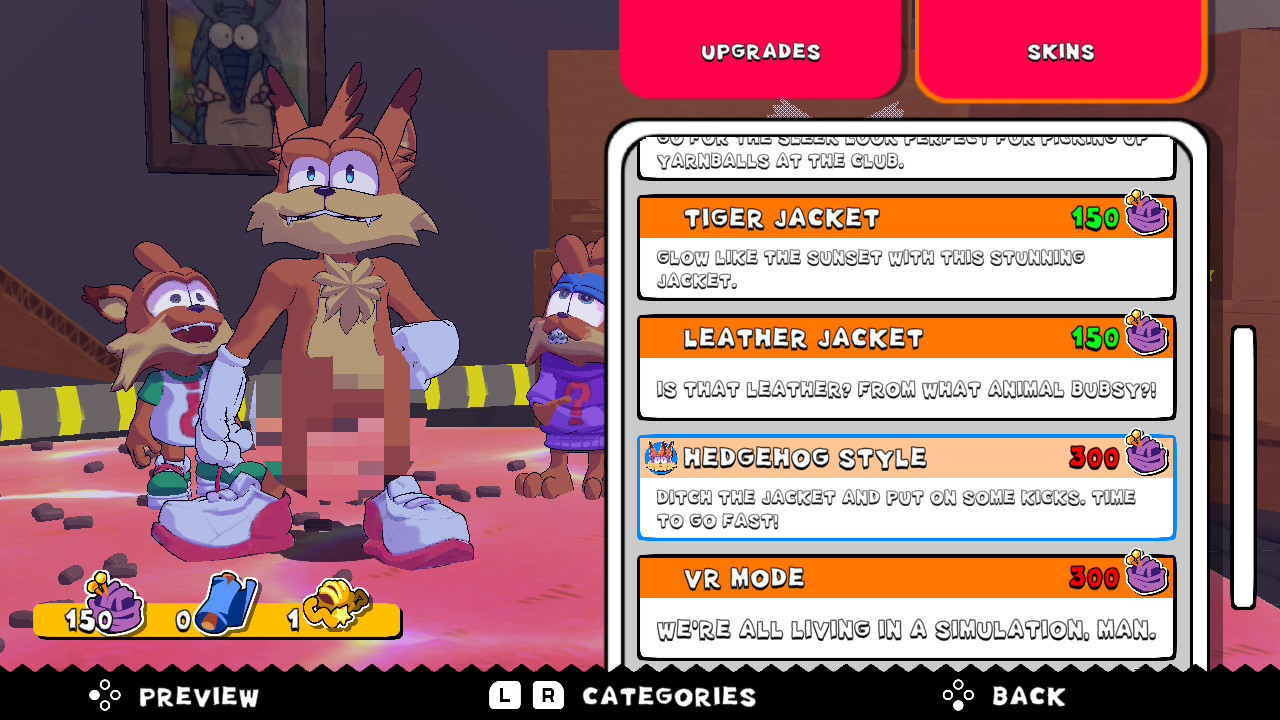
- Twins’ shop sells abilities for blueprints
- Hairball Drifting, OG Coyote Time, and Zoomies expand the toolkit
- All purchased moves can be equipped at once
- Costume options include the PS1 sprite and a Sonic the Hedgehog gag
- Tank Controls option mimics Bubsy 3D’s infamous scheme—Bubsy himself warns you not to touch it
Bubsy’s already deep moveset gets even deeper through the store, which Terry and Terri run out of the hub in exchange for the blueprints scattered through each level. Purchases include Hairball Drifting (more precise control in hairball form), OG Coyote Time (a Looney Tunes-style grace period where Bubsy gets a few steps off a ledge before falling), and Zoomies (a high-speed dash triggered by crouching and then dashing). The best part is that you don’t have to pick and choose—every move you unlock can be equipped simultaneously, so the toolkit only grows.
The costume options are a little more underwhelming. You can buy Bubsy’s original outfit—complete with his creepy PS1 sprite—along with various color variants of his new signature jacket and tie. The standout is Hedgehog style, which is hilariously just Bubsy completely naked with a mosaic blur over the indecent bits, wearing only his shoes. If you’re looking to make Bubsy a fashionista, however, there isn’t much in terms of distinct styles. Once the novelty of the gag outfits wear off, there isn’t much to chase.
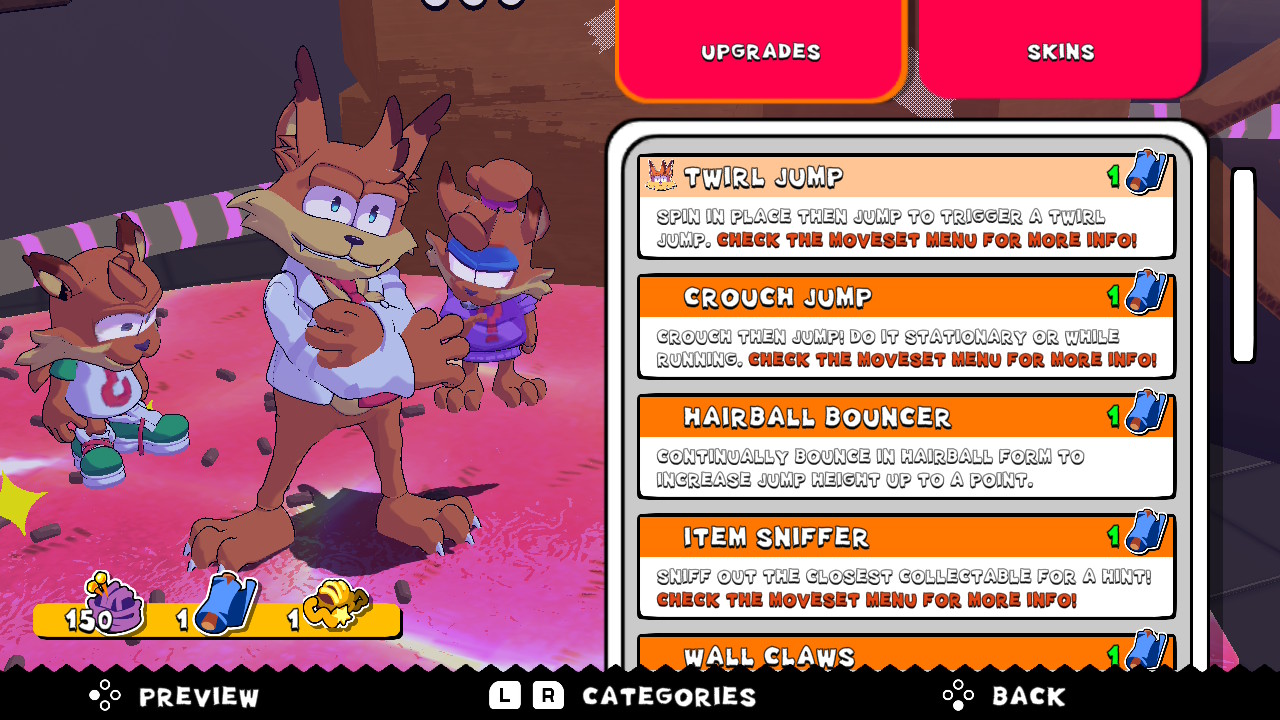
The settings menu also hides one of the game’s most self-aware mechanics: a Tank Controls option that replicates the infamously stiff, disorienting control scheme of Bubsy 3D. Fabraz even has Bubsy break the 4th wall to warn you directly not to turn it on. I admittedly took the bobcat’s advice. Some things are better left in 1996, where they belong.
Gameplay (Moveset) — A Bobcat of Many Moves
- Robust expressive moveset with triple jump, dive, hover, and wall climb
- Hairball mode delivers Sonic-style speed with more control
- Homing dive locks onto enemies and platforms
- Platforming feels clumsy at times
Bubsy’s moveset is where this game makes its strongest case for taking the bobcat seriously. The expressive kit is loaded: triple jump, side flip, dive, dash, hover, cat-like wall climbing, and a hairball mode that delivers Sonic spin-dash speed with significantly more control. Bubsy also has a homing attack tied to his dive that locks onto foes, and the same dive doubles as long-distance traversal. It all combines into a kit that genuinely encourages creative routing.
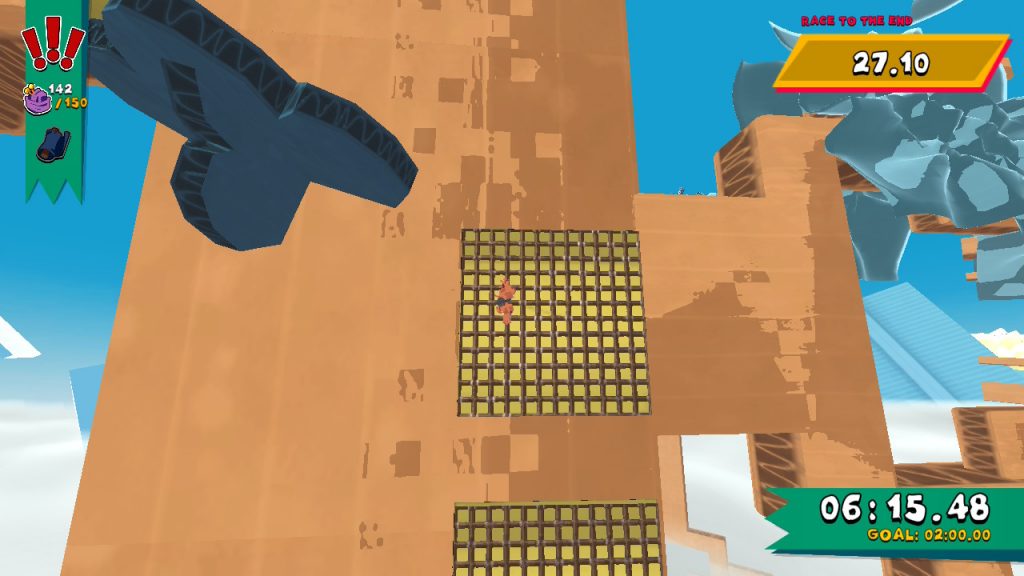
Bubsy controls great for the most part, but with a few hiccups. The advanced moveset is a joy to use, and the freedom it provides is awesome. At the same time, Bubsy’s platforming can feel clumsy early on. I was constantly overshooting or undershooting platforms and rarely settled into that perfect platforming groove. I’ll dive toward a ledge, overshoot, flutter jump to correct, overshoot that, then hover to land—and the whole sequence looks… amateur.
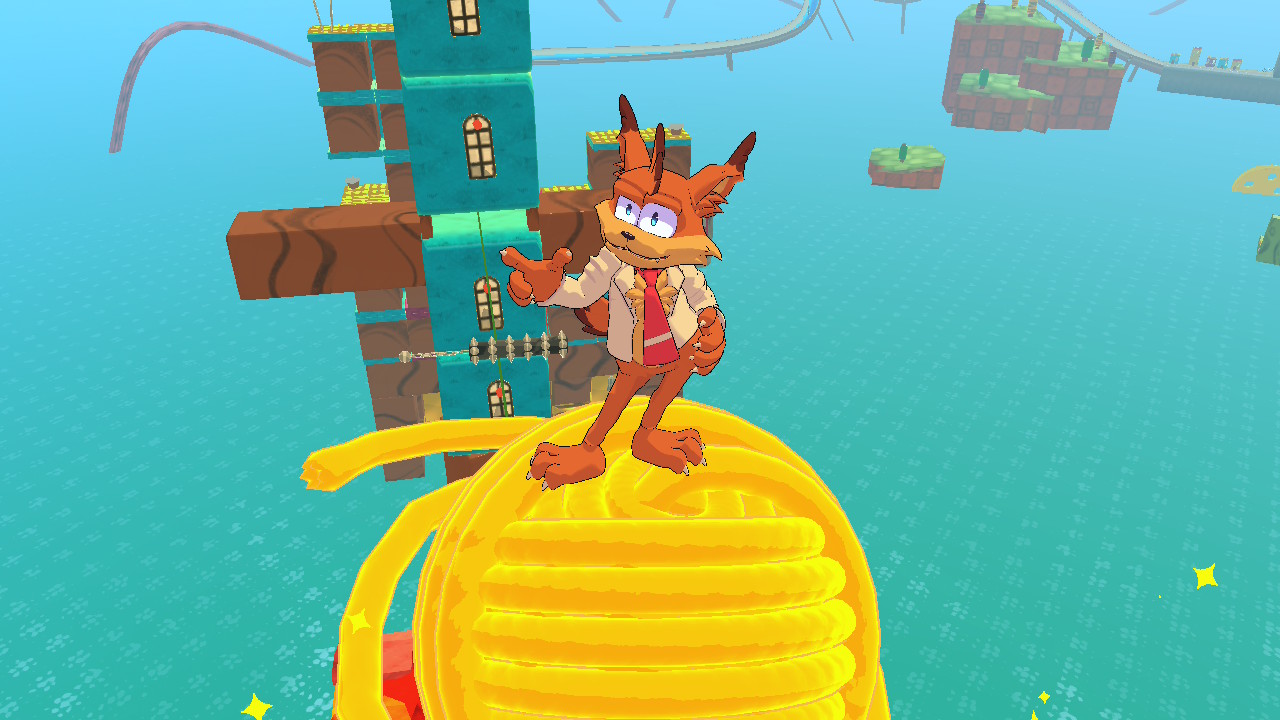
The animations don’t help; most of them look like Bubsy is scraping and clawing his way through each stage. With Bubsy being Bubsy, it actually fits the character if that’s what Fabraz was going for, but as a player, it doesn’t make for aesthetically pleasing clips. This is mostly a visual and feel problem rather than a mechanical one, and it’s exacerbated when you’re learning the game or getting the feel for a new level, hunting all 150 yarn balls and the hidden blueprint. Once you complete a stage, that’s when the real magic of Bubsy 4D starts.
Gameplay (Speedrunning) — Built for Speed
- Speedrunning is the heart of the experience.
- Hairball mode is high risk and high reward.
- Ghost races against leaderboard players add replayability.
- It may disappoint players uninterested in time attacks.
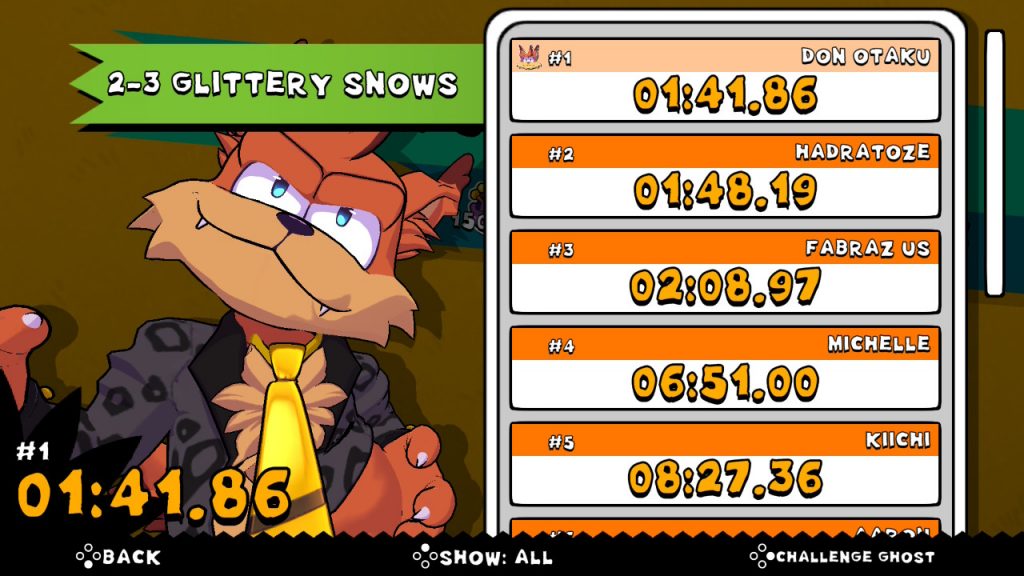
Speedrunning levels is a core part of Bubsy 4D and adds a ton of fun replayability to the experience. This is where you really get to put Bubsy’s moveset and Fabraz’s expressive 3D platforming design to the test, and it’s also where the feel of Bubsy shines a lot more than it does in slow, precision-focused collectathon runs. He seems built for speedy runs first and tight precision second.
Hairball mode is essential for climbing the leaderboards, but it’s a high-risk, high-reward tool. It’s fast, hard to control, and sometimes genuinely unpredictable. That unpredictability also occasionally becomes a savior—it can cause some unexpected platforming mischief that lets you skip entire sections. Just like in Demon Tides, you can race against the ghosts of leaderboard players, watch how they pulled off their time, and learn to adapt and beat it. I’ve seen some insanely creative runs already in just the review period and the demo phase.
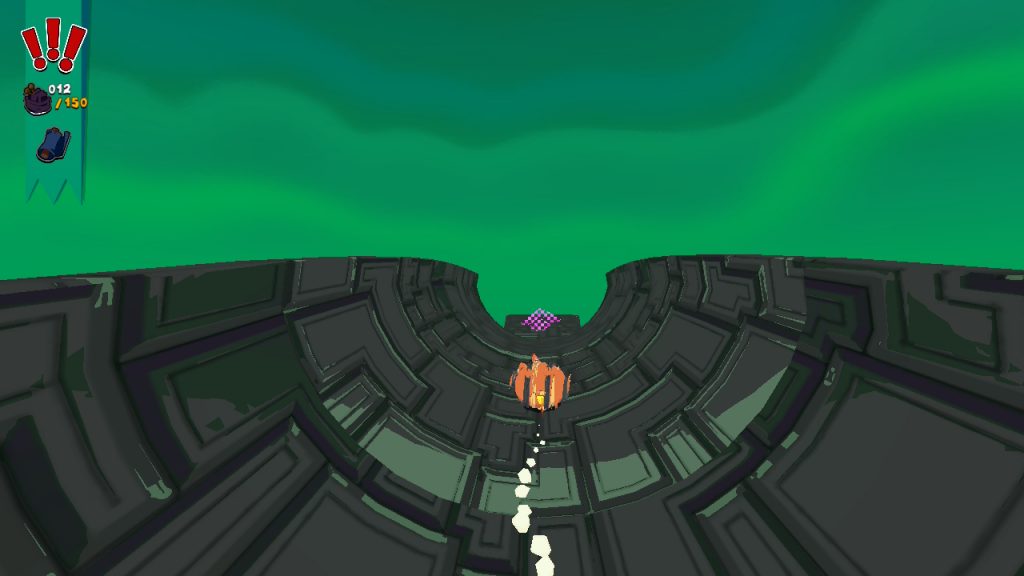
The catch is that if you’re not into speedrunning at all, Bubsy 4D is probably going to disappoint you a bit. The collectathon side alone will leave you with a pretty short experience, and speedrunning actually ties into getting the 100% as each level has a time to beat to obtain the medal. The game’s best self really shows out once you start chasing the clock.
Gameplay (Boss Battles) — A Worthy Finale
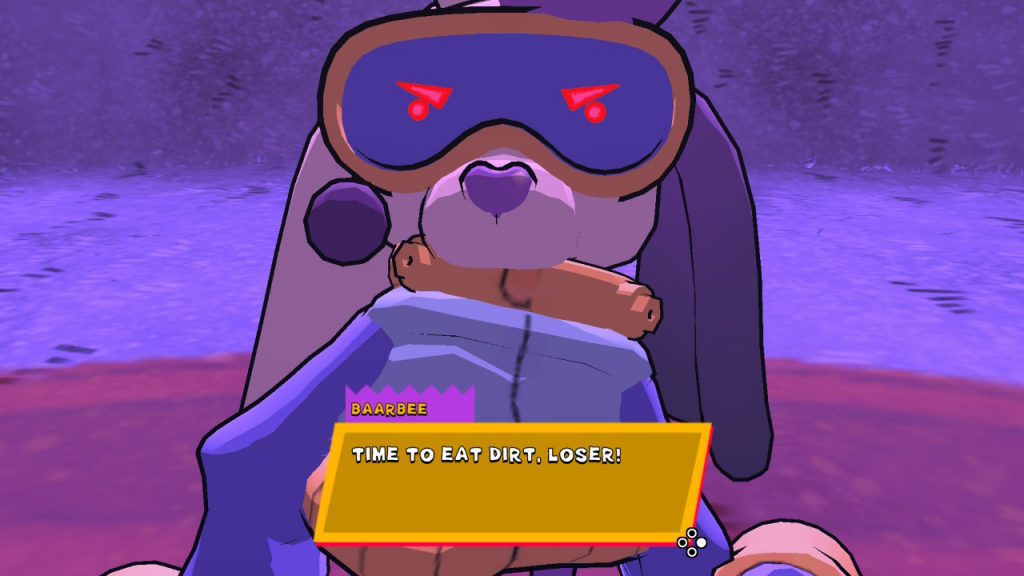
- Three boss fights cap each planet.
- Distinct designs across each encounter.
- Final phases test the entire moveset.
- A few retries are likely before victory.
Boss battles are a highlight of the experience and feature some of the most memorable moments in Bubsy 4D. They’re well designed and distinct from one another, with each capping off its respective planet in a way that feels earned. They’re also a little tougher than the standard platforming sections. Expect to retry a couple of times once a boss hits its final phase and starts pulling out all the stops. The escalation forces you to chain together Bubsy’s full moveset under pressure, which is where the combat-platforming hybrid feels most satisfying.
Conclusion — Bubsy 4D is a Solid Revival That Redeems An Infamous Character
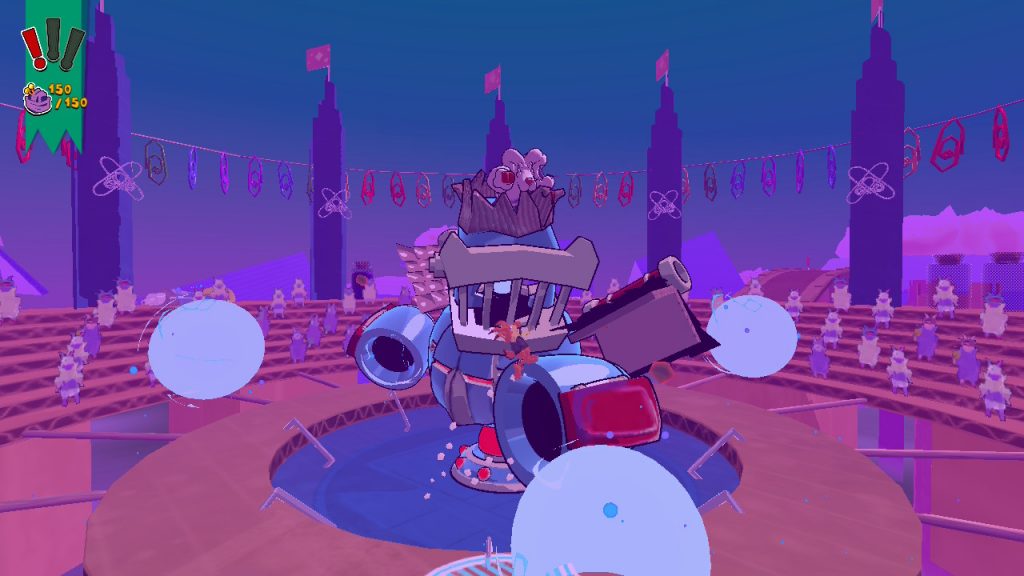
It’s hard not to compare Bubsy 4D to Demon Tides because the foundations are so similar, and I think I would’ve walked away more positive if Bubsy had launched first. That’s not to say Bubsy 4D falls short—it’s a solid 3D platformer that is mechanically deeper and feels better than most in the genre. It’s just not a game that shoots for the stars the way Fabraz proved they could before. Still, this is the best rags to riches revival I’ve seen in gaming, turning a laughing stock of the industry into a franchise that can sit alongside Mario’s biggest rivals. The bobcat is back by no demand—and he’s actually a lot of fun this time.
Bubsy 4D Review
The bobcat is back by no demand—and he’s actually a lot of fun this time. Bubsy 4D is a solid 3D platformer that is mechanically deeper than most in the genre. Despite the lack of polish in some areas and the refusal to shoot for the stars the way Fabraz proved they could before, it’s a great zero to hero revival for the infamous bobcat.
Pros
Expressive moveset with creative freedom for traversal
Sharp character writing and a standout supporting cast
Genuinely addictive speedrunning hooks with ghost races
Self-aware revival that simultaneously respects and pokes fun at Bubsy's history
Cons
Platforming animations and cutscenes feel clumsy and visually scrambled
Later levels feel disjointed and PS1-era empty
Costume options lack meaningful variety
May feel lacking if you're not into speedrunning
