
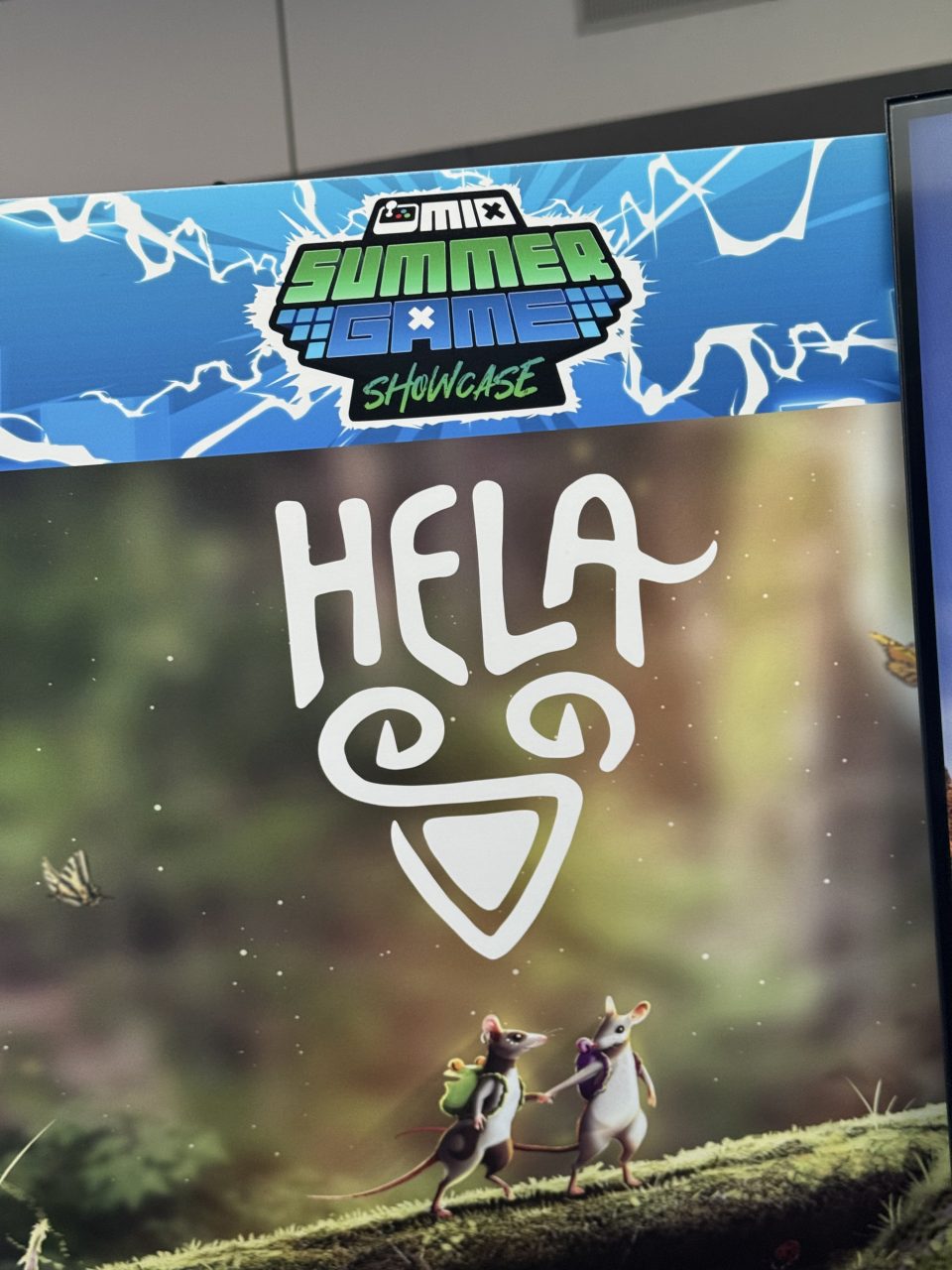
What is the MIX Indie Games Showcase?
Coming into The MIX indie games showcase, I had already been moving through the usual Summer Game Fest chaos. We were coming from the Dolby Theater and trying to get across town to the L.A. Live campus. By the time we arrived, a line had already started building outside. I got there later than I wanted, but that also fit the pace of the week.
Everything around Summer Game Fest feels like a scramble. You rush from one thing to the next. You try to make the next appointment, thank the right people, and still take in what is happening around you.
L.A. Live is already a cool place for an event like this. There are restaurants everywhere, people moving through the campus, and that downtown Los Angeles event energy where everything feels hectic but still exciting. Once we checked in, the staff welcomed us in, and the setup had a nice sense of discovery. You go up the elevator, walk into the space, and before you even reach the main area, a few games are already set up in the lobby.
Then the event opens up more. There is music, a DJ, and eventually Mega Ran performing. That brought a really positive video game energy into the room. It made The MIX feel less like a sterile press demo setup and more like a community space built around games. Developers showed off their work. Press and creators moved between booths. The music actually fit the culture around the event.
That is what made The MIX indie games showcase feel different from a normal appointment block.
The MIX Indie Games Showcase Gave Developers Direct Access
What made The MIX work was simple. It gave indie games something Summer Game Fest week does not always provide: room to be experienced directly. Better yet, it did that without making the exclusivity of the event feel overwhelming. There was still that industry-showcase energy, but it did not feel sealed off from the point of the thing. The focus stayed on the games and the people making them.
That direct access mattered. I could talk to indie developers while they stood beside their games. They answered questions, explained choices, and gave context for what they were trying to build. That made a real difference.
These are developers putting years of work, risk, and personal investment in front of people who may only have a few minutes to understand it. Seeing that up close was humbling. It made me appreciate not just the final demo, but the journey behind it.
Huge shoutout to The MIX and the production team for creating that kind of space. It is easy to talk about indie games in broad terms. Being in the room made the point clearer. So much of the industry’s experimentation and creativity lives in this space. The indie scene is where a lot of game innovation happens because smaller teams often take chances larger studios cannot, or will not.
With that said, three games stayed with me after I left the event: Gunstoppable, Hela: of Mice & Magic, and Toxic Crusaders. Each one stood out for a different reason. Together, they helped explain why The MIX was so interesting.
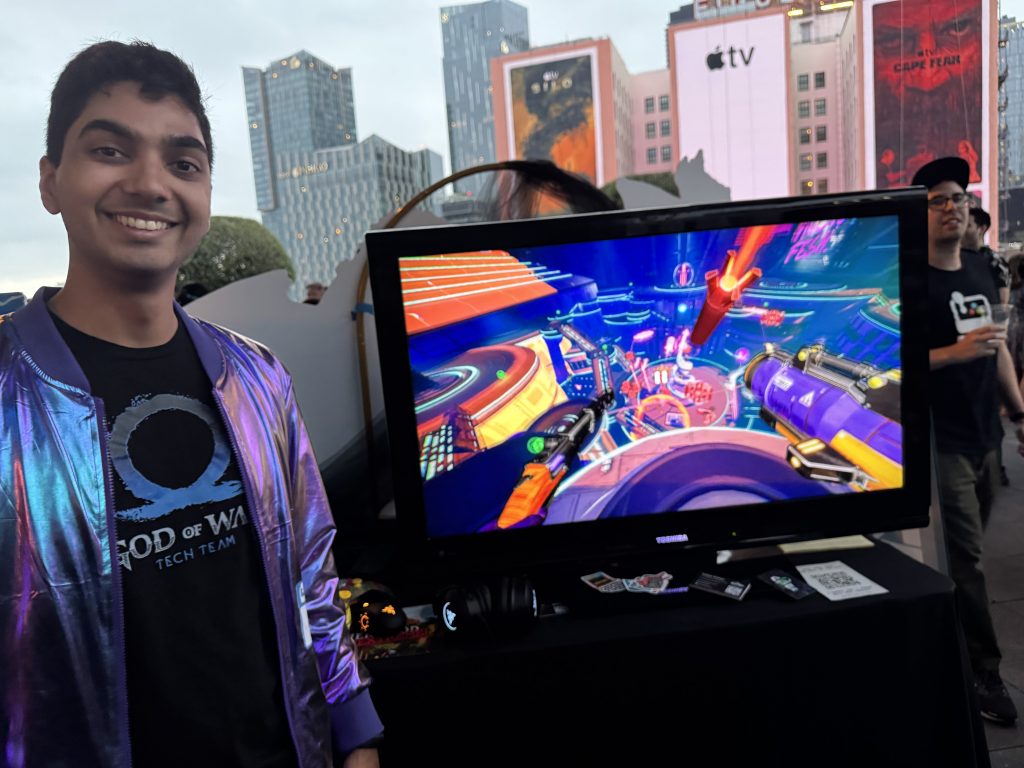
The MIX Indie Games Spotlight: Gunstoppable
Gunstoppable was the game that made me stop and ask more questions. It is a cel-shaded shooter built around movement, speed, and arena control. The demo I played had me moving through an arena while taking on waves of enemies.
The game communicated its rhythm quickly. I was shooting while moving, repositioning often, and using the arena space instead of standing still and firing at whatever came toward me. That matters in a shooter. Moving fast is one thing. Letting the player think, react, and survive while everything is happening around them is something else.
Gunstoppable had that early sense of flow. Movement and shooting felt tied together instead of acting like two separate systems.
Talking to the developer afterward made it more impressive. He told us he was 26 years old and had previously worked at Sony Santa Monica Studio before leaving to make Gunstoppable. That context gave the demo another layer. This was not just a small game trying to look stylish. It felt like a project from someone who understood game feel and wanted to build something of his own around that foundation.
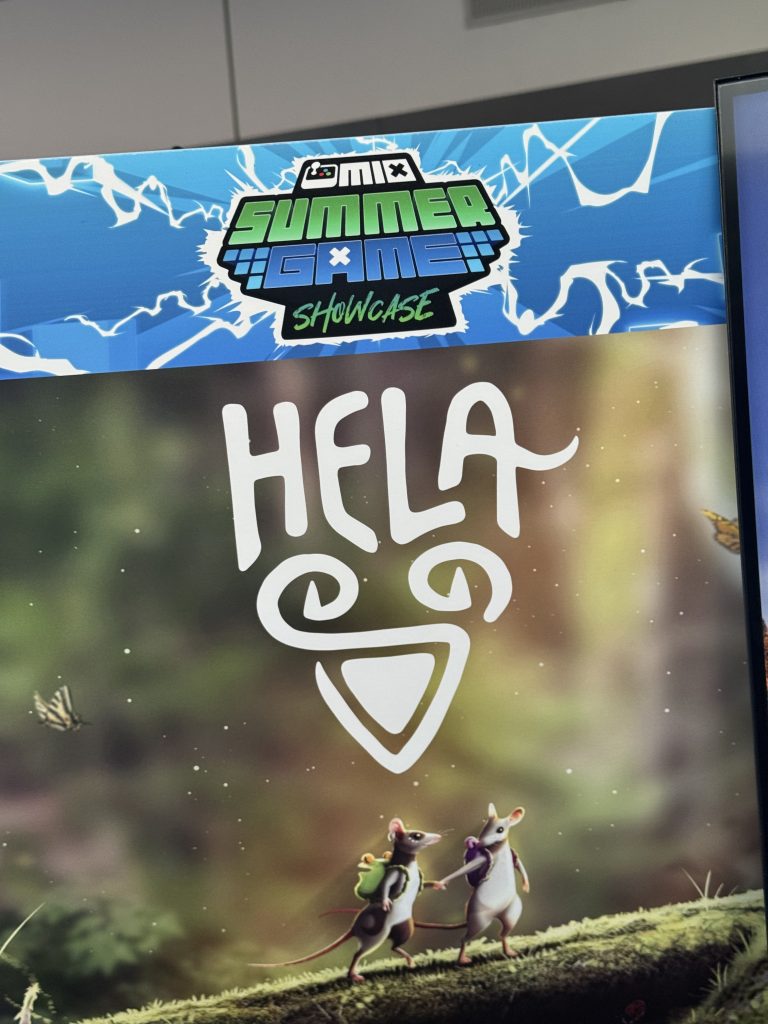
The MIX Indie Games Spotlight: Hela: of Mice & Magic
Hela: of Mice & Magic stood out in a completely different way. My hands-on time with it was lighter, but even that short demo showed me why it caught my attention. I spent most of my time walking around, jumping, and using a backpack-style glide mechanic. It let me launch from higher points and float across the environment.
That gave the game a small-character-in-a-big-world feeling right away. Movement was not just about getting from one place to another. It was about reading the space around me and figuring out how to use height, wind, and distance.
What impressed me most was how finished it felt. I do not just mean the graphics looked nice, although they did. The presentation was crisp, clean, and visually rich without losing readability. More importantly, the character felt responsive. The jumping, gliding, and movement had a softness to them without feeling loose. That is a hard balance for this kind of 3D platforming adventure.
There was also a lot going on around the core movement that made me want to see more. The game has adorable mouse characters and a cute backpack companion with a little frog-like charm. It also seems to include physics, duplication, and environmental interaction. I did not get enough time to fully understand those systems, but watching the demo helped. Seeing other players interact with the game made Hela feel like more than cute mice in a pretty world. It looked wholesome and inviting, but also like a real 3D adventure with systems underneath all that charm.
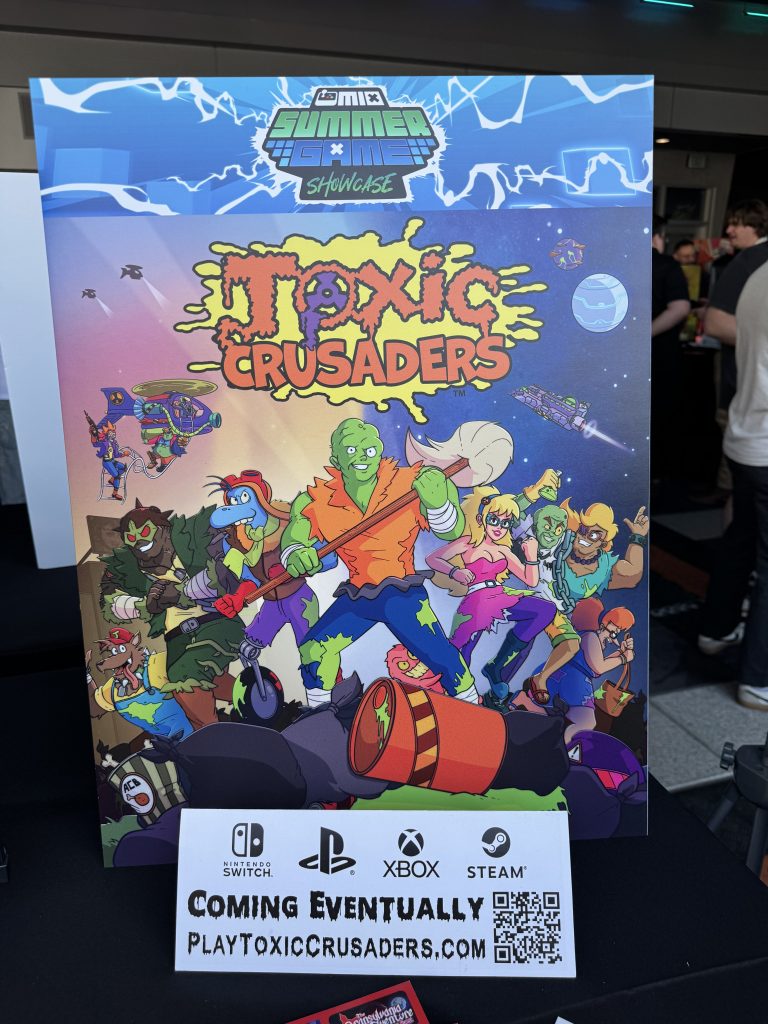
The MIX Indie Games Spotlight: Toxic Crusaders
Toxic Crusaders was interesting for me because I had just come off reviewing Jay and Silent Bob: Chronic Blunt Punch. My brain was already living in brawler mode. That made it easier to feel what Toxic Crusaders was doing well.
I did not need much time to figure out how to play it. I could move, attack, read the screen, and start doing what I normally do in brawlers. The game responded in a way that felt natural.
I also played co-op with a stranger, which became a good accidental test for the game. Neither of us needed a long explanation. We both seemed to understand the rhythm quickly. The game let us fall into that shared arcade flow where you clear space, watch each other’s positioning, and keep the action moving.
I did not get deep enough into the combo system to say how far it goes. Still, I noticed the hit meter, which told me there is more there for players who want to chase cleaner strings.
The humor also felt in line with Toxic Crusaders. It had that strange, gross-out, cartoon brawler energy without apologizing for what it was. Considering this game has been in the works for a while and is now listed for 2026, I walked away hoping it releases soon. Not in a rush-it-out way, though. If Retroware is still tightening things up, especially in a genre where feel and co-op readability matter so much, then let them take the time.
Why The MIX Indie Games Showcase Matters
That was the broader feeling I kept coming back to while walking through The MIX. These events are not just about finding the next breakout hit. They preserve the part of games coverage that still feels curious.
It is easy to get trapped in the machinery of major announcements. Big games get judged by brand size, trailer budget, and whether the internet already decided to care. A room full of indie games forces you to look closer.
It asks better questions. What is this game trying to do? Who is making it? Why did this person or team put years of effort into this specific idea? Those questions matter more than whether something is already big enough to dominate the conversation.
Most games will not dominate anything. Most games do not get that kind of runway. They can still be clever, personal, inventive, strange, funny, beautiful, or worth someone’s time.
Indie Games Need Rooms Like The MIX
That is why The MIX worked for me. It gave these games a room where people could play, discuss, and understand them. Developers stood beside their work and gave context that a trailer or store page cannot always capture.
It also reminded me that the indie space is not some side hallway of the industry. It is one of the places where games are still allowed to be risky, specific, and genuinely surprising. The MIX indie games lineup worked because it gave smaller projects a chance to be played, explained, and remembered in the middle of a very crowded week.
Not every game at The MIX will become the next breakout indie hit. That is not really the point. Spaces like this allow smaller games to be seen before the next news cycle buries them. For a few hours at L.A. Live, these developers had the room. Controllers were in people’s hands. The music was playing. The games had a chance to ask for attention on their own terms.
That is worth celebrating.
Check out my impressions of Way to the Woods from Summer Games Fest Play Days here.
