
Growing up, Hot Wheels was the go-to toy option. Colorful, cool-looking cars and racing them on playsets, or anything your mind can imagine, were a childhood delight. And for a few years, the team at Milestone honored that dream with the Hot Wheels Unleashed series.
But what happens when you go from race tracks to the vast horizons of open islands? That’s what Infinite Rush sets out to answer. Leveraging the core racing mechanics of prior Hot Wheels games, does this open-world racer dash the finish line? Or are the wheels falling off?
While it doesn’t match the vast horizons it was inspired by, I still had a great time racing across the colorful islands in Infinite Rush using a wide collection of cool Hot Wheels.
Publisher/Developer: Milestone
Release Date: September 10th, 2026
Platforms: Nintendo Switch 2, Xbox Series X/S, PlayStation 5, PC
Price: $49.99
Reviewed On Nintendo Switch 2
It’s a Cars World – Premise of Infinite Rush
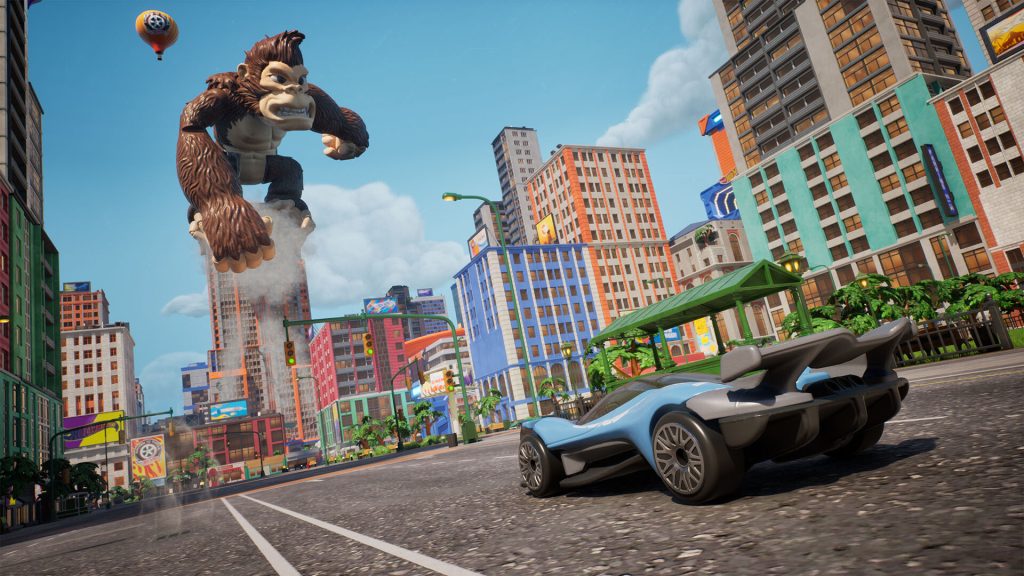
It’s, well, a Cars world. As one of several Hot Wheels cars, you drive around four unique islands. Complete various racing types, collect gears and stickers spread throughout the islands, and overall enjoy exploring literal playsets. There isn’t a real story or throughline, like in the Forza Horizon series, but that’s not an issue when the islands themselves feel like living Hot Wheels playsets.
Driving around the New York-inspired streets of Wheelswood, the muddy roads of Gearville, and the exciting Japanese-inspired streets of Drifty Temples, each area is quite well-defined with landmarks and makes the driving adventure visually engaging.
But it’s not just the set dressing and visual design keeping things interesting, as the progression in Infinite Rush does a lot to keep players engaged.
Gotta Race ‘Em All – Progression
The main ‘mission ‘ is unlocking access to all four island biomes. To do this, players participate in main racing missions (orange on the map), and after completing five, they race a major rival. After defeating the rival, you unlock their car and gain access to a new island.
But you aren’t rushed into launching to the next island, as each one features over 25 main races to compete in. They are varied, featuring traditional and elimination matches, speed-focused time trials, and more. Each one has two challenges, and completing both unlocks perks and new cars.
Of all the main racing types, I particularly enjoyed the elimination matches. Trying to stay ahead of the pack, fearful of getting in a lower position for too long, made dashing across the finish line immensely satisfying.
Each perk can enhance stats your car, and you can gain more slots (up to four) as you progress through the game. I didn’t see much of a difference handling-wise, but they are a welcome addition for players who want options.
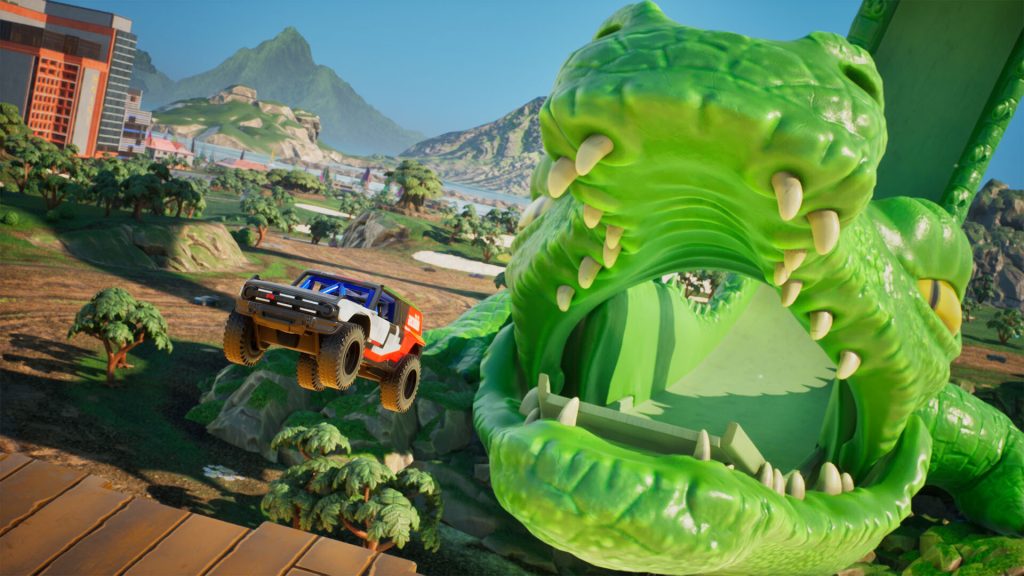
Completing missions, main ones and fun side-challenges across the island, earns currency, creating a consistent reward loop. Currency used to buy new cars, boost trails, perks, and more is also exclusively earned in-game. The main draw of unlocking each car is the visual differences between them, alongside how different each ‘class’ of car handles.
Infinite Rush takes full advantage of the fact that Hot Wheels are toy cars, having a wide variety of visual designs. Some cars can look slick, while others can look downright absurd and wacky. It gives Infinite Rush a unique identity from other open-world racers with its roster of cars. But one similarity to its horizon of inspiration is the open-world exploration.
Coast to Coast – Open World Exploration
Driving around the open world instantly brought back memories of speeding through Forza Horizon 5‘s vast world, with each biome offering fun side roads and more open areas to drive through. Each island offers a different vibe, but my favorite is Drifty Temples, which strikes the best balance of fun, curvy roads to drift and open woodland areas to crash through.
Spread throughout the islands are three types of collectables: 300 blue gears, 10 Hot Wheels Logos, and 10 Stickers to take pictures of. Collecting these is enjoyable because of how organic the sense of discovery feels. I never felt my time was wasted exploring the different islands.
That feeling of pulling off a tight drift and finding a cluster of Blue Gears, or spotting a Hot Wheels logo in the distance and finding the ramp to launch myself toward it, was a frequent highlight of my time with Infinite Rush. Getting to 100% can take away that rewarding feeling, as repetition can set in.
But casually collecting stickers, gears, and Hot Wheels Logos is a reward in itself (look into whether they offer other rewards)
Casual driving is fun, but what about the standard racing?
Choose Your Ride – Standard Racing
Controls are consistent with other racers, with cars having a good feeling of weight regardless of class type. Hitting high speeds, turning tight drifts, and boosting at the right moment feels great using both the Switch Pro Controller and the Joy-Cons in handheld mode.
But there are two unique aspects in racing that make Infinite Rush more engaging. One is the ability to turn left and right at any moment using the Y and A buttons. On the surface, this doesn’t affect racing much. But when you are just about to hit an incoming racer, you can quickly side-step them without losing your built-up speed. It’s a great feeling to nail the maneuver.
There’s also the fun wrinkle of Car Classes. Each call falls into one of four classes: Speed, Drift, Titan, and All-Rounder.
Each focuses on a specific driving style, with Speed Cars offering blistering speeds but crashes making your speed slow to a crawl. Meanwhile, Titan Cars build boost over time and can double-drift, but running out of boost takes away all your speed. These were by far my favorite cars to drive around in, while the Drift Cars took a bit longer than expected to get a grip on.
Races are built for one specific car class, which ensures each one is a balanced experience. In multiplayer, players can freely pick whatever car they want, and in the open world, you can instantly swap classes by pressing a direction on the D-Pad.
I loved how each car class felt distinct, and it’s a welcome inclusion other open-world racers should consider.
Building the Road – Track Building
Another interesting feature Infinite Rush includes is a track editor. Being able to build tracks on any of the main four islands, players can place roads and loops in the sky and create their own racing events. It’s a deep level editor if you really get into the thick of it, able to build roads with curves and more.
While I didn’t make my own tracks during the review process, I leveraged the ability to play tracks people created. These custom tracks push the envelope, with several combining the standard island racing with highway-in-the-sky tracks one would see in a typical Hot Wheels playset.
It’s awesome and similar to the custom races in Forza Horizon; I’m eager to try out future creations players create with the robust track builder.
Beyond the Playset – Presentation
Visually, Hot Wheels Infinite Rush is an interesting experience. Every island has a major landmark, from Wheelswood’s King Kong-inspired ape toy in the center to a striking green dragon in Drifty Temples, with roads and outlands spreading out from them.
Some areas looked similar to each other visually, like the cities of Wheelswood and Gearville, but the side roads of each island were a joy to drive around in. Drifty Temples stands out in this regard, melding lush grassy areas with its Japanese temples and busy roads.
And the car density is impressive too, with every major city area having several cars, each visually distinct from one another.
Performance on Switch 2
Running an open-world racing experience on the Switch 2, Hot Wheels Infinite Rush delivers performance. Running at a stable 30 FPS target at high resolutions in both handheld and docked play, it does a good job matching the presentation on other platforms.
However, load times getting into and out of races are on the longer side, lasting upwards of 20 to 30 seconds.
Jet Blue Speaker – Audio/Music
While the presentation is overall solid, the music is just okay. Main events have solid techno beats that keep you invested in races, but free-roam driving in the open world has background music that doesn’t leave an impression. It’s fine and does the job, but it doesn’t compare to the playlists heard in other open-world racers.
The audio design, though, is great. The engines revving and other sounds from your Hot Wheels cars are crisp and add to the racing experience. A lovely touch is that Infinite Rush doesn’t forget these are toy cars, with driving through trees, signs, and more having ‘thuds’ and sounds of plastic colliding.
It helps sell the fantasy of driving a massive toy set.
Accessibility Features
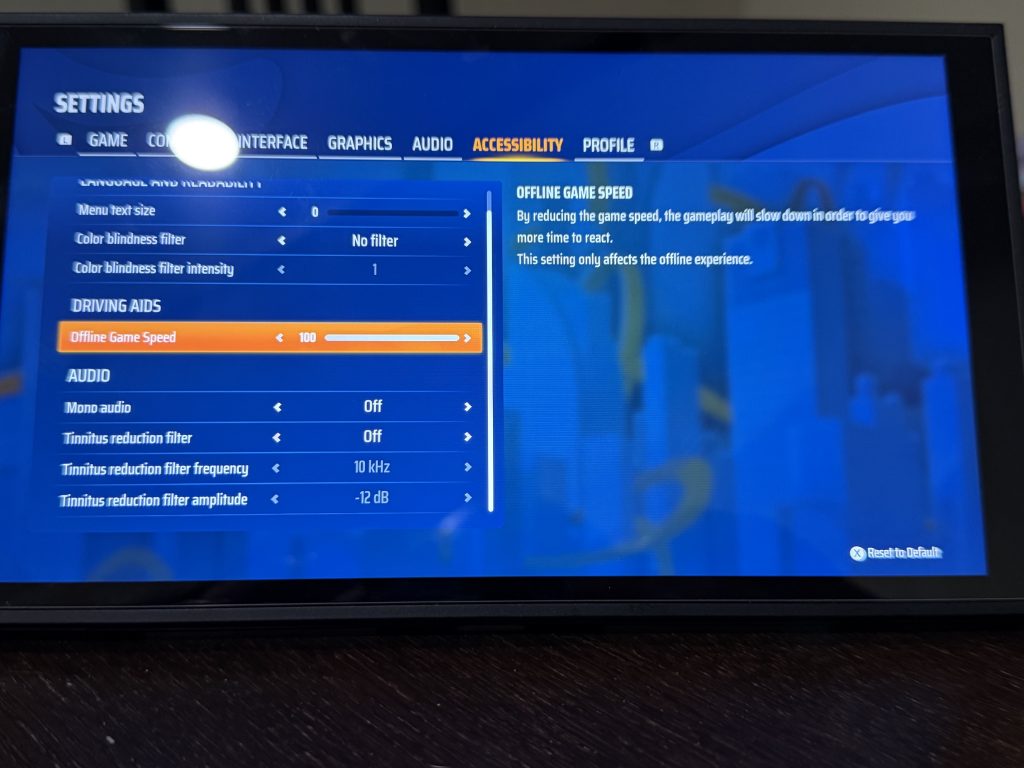
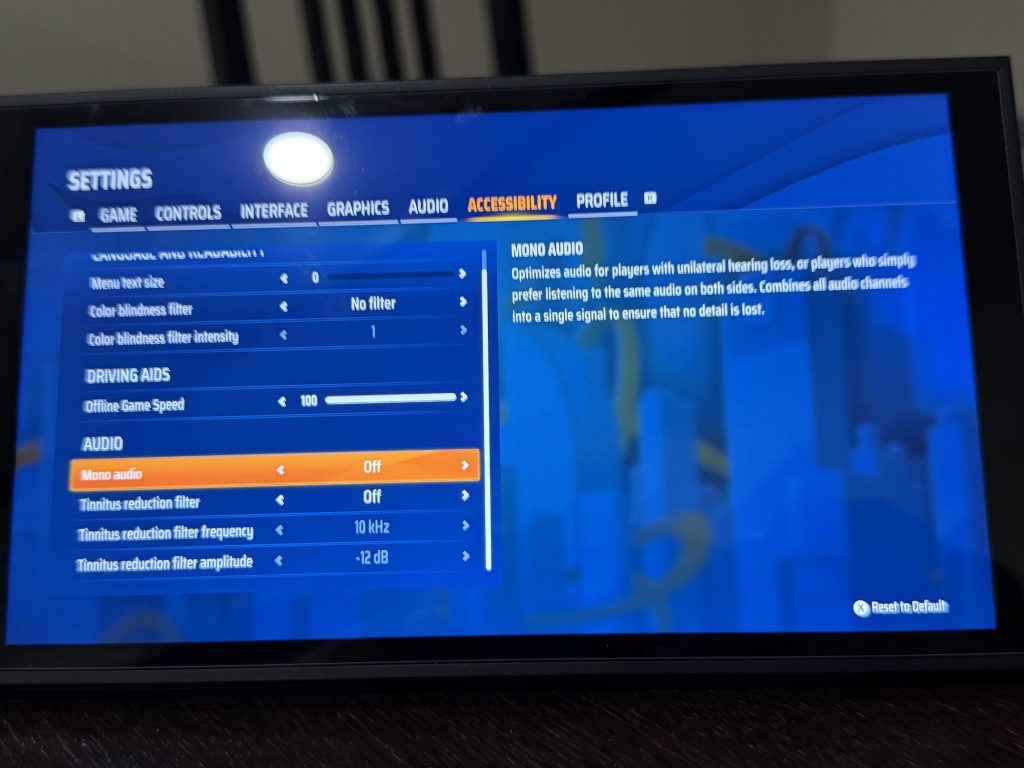
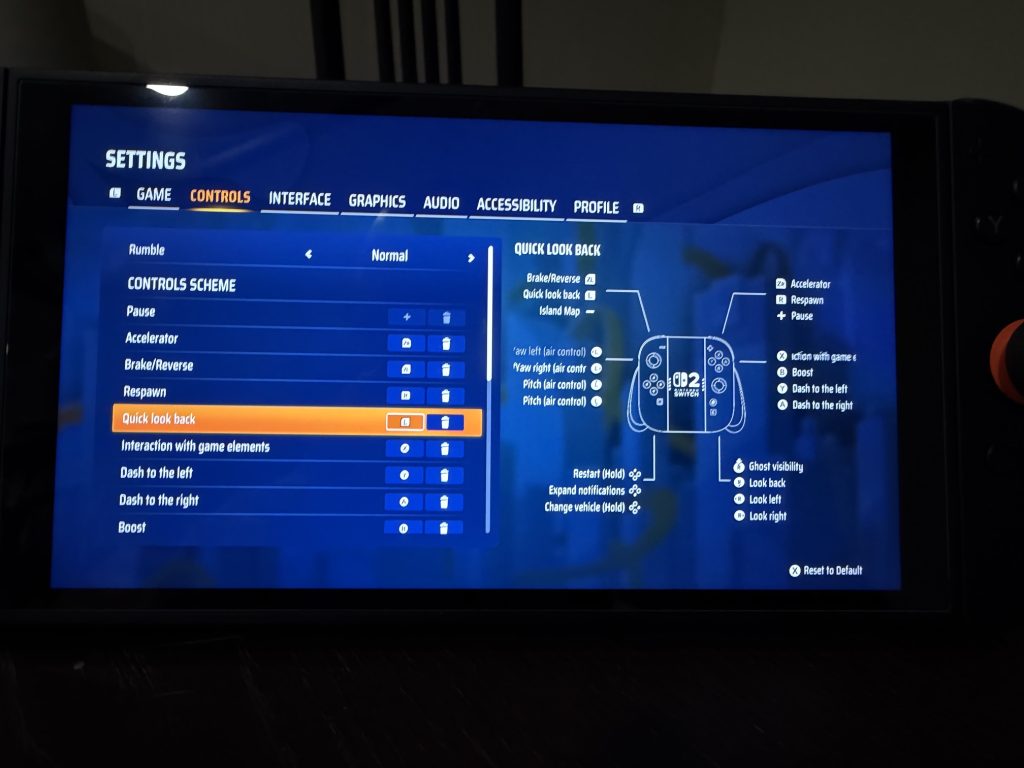
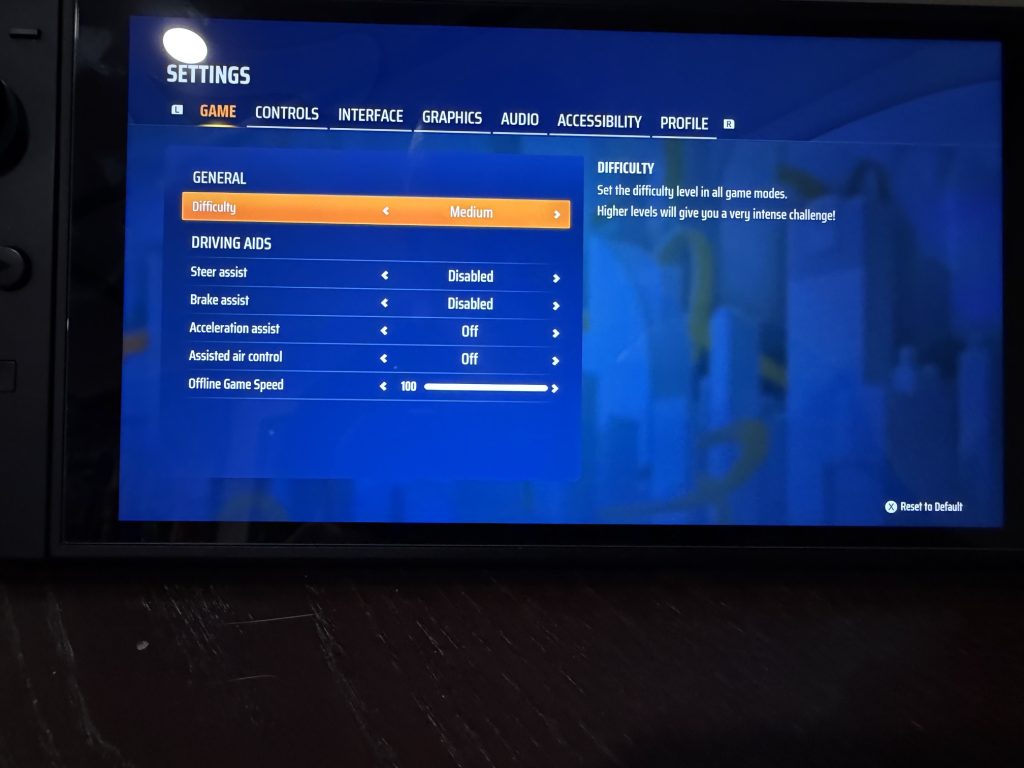
Regarding accessibility, Hot Wheels Infinite Rush includes several options to make it an experience for everyone. From full control customization, game-speed options for offline racing, and colorblind/mono audio options, most players can fully engage with what Infinite Rush has to offer.
Closing Thoughts on Hot Wheels Infinite Rush
After speeding through colorful islands and driving in several awesome toy cars, I can safely say this is one open-world driving experience I can recommend to all players. Despite a lackluster soundtrack and some minor technical issues with loading times, Hot Wheels Infinite Rush stands out with its unique car class systems, extensive custom track support, and enjoyable islands to race around.
It’s a playset that looks to its horizons both fondly and eagerly, putting you behind the wheel for a fun time with burning wheels.
A Code was provided by the publisher for this review.
Hot Wheels Infinite Rush
Pros
Large open islands with plenty to see and do.
Four Car Classes, making each Hot Wheels special.
Extensive track builder with support to download custom tracks
Cars and the game world feel like a living Hot Wheels Playset
Stable performance on Switch 2
Cons
Long Load times
Mostly lackluster soundtrack
Full 100% completion can be tedious
